







By Gavin Jones
ROME, April 23 (Reuters) – Italy may not be able to raise defence spending as planned due to growing economic and public finance difficulties plus the need to counter surging energy prices, a government document said on Thursday.
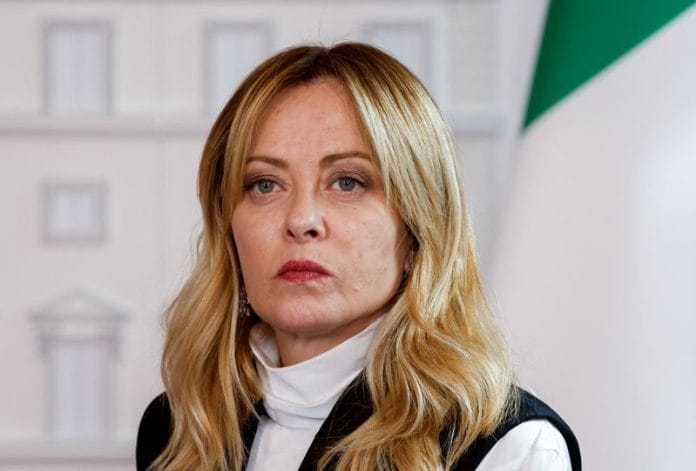
Prime Minister Giorgia Meloni’s government cut its growth projections on Wednesday and hiked forecasts for the budget deficit and public debt, reflecting surging energy prices and turmoil in the Middle East.
The Treasury’s multi-year budget plan (DFP) issued on Thursday underlined the downside risks to the outlook and said Italy now had little fiscal room for manoeuvre given its need to help families and firms deal with the energy shock.
“As a result, it will be necessary to re-define our priorities and re-programme the planned spending increases in other areas, including defence,” Economy Minister Giancarlo Giorgetti said in an introductory note to the DFP.
Italy, along with most other NATO European countries, has agreed to a call from U.S. President Donald Trump for an increase in defence and security spending to 5% of GDP by 2035.
In the nearer term, Rome’s 2026 budget approved in December pledged an increase of 0.5% of GDP by 2028, or about 12 billion euros ($14.03 billion), sparking protests from opposition parties who argue the cash would be better spent on public services.
ITALY HIGHLY DEPENDENT ON IMPORTED GAS
Highly dependent on imported energy, Italy is particularly vulnerable to the disruptions caused by the Iran conflict.
It is Europe’s most gas-reliant economy, accounting for 38% of its energy supplies, according to the London-based Energy Institute. It is also the European Union’s largest importer of liquefied natural gas through the Persian Gulf.
The European Union is allowing countries to exceed the bloc’s deficit limits to increase their defence spending, or in the case of exceptionally averse economic circumstances.
Giorgetti said on Wednesday that Rome may tap this so-called “national escape clause,” while the DFP suggests it is more likely to do so to tackle the energy crisis than to hike defence spending.
Giorgetti warned on Wednesday the government’s latest forecasts, envisaging 0.6% growth both this year and next, may soon have to be revised down, and the DFP said that in a worst-case scenario the economy would contract by 0.2% in 2027.
($1 = 0.8551 euros)
(Reporting by Gavin Jones, Additional reporting by Giuseppe Fonte, Editing by Alvise Armellini and Andrew Cawthorne)
Disclaimer: This report is auto generated from the Reuters news service. ThePrint holds no responsibility for its content.