





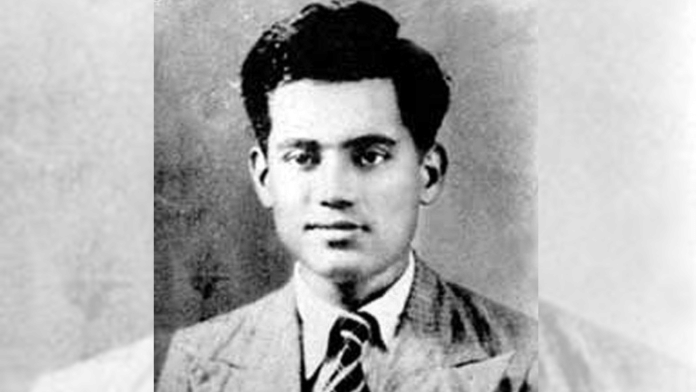



New Delhi: China has opened the Dwarkanath Kotnis Memorial Hall in Hebei province, in honour of Indian physician Dwarkanath Kotnis who served in the nation during the Second Sino-Japanese War, saving hundreds of lives. He died in 1942, aged 32, while serving on the frontlines in China and became a powerful symbol of Sino-Indian friendship.
Chinese ambassador to India, Xu Feihong, posted on X Tuesday that “the new Dwarkanath Kotnis Memorial Halls are open in Hebei province, China. We honour the legacy of Doctor Kotnis, whose courage and dedication continue to inspire”.
In both India and China, Dr Kotnis is remembered as a hero. China has honoured him with postage stamps and memorials while in India, streets and institutions bear his name.
Today, his memorials and the 1946 film Dr Kotnis Ki Amar Kahani keep his legacy alive, symbolising medical heroism amid the tension between the countries.
The new Dwarkanath Kotnis Memorial Halls are open in Hebei province, China.
We honor the legacy of Doctor Kotnis whose courage and dedication continue to inspire. 🙏 pic.twitter.com/Dx6uuf2Q9D
— Xu Feihong (@China_Amb_India) December 23, 2025
Earlier this month, Dr Dwarkanath Kotnis Memorial Committee hosted an event in West Bengal to honour the 83rd anniversary of Kotnis’s passing, recognising him as an enduring emblem of Sino-Indian friendship. Chinese Consul General Xu Wei was in attendance.
Here’s a look at the life, sacrifices, and enduring impact of Dr Kotnis, whose brief mission inspired tens of thousands, if not millions, on both sides of the border.
Kotnis was an Indian physician who volunteered to serve in China during the Second Sino-Japanese War (1937–1945). At the time, the Indian National Congress had organised a medical aid mission of five volunteer doctors in response to appeals from Chinese leaders.
The team travelled by sea and overland routes to reach the war zones. While the other doctors eventually returned to India, Kotnis remained, serving on the frontlines in North China’s Yan’an region and later the Jin-Cha-Ji border area.
He worked in mobile hospitals and caves under constant threat from shelling. He worked 18-hour days, performing surgeries without electricity. He even imparted anaesthesia, treating bullet wounds, malaria and dysentery, saving an estimated 650 to 1,000 lives.
Alongside his tireless work, he mastered the Chinese language, trained local doctors, and lectured on hygiene. In 1941, he married Chinese nurse Guo Qinglan, who assisted him.
Childhood epilepsy worsened by the pressures of war felled him. On 9 December, 1942, he collapsed mid-procedure in Guoliangliang village in Hebei province and died. His last words urged his colleagues to fight on.
Kotnis became a legend in China, earning the nickname “Kotnis the Good”. He inspired Mao Zedong, leader of the Chinese Communist Party, to write a eulogy in his memory and later fuelled the slogan of Sino-Indian brotherhood. Mao Zedong mourned him as a “friend of China”, while a book on him, The Kotnis Doctor from India, was published in 1941.
Post-1949, China built Kotnis Medical College, issued stamps, and named a Xinjiang township after him.
In India, then Congress leader Jawaharlal Nehru hailed him as a patriot. V. Shantaram’s 1946 film Dr Kotnis Ki Amar Kahani immortalised his tale.
Even though ties between India and China have often been strained post-1962 and after the 2020 border clashes, Kotnis endures as a bridge. Annual commemorations in both nations highlight people-to-people bonds.
His diary entries, part of the book Dr Kotnis in China, compiled by his wife, are revealing: “I have no regrets, serving humanity is my religion,” he wrote.
Vaibhav Pant is an alum of ThePrint School of Journalism, currently interning with ThePrint.
(Edited by Nida Fatima Siddiqui)
Also Read: India is trying a new China strategy. It’s called ‘managed rivalry’