







By Gergely Szakacs and Anita Komuves
BUDAPEST, May 11 (Reuters) – Hungary will review the financing and implementation of the Paks nuclear power plant expansion project, the nominee for economy and energy affairs minister said on Monday, as the new government laid out its strategy after a landslide election win.
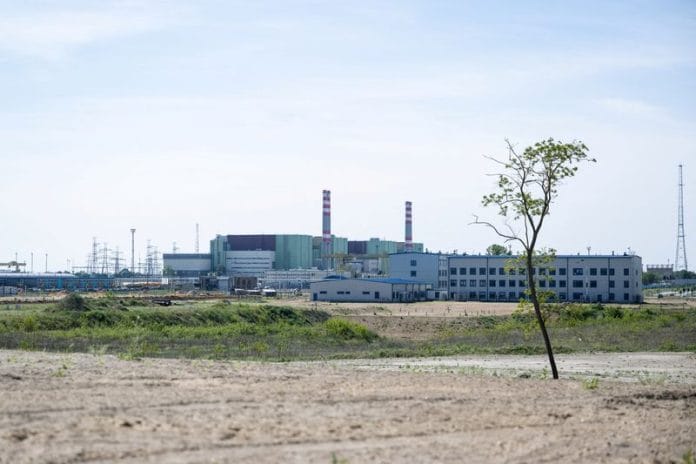
The 12.5-billion-euro ($14.7 billion) project to expand the 2-gigawatt Paks nuclear power plant with two Russian-made VVER reactors was awarded in 2014 without a tender to Russia’s state nuclear corporation Rosatom, and has been delayed by years.
Political observers often cited the project as a prime example of the close ties between Budapest and Moscow under former prime minister Viktor Orban, which the incoming government has vowed to change as part of a push to mend relations with the European Union.
“We need a transparent nuclear strategy,” Istvan Kapitany told a parliamentary hearing.
“We have to review the financing and costs of Paks 2 (expansion project) and its implementation conditions. These are classified contracts, which we have not yet seen, we need to examine them,” he said.
Centre-right leader Peter Magyar, who was sworn in as prime minister on Saturday, said last month that the cost of the project was over-inflated. Rosatom said it was ready to justify the price tag.
Kapitany said that nuclear power would continue to play an important role in Hungary.
He also vowed to fight corruption. Critics of Viktor Orban say graft was rampant under his rule, something the former prime minister denies.
REBUILDING TRUST IN HUNGARY
Meanwhile, the nominee for foreign minister Anita Orban told a separate committee that her first task would be to rebuild trust in Hungary which was eroded under the previous government.
Under Orban, Hungary was in almost constant conflict with the EU over issues ranging from the rule of law to minority rights. Budapest’s continued close ties to Moscow despite Russia’s war in Ukraine combined with its decision to block funds for Kyiv strained relations even further.
“Laws need to be passed that will ensure that Hungary’s judiciary is independent, that public tenders are transparent, that corruption can be fought, wealth declarations can be checked and the use of European Union funds can be tracked,” Orban said.
She stressed that Hungary would not send soldiers or weapons to Ukraine.
($1 = 0.8495 euros)
(Reporting by Anita Komuves and Gergely Szakacs; Writing by Pawel Florkiewicz and Alan Charlish; Editing by Emelia Sithole-Matarise)
Disclaimer: This report is auto generated from the Reuters news service. ThePrint holds no responsibility for its content.