







Washington: Asia’s Gen Z is facing a summer of discontent. Already grappling with bleak job prospects and lackluster growth, it is now being stung by the shock from the Iran war, which is driving up prices of everything from fuel to food and fertilizers.
The immediate impact is economic, but there is a growing risk of political instability. This crisis is hitting a generation already frustrated with inequality and endemic corruption, and increasingly willing to push back. Governments will have to stretch their budgets further to prevent young people from falling behind — or confront a renewed wave of unrest.
Last year’s Gen Z-led demonstrations against graft and elite privilege are a warning that anger can spill onto the streets with devastating results. It’s a scenario that could now intensify as the Iran war ripples through economies that are heavily exposed to energy flows through the Strait of Hormuz.
There are visible signs of turmoil. In the Philippines, which imports almost all of its crude from the Middle East, rising fuel bills prompted an energy emergency soon after the war began. Transport workers launched nationwide strikes, demanding more assistance from their leaders. In India’s industrial hub of Noida, people took to the streets over low pay and poor conditions made worse by surging living expenses — driven in part by cooking gas shortages. And in Pakistan, widespread rallies against sharp hikes in petrol were a reminder of how economic strain can morph into a backlash.
Young workers are especially vulnerable. Even before the war, the World Bank had warned of mounting unemployment among the region’s youth. Many are likely to be hired informally, with few financial buffers to absorb steeper expenses. That insecurity will deepen as wages lag inflation and stable jobs move further out of reach. For many, this is the second major economic setback in just a few years, after the pandemic left them facing a more precarious future.
The blow could be severe enough to push millions into financial distress. A UNDP report published this month estimates that 8.8 million people across Asia and the Pacific risk falling into poverty as a result of the Middle East conflict. While more than half are in Iran, the wider region is also affected. Job losses are also likely to hit lower-skilled workers harder, the report notes, leaving many youth particularly exposed. Factories around the region are cutting output as input prices climb, weighing further on hiring.
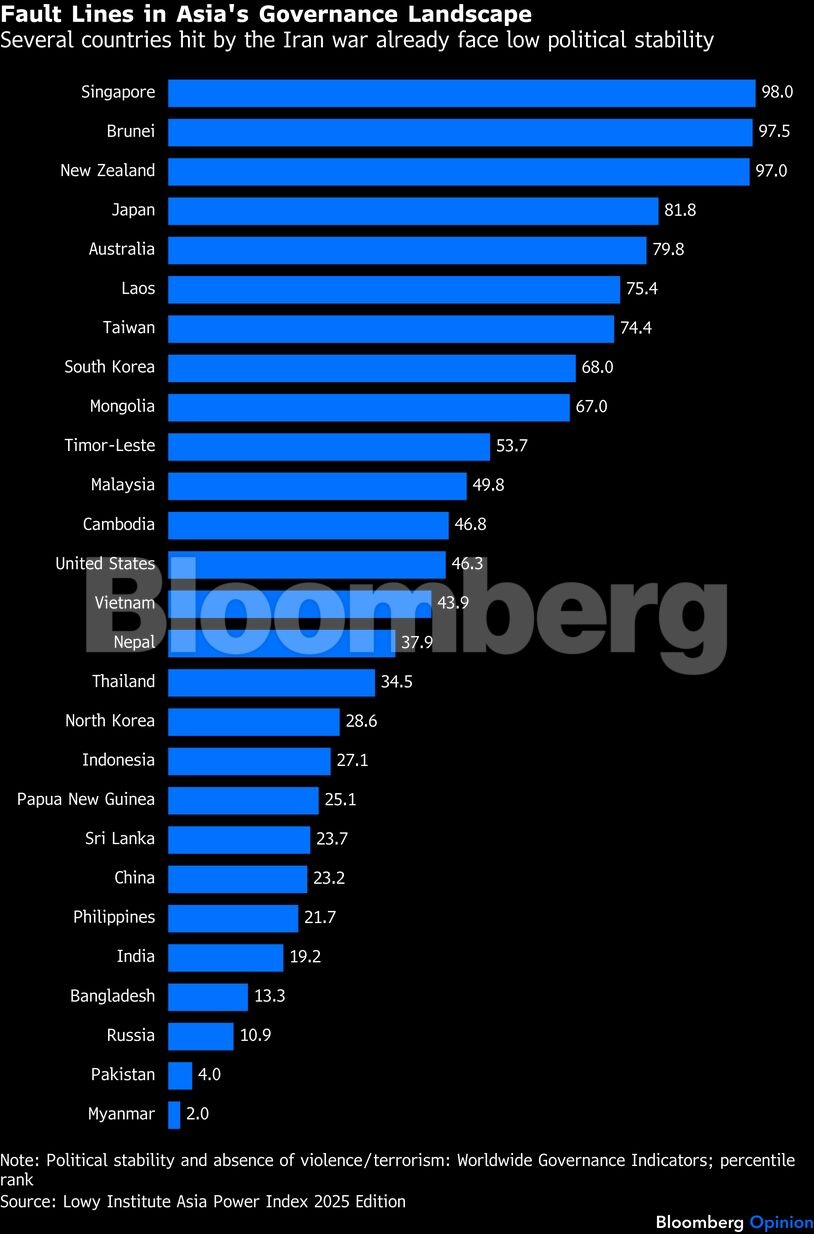
The pressures could be greatest in countries with low political stability. Protests can easily flare up again in those that experienced Gen Z-led unrest last year, threatening to destabilize already fragile administrations.
Nepal, which was at the forefront of demonstrations, will be one to watch. That movement helped bring down the previous government — voters have since elected a Gen Z-backed leader — but spiking energy prices could test their optimism. In Sri Lanka, younger adults who drove activism during the country’s political turmoil in 2022 now face renewed strain from surging food prices. In Indonesia, where deadly protests took place last summer, a large share of workers remain in informal employment, while the rupiah has weakened, pushing up the cost of imports.
This is a combustible mix of grievances and the current response from governments is not enough to contain it. More financial assistance is needed if politicians want to prevent economic strain from turning into public anger.
Finances across much of developing Asia are already stretched, limiting the ability of states to cushion the blow. Subsidies and austerity tactics can only go so far. Measures like targeted income support, investment in job creation and cash transfers to the most vulnerable households will be necessary. If the shock persists, politicians will face tougher trade-offs between controlling prices, supporting citizens and businesses, and maintaining spending on essential public services such as education and healthcare.
Regional cooperation will also be essential. Japan’s recent announcement that it will provide $10 billion in support to nations in Southeast Asia is one example of how middle powers can help others cope with surging energy costs. More coordination to manage fuel financing and emergency support for food and fertilizer imports would also be prudent.
These are tall asks at a time when many governments can ill afford them. But they have little choice until peace comes to the Gulf and stability returns to global energy markets.
Until then, the region is at risk of losing a generation before it ever had a chance to build a future.