








By Michaela Cabrera
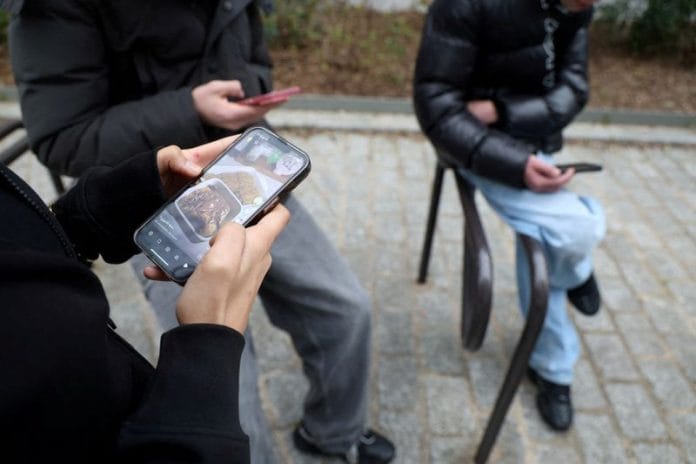
PARIS, March 31 (Reuters) – French senators vote on Tuesday on a draft law that aims to ban social media access for children under the age of 15, joining countries around the world in considering a move unpopular with many teenagers but supported by some parents and teachers.
President Emmanuel Macron wants the law in place in time for the start of the next academic year, in September. If adopted, France would follow Australia, whose world-first ban for under-16s on platforms including Facebook, Snapchat, TikTok and YouTube came into force in December.
Countries across Europe and beyond are considering ways to restrict social media after becoming increasingly aware of the risks to children.
Last week a jury in Los Angeles found Meta and Alphabet’s Google negligent for designing social media platforms that are harmful to young people and found them liable for damages in a case that could serve as a bellwether for others.
“The idea is to be able to require platforms to implement age verification that is reliable, robust, and protective of personal data,” said French lawmaker Laure Miller, who drafted the bill.
“It’s clear that young people have access to smartphones at increasingly younger ages,” she said. “This has a significant impact on their development, both personally and cognitively,” she added, arguing that governments must regulate this and not leave it in the hands of social media giants.
Miller’s and Macron’s plans may face a hurdle in the Senate.
While the legislation was adopted in the lower house of parliament as a blanket ban, senators amended the text at committee level, saying they want to block access only for platforms that are considered harmful for children. Others could be accessed with parental approval. The list of harmful social media would be defined later by decree.
If the Senate as a whole supports that amendment, that could lead to back-and-forth between the two chambers, although the lower house has the final word.
French school pupil Louis Szponik, 15, does not agree with a social media ban. Though he says apps like TikTok can lead to procrastination, he feels strongly that social media can cultivate cohesion and expression.
“It’s true that our generation is often caricatured like that, as the younger generation, always on our phones,” he said. But social media can “have a positive side, which is being able to communicate with friends.”
(Writing by Ingrid MelanderEditing by Alexandra Hudson)
Disclaimer: This report is auto generated from the Reuters news service. ThePrint holds no responsibility for its content.