







By Colleen Goko
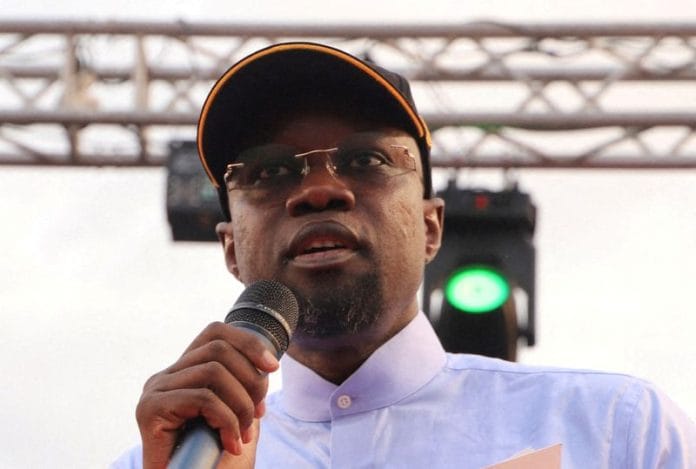
JOHANNESBURG, May 26 (Reuters) – Senegalese President Bassirou Diomaye Faye’s dismissal of a government headed by a firebrand critic of the International Monetary Fund gives fresh impetus to protracted negotiations aimed at resolving West Africa’s most pressing debt crisis.
But analysts and investors cautioned that, while Prime Minister Ousmane Sonko’s Friday ouster may remove one obstacle to an IMF deal, its unpredictable fallout presents new complications for the stalled talks and potential risks for investors.
“The removal of PM Sonko creates additional political uncertainty,” said Thalia Petousis, portfolio manager at Allan Gray. “There is also a chance that a newly appointed PM might be in favour of a deep debt restructuring, increasing the probability of a negative outcome for Senegalese bondholders.”
Late on Monday, Faye named Ahmadou Al Aminou Lo, a seasoned economist and former regional central bank official, to replace the populist Sonko.
But Sonko, whose party still dominates the National Assembly, made a political comeback of sorts on Tuesday as lawmakers overwhelmingly elected him speaker of parliament.
Senegal’s foreign currency-denominated government bonds plummeted as much as 5.7 cents on the euro and nearly 4 cents on the dollar on Tuesday, Tradeweb data showed.
Investors were now pricing higher odds of a restructuring following the latest events, Morgan Stanley said on Tuesday.
Petousis warned that if only foreign-currency debt was restructured while local currency debt was not, “the risks are that realised haircuts could be steeper than what is currently priced.”
Senegalese dollar-denominated bonds have handed investors losses of 9.7% over the past three months, compared to the 0.1% average return of peers in the JPM EMBI Global Diversified Africa index. Bonds due May 2033 traded around 50.6 cents on the dollar, at record lows.
SONKO DOWN BUT NOT OUT
Senegal has been engaged in off-and-on talks to secure a new IMF deal since the Fund froze a $1.8 billion programme in 2024 upon the discovery of previously unreported debt that pushed its debt-to-GDP ratio above 130%.
It is effectively locked out of international capital markets and is struggling to contain a ballooning fuel subsidy bill. Investors are growing increasingly anxious about the government’s ability to service its obligations.
President Faye’s office said earlier this month he was personally taking charge of Senegal’s debt file. And Cheikh Diba, who had served as finance minister until Friday, said talks with the IMF would resume in the week of June 8, with a deal on the broad contours of a new programme possible by the end of June.
Sonko told parliament on Tuesday he had policy differences with Lo, particularly over debt management, highlighting the divisions that exist even before the new prime minister forms his government.
He said his support would depend on Lo’s approach to debt restructuring, protecting purchasing power and shielding citizens from price rises, making clear his backing for President Faye’s agenda was conditional.
LOOMING SHOWDOWN OVER FUEL SUBSIDIES
Past timelines for an IMF agreement communicated by Senegal’s government have been overly optimistic, with authorities initially saying they expected a programme to be in place last year.
In a response to emailed questions, the IMF told Reuters it was closely following developments in Senegal and looked forward to engaging with the new government.
“The timing of IMF staff’s next visit to Dakar will be guided by the availability and readiness of the incoming authorities,” it said.
When negotiations do resume, fuel subsidies are likely to be at the centre of the talks.
Senegal had budgeted 250 billion CFA francs ($446.03 million) for subsidies this year before the U.S. and Israel attacked Iran in late February, igniting a conflict that has sent oil prices surging.
Former Finance Minister Diba warned on Friday that the subsidies bill could exceed the 2026 budget by 1.39 trillion CFA francs – roughly $2 billion – if oil prices hit $115 per barrel.
Sonko, however, had refused a request to raise fuel prices, Diba told parliament.
“In many countries, energy prices are incredibly politically sensitive and thus governments will be tempted to alleviate price pressure,” said Nicholas Sauer, portfolio manager at Robeco.
“There is indeed a long history of inflation-inspired social unrest that can eventually topple governments.”
($1 = 560.5000 CFA francs)
(Reporting by Colleen Goko; additional reporting by Marc Jones; Editing by Robbie Corey-Boulet and Joe Bavier)
Disclaimer: This report is auto generated from the Reuters news service. ThePrint holds no responsibility for its content.