



By Stine Jacobsen, Jacob Gronholt-Pedersen and Tom Little
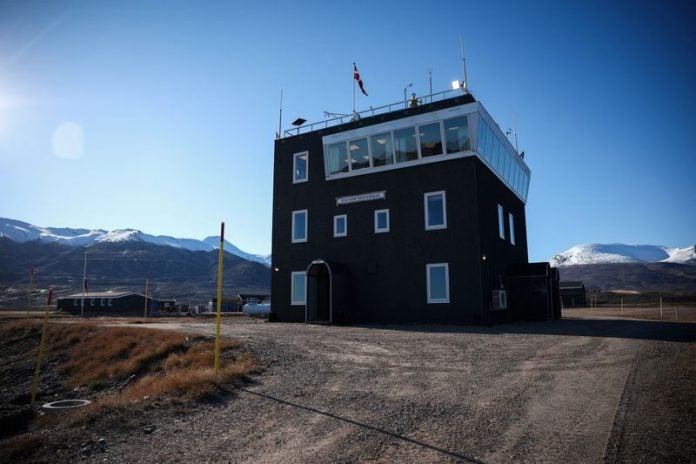
COPENHAGEN, Sept 25 (Reuters) – At a windswept gravel airstrip in eastern Greenland, a small Danish military detachment has quietly kept watch for decades.
Now, under a new US defence agreement signed this week, the outpost at Mestersvig could soon become a key American military foothold in the Arctic.
Mestersvig sits 240 kilometres (149 miles) from the nearest settlement (population 330), at the edge of an uninhabited national park larger than Germany and France combined. The place is covered in darkness during winter, with average temperatures of around minus 10 degrees Celsius (14 degrees Fahrenheit).
“This is as remote, as cold, and as extreme as you can find in the world. You have to go to Antarctica to find similar conditions,” said Anders Ibsen, a former officer with Denmark’s Sirius dog sled patrol, an elite unit that uses Mestersvig to resupply.
STRATEGIC CHOKEPOINT
It oversees the stretch of ocean between Greenland, Iceland and Britain — known as the GIUK gap — that Russia’s Northern Fleet must cross to reach the Atlantic. For NATO, controlling this chokepoint is critical to containing Russian naval power.
Local member of parliament Justus Hansen welcomed the expansion, saying: “In east Greenland, we really need that new money.”
Under the defence agreement, Washington will be allowed to establish a new base at Mestersvig and Narsarsuaq in southern Greenland, potentially marking the first US military expansion on the vast, semi-autonomous Arctic island in decades.
Currently, only three soldiers maintain the facility, which was built in the 1960s and includes barracks to house 150 soldiers.
The US has made no public announcement about its plans for the base.
A HISTORY OF OUTSIDE INTEREST
During World War Two, this stretch of the Arctic island’s coast became a front line in the “weather war”, a race between Germany and the Allies to read Greenland’s weather, which shaped conditions over the North Atlantic and Europe days later.
Germany secretly built manned stations here, but Danish dog sled patrols tracked them down, and Allied forces drove them out.
Nearby, an EU-backed project aims to mine molybdenum — a critical metal for aerospace and defence — some 20 kilometres (12 miles) away. A Texas oil company plans to drill for oil this winter at an untested basin just south of Mestersvig, although it still lacks a permit to do so.
The previous owner, ARCO, spent heavily on seismic work in the 1970s but never drilled.
“Any infrastructural improvements in Greenland would be very welcome,” said Robert Price, CEO of Greenland Energy, the oil company.
The 1.8-km (1.1-mile) airstrip — long enough for military transport planes to land — can collect up to 5 meters of snow a year. “When it’s snowing, you’re basically removing snow 24/7,” said Ibsen, the former dog sled patrol officer who spent a year at Mestersvig.
“You have plenty to do just staying alive.”
(Reporting by Stine Jacobsen, Jacob Gronholt-Pedersen and Tom Little in CopenhagenEditing by Gareth Jones)
Disclaimer: This report is auto generated from the Reuters news service. ThePrint holds no responsibility for its content.