







By Michele Kambas and Yiannis Kourtoglou
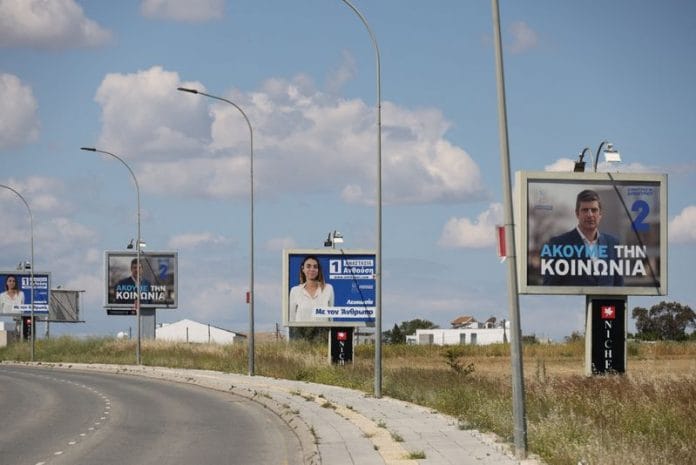
NICOSIA, May 21 (Reuters) – Cyprus votes on Sunday in parliamentary elections which could reshape the island’s political landscape, as frustration over corruption and the rising cost of living boosts support for political newcomers.
Although executive power in Cyprus rests with the presidency, a stronger showing for political outsiders could fragment the parliament and complicate efforts to support government initiatives.
Opinion polls suggest reformist movement ALMA and liberal Volt could enter parliament for the first time, while the far-right ELAM is also forecast to gain ground, potentially becoming the third largest in the 56-seat legislature – a shift that would end decades of dominance by the Communist AKEL and right-wing DISY parties.
Such gains could erode support for at least two of the three parties that backed President Nikos Christodoulides’ election in 2023, providing the first nationwide test of public sentiment midway through his term.
Public confidence has been rattled in recent years by a cash-for-passports scandal involving wealthy foreign investors, as well as delays to energy infrastructure projects that have left Cypriots with some of Europe’s highest electricity bills.
“It’s going to be a vote of protest towards established parties which will also, to an extent, be directed towards the government,” said political analyst Christoforos Christoforou.
NEWCOMERS BENEFIT
A record 753 candidates from more than 18 parties are in the running. The outgoing parliament had seven parties represented.
Odysseas Michaelides, a former auditor general who founded ALMA after being removed from office in 2024 — a move he says followed repeated questions he raised about public spending — said voters are disappointed with the political system as a whole.
Polls show ALMA on around 8% to 10%, as it campaigns on tighter anti-corruption safeguards and reforms to state institutions.
Volt Cyprus, a pro-European movement polling above the 3.6% threshold for entering parliament, says many voters feel alienated by corruption and lack of accountability. Co-chair Andromachi Sophocleous described it as the effect of living in a “dysfunctional state”. “We feel that the public is completely fed up with politics not bringing any improvement to their lives,” she told Reuters.
(Writing by Michele Kambas; Editing by Chiara Rodriquez)
Disclaimer: This report is auto generated from the Reuters news service. ThePrint holds no responsibility for its content.