







By Miranda Murray and Alexander Ratz
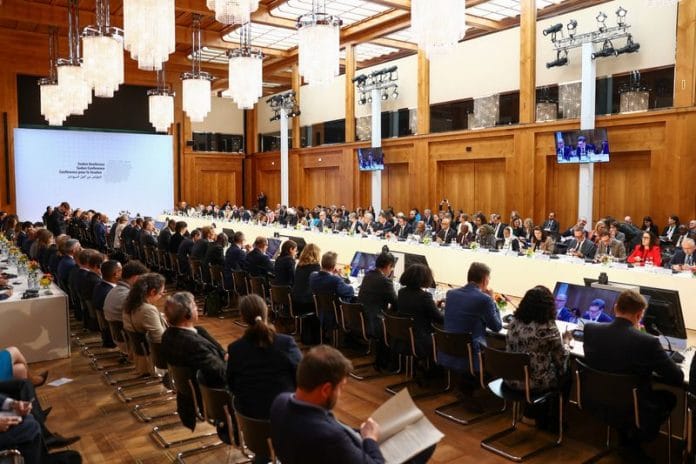
BERLIN, April 15 (Reuters) – An international conference to raise funding commitments for Sudan has produced pledges of more than 1.5 billion euros ($1.77 billion) in humanitarian aid, German Foreign Minister Johann Wadephul said on Wednesday.
The brutal three-year war between the Sudanese army and the paramilitary Rapid Support Forces has created what aid groups say is now the world’s worst humanitarian crisis.
Wadephul thanked donors for their pledges. “They help to alleviate the suffering of the people in Sudan, they help to save lives, and they show that this conflict has not been forgotten,” he said.
With development spending by established donors increasingly squeezed, the conference, which followed earlier meetings in London and Paris, was intended to throw a spotlight back on Sudan. The global focus has recently been diverted towards the longer-running war in Ukraine and the conflict in Iran.
Away from the media spotlight, millions of people have been forced to flee their homes and widespread hunger has left almost 30 million people relying on food assistance, while many state institutions are close to collapse.
“The Berlin conference is an important signal that Sudan is not being forgotten. Yet the sad tragedy is that an end to the war looks as far away as ever,” said Comfort Ero, the president and CEO of International Crisis Group.
Officials from more than 50 states and dozens of Sudanese and international NGOs attended, but neither of the warring parties sent representatives in the absence of a ceasefire agreement.
British Foreign Secretary Yvette Cooper reiterated the need for humanitarian support to relieve the immediate suffering in Sudan but said the fighting needed to end as quickly as possible.
“We need to ensure that every possible pressure is put on those warring parties to reach the urgent ceasefire that we desperately need to see,” she said.
‘SURPRISING AND UNACCEPTABLE’
Much attention will be devoted to ways of stopping the flow of arms from outside Sudan, but the task facing the international community has been complicated by the ongoing fighting, the continued involvement of regional powers in the conflict, and the refusal of the two warring factions to cooperate.
The Sudanese government on Wednesday called the conference plans a “surprising and unacceptable” interference in its internal affairs and warned that engaging with paramilitary groups would undermine state sovereignty.
For its part, the RSF-run parallel government also rejected the conference, saying political elements close to the army were included among the participants.
Wadephul said it was not only an ethical obligation to ensure people did not face hunger but also in Germany’s interest to avoid facing a large migration influx similar to the one from the Middle East in 2015 to 2016 as people were forced to flee.
Germany overall is pledging a total of 232 million euros to Sudan and neighbouring countries hosting millions of Sudanese displaced by the war.
($1 = 0.8475 euros)
(Reporting by Alexander Ratz, Writing by Miranda Murray and James Mackenzie; Editing by Alex Richardson, Toby Chopra and Aidan Lewis)
Disclaimer: This report is auto generated from the Reuters news service. ThePrint holds no responsibility for its content.