





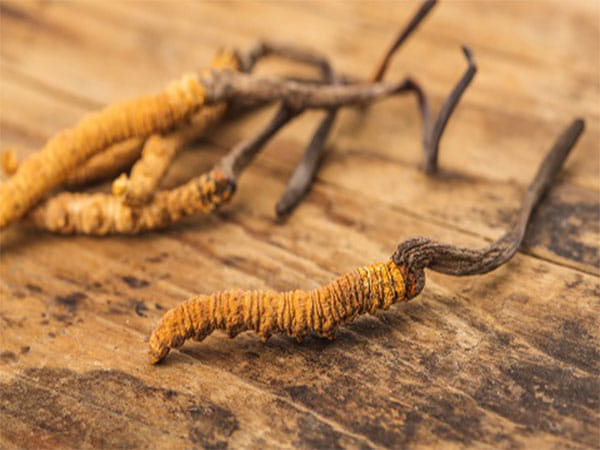



Beijing [China], December 25 (ANI): Several attempts of Chinese intrusion into Indian territory were to collect Cordyceps, also known as caterpillar fungus or the Himalayan Gold, an expensive herbal drug in China, according to the Indo-Pacific Centre for Strategic Communications (IPCSC).
Chinese soldiers have been accused of illegally entering Arunachal Pradesh in search of the fungus which is claimed to be costlier than gold in China.
Cordyceps is mainly found in the Indian Himalayas and at higher altitudes of the Qinghai-Tibetan plateau in southwestern China.
Globally, in 2022, the Cordyceps market has been valued at USD 1,072.50 million. China is the largest producer as well as exporter of Cordyceps.
However, according to IPCSC, “In the last two years, the Cordyceps harvest has waned in Qinghai, the largest producing region in China as the fungus grew scarce. At the same time, demand for the highly prized Cordyceps has increased sharply in the last decade as an emerging Chinese middle class seeks it to cure everything from kidney disorders to impotence, despite a lack of scientific evidence.”
High demand and limited resources have led to the fungus’ overharvesting, experts say.
“Output fell to 41,200 kg in 2018 from 43,500 kg a year earlier, a 5.2 percent slump, revealed data from the bureau. That’s a fraction of the 150,000 kg reported by provincial media for 2010 and 2011,” according to the IPCSC.
Chinese Cordyceps companies in Qinghai have in recent years been paying the locals millions of yuans to block off entire mountains for Cordyceps harvesting.
Surveys show that the annual Cordyceps harvest has declined. This according to the collectors, can be attributed to overharvesting.
According to IPCSC: “Some towns in the Himalayas rely on collecting and selling this fungus for a living. In fact, experts say that up to 80 percent of household income in the Tibetan Plateau and Himalayas can come from selling caterpillar fungus.”
The Cordyceps mushroom is well known for its gruesome eating habits: it is well-known that its spores kill insects by infecting them, and the dead insects’ flesh sprouts fully developed fruiting bodies of the Cordyceps fungus.
The bioactive molecule cordycepin found in cordyceps has great therapeutic potential and may one day be turned into an effective new antiviral and anti-cancer treatment.
The mushrooms are rare in the wild, and up until now, growing healthy Cordyceps in the lab has been difficult, hindering scientific research.
However, Professor Mi Kyeong Lee of Chungbuk National University and her team, including Dr Ayman Turk, have discovered a way to grow these elusive fungi in a controlled environment without losing their potency. Their findings are published in Frontiers in Microbiology. (ANI)
This report is auto-generated from ANI news service. ThePrint holds no responsibility for its content.