





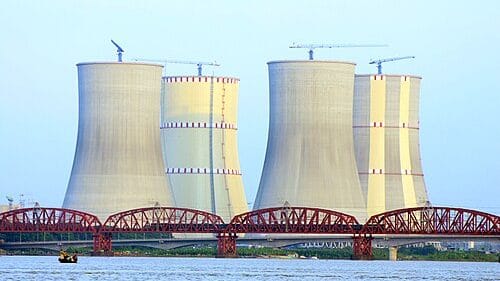



Bangladesh will likely commission its first nuclear reactor within months, a long-delayed start that comes as the government grapples with acute energy shortages caused by war and trade disruption in the Persian Gulf.
The reactor had initially been planned — under a previous government, ousted in 2024 — for early last year, but the technical complexity of integrating atomic power into the grid has caused delays, according to Energy Minister Iqbal Hassan Mahmood, who took office last month.
Fuel loading in the first of the two 1.2 gigawatt reactors at Rooppur is planned for April 7, he said. The reactor will be linked to the grid and start running at 30% capacity by June, he added.
The South Asian nation gets about half of its electricity supply from gas and dependence on imports of the fuel has been rising. The effective closure of the Strait of Hormuz over the past month, closing off the Persian Gulf, and a subsequent attack on Qatar’s giant Ras Laffan facility have caused a spike in liquefied natural gas prices — leaving Bangladesh vulnerable to shortages during the summer months and pressuring its paltry foreign exchange reserves.
“Since it will run at 30%, it will give us some relief,” Mahmood said in an interview, without commenting on the exact length of the ramp-up period.
People familiar with the matter said it could take nearly a year for the plant to start running at capacity. They asked not to be named as they are not authorized to speak to the media.
Bangladesh plans to install two VVER reactors — Russian-designed pressurized water reactors — from Russia’s Rosatom Corp. Delayed supplies from Russia also contributed to the slow commissioning, the people said.
The country has also signed a new cooperation agreement with the International Atomic Energy Agency earlier this month.
To manage immediate energy shortages, the country is planning to ramp up spot LNG purchases in order to build a three-month stock, Mahmood said. It plans to buy 11 cargoes and has already secured some at competitive rates, he said.
Energy imports have been a major source of fiscal stress for the country, and increased spot purchases could add to the burden given currency weakness.
Under a previous administration, Bangladesh had prepared a long-term energy transition plan to reduce dependence on imports by 2050, a blueprint that called for a sharp reduction in the share of fossil fuels, including coal, gas, diesel and fuel oil, while installations of solar and wind power are expanded, according to a January presentation by Dhaka-based researcher CPD Power and Energy Study.
The new government — elected in the first polls since a 2024 youth-led uprising ended 15 years of authoritarian rule — took charge in Dhaka last month.
Disclaimer: This report is auto generated from the Bloomberg news service. ThePrint holds no responsibility for its content.
Also read: West Asia war exposes fragility in India’s neighbourhood, potentially forcing New Delhi’s hand