








New Delhi: The last US-Russia nuclear arms pact, New START, which sets limits on strategic nuclear weapons, is set to expire Thursday.
Arms control advocates fear removing caps on the two largest atomic arsenals could set the stage for a new nuclear arms race with active deployment of strategic arms such as long-range ballistic missiles and bombers.
The renewal of the Strategic Arms Reduction Treaty (START) remains uncertain, as the US president wants China to join talks, which Beijing has categorically rejected, calling the US and Russia’s arsenals larger than its own.
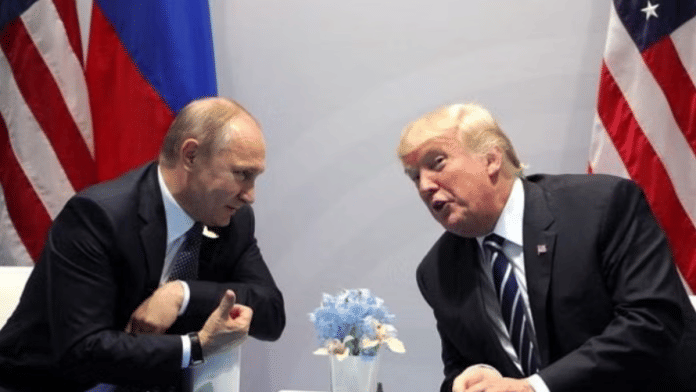
Russian President Vladimir Putin has reiterated Moscow’s intent to respect the terms of the treaty after expiry, if the US agrees to the same. The two countries can also share data.
Experts fear the non-renewal of the treaty could risk unchecked warhead growth and opacity in arsenals.
Dmitry Medvedev, deputy chairman of Russia’s Security Council, has expressed fears that the expiry of the treaty should alarm the world, as the biggest nuclear powers will have no limit on arms production for the first time since the early 1970s.
ThePrint delves into New START’s origin, the geopolitical impediments, current standoff, and the likely instability once it ends to understand the stakes of this arms control collapse and its likely domino effect on global security.
Also Read: Alberta’s separatist movement is back. Why Canada is worried over its US outreach
Background of New START
New START emerged from Cold War arms control efforts and was signed on 8 April 2010 in Prague by then US President Barack Obama and Russian President Dmitry Medvedev.
Ratified in 2011 after the expiry of START I in 2009 and the Strategic Offensive Reductions Treaty’s (SORT) sunset in 2012, it reduced deployed strategic warheads to 1,550 per side, intercontinental ballistic missiles and bombers to 700. It also included 18 annual on-site inspections, data swaps, and telemetry sharing for transparency.
The first crack opened in the treaty after the Crimean invasion in 2014. But the treaty was extended for five years in 2021 at US President Joe Biden’s initiative till February 2026.
However, in 2023, Russia suspended its participation in the treaty due to the US’s active support for Ukraine during the war. This halted the on-site inspection mechanism, which could satisfy both sides on compliance. However, neither side has accused the other of breaching the warhead limits.
According to the last disclosed data, in 2022, the US reported 1,419 deployed strategic warheads under New START ceilings, while Russia declared 1,550, the highest limit under the treaty. The US count remained at 1,419 in March 2023, but Russia suspended data sharing that year, citing US support for Ukraine in its war against Russia.
The talks on the treaty have largely been paused as Moscow is engaged in a long, drawn-out conflict with Ukraine. At the same time, Washington has demanded the inclusion of China in the agreement due to the fear of China’s rising arsenal.
Implications after expiration
According to the agreement, the treaty can only be extended once, which happened during the Biden administration in 2021. To remedy that, the Russian president, in September, proposed the sharing of data and information after the end of the treaty, but the US President has yet to respond.
After the expiry on 5 February, there would be no binding agreement for the first time since 1972 on building strategic and long-range warheads. This could further greenlight the rebuilding of warheads, spiking to Cold War-era levels.
Arms control advocates fear that this would lead to nuclearisation, especially at a time when there are heightened global tensions in Ukraine and West Asia.
Each side would be free to increase its missile numbers and deploy hundreds more strategic warheads, but this would not happen overnight due to the technical and logistical challenges.
However, in the longer term, the concern of an unregulated arms race would build mistrust, which could lead the other side to keep on adding weapons.
Daryl G. Kimball, executive director of the Arms Control Association, in conversation with Reuters, warned that “without data exchanges or inspections, opacity invites worst-case planning and arsenal growth.”
(Edited by Sugita Katyal)
Also Read: Iran’s IRGC: Ayatollah’s shield against dissent, external threats, now labelled ‘terror group’ by EU