





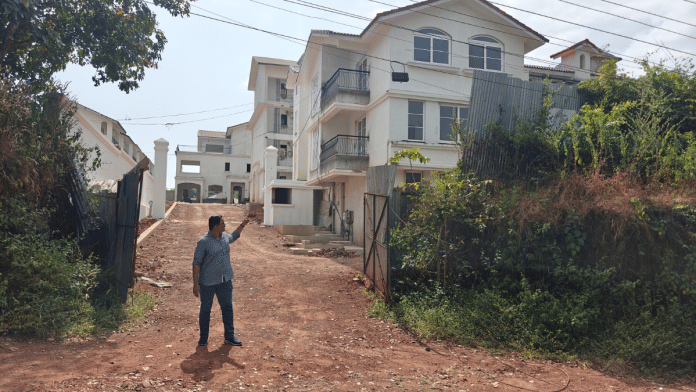



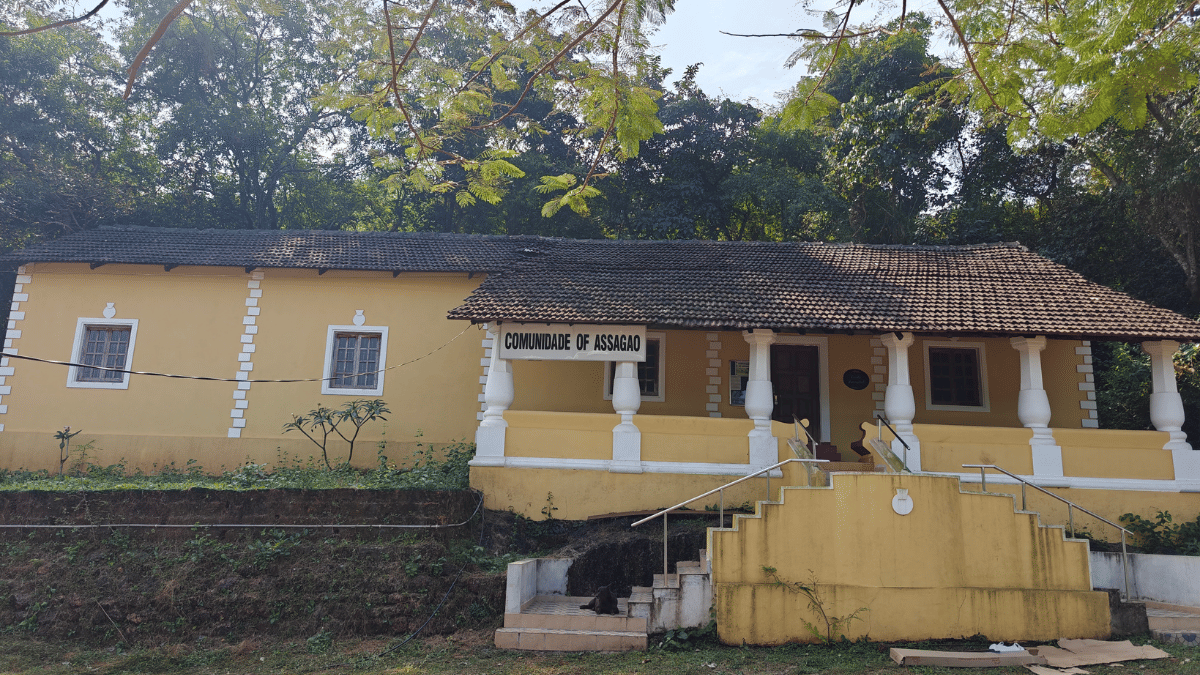
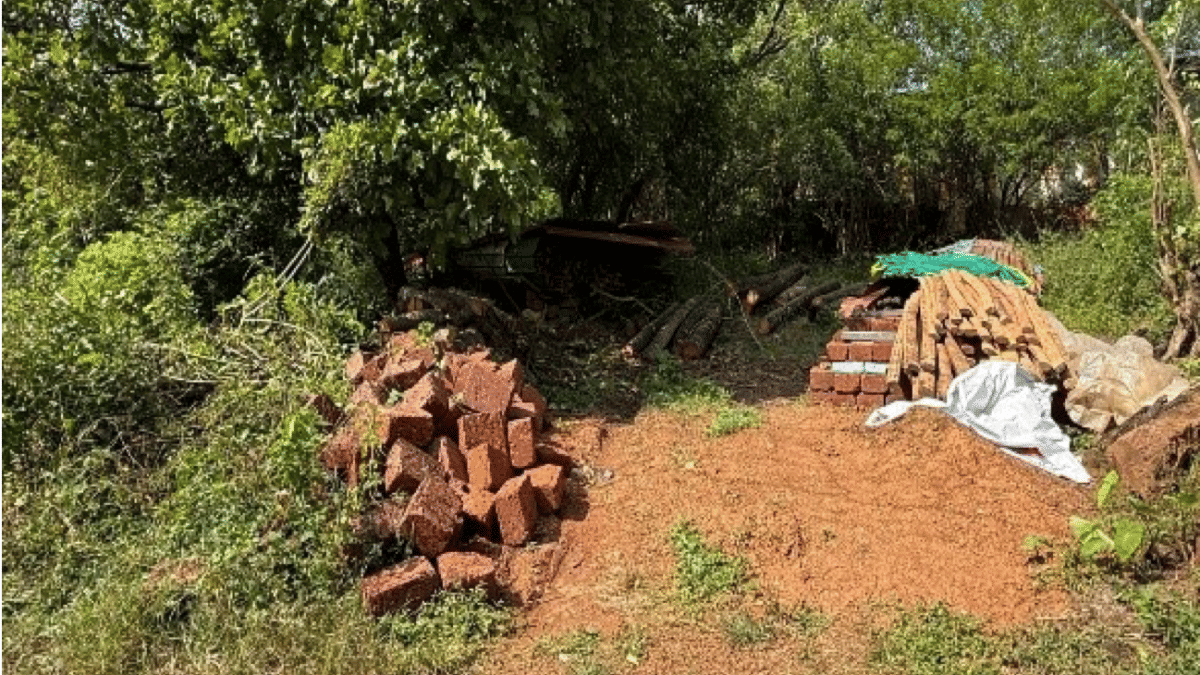
Panaji: In early 2022, a neighbour alerted Ashley Monteiro of some suspicious activity going on in his ancestral plot in North Goa’s Badem village. Co-owned by his father and three other family members, the land was being cleared of vegetation, and trees were being felled for construction.
Ashley (50), had returned from his job in the Middle East due to the pandemic, and had stayed back to care for his ageing parents. He rushed to the spot, located a few kilometres from his residence in Anjuna village. That was when he realised he had been targeted by a land-grab syndicate.
Several others in Badem, Anjuna and Assagao—all three villages within the Bardez block in North Goa district—have lost their land to such syndicates, which have become so audacious that they don’t even spare government plots.
There had been so many complaints about such land-grabbing incidents in the state that when the BJP came back to power in March 2022, Chief Minister Pramod Sawant ordered the formation of a Special Investigation Team (SIT) to probe such cases.
The SIT has lodged 51 FIRs so far, charged more than 100 people, and submitted 15 charge sheets. The government also set up a single-member judicial committee to assess FIRs lodged by victims and recommend solutions.
The Enforcement Directorate (ED) stepped in too, identifying more than 130 properties that were allegedly fraudulently sold and purchased through these land-grabbing syndicates. It has so far attached properties worth more than Rs 1,500 crore.
These syndicates, as Ashley later realised, target plots whose owners had left their native places for jobs or had migrated to foreign countries, and rarely came to see what was happening with their ancestral properties back home.
To Ashley and his father’s dismay, his plot in Badem had been sold to someone without them even knowing. The seller was a person named Royson Rodrigues, who carried out the transaction allegedly based on a forged Portuguese-era succession deed, purportedly signed by Ashley’s great-grandfather.
Ashley sought help from lawyer Christiana Dias and her team, and they began digging.
“They (Royson Rodrigues) had submitted a fabricated succession deed and followed it up with several fake sale deeds dating back to the Portuguese era. I was born and brought up in Mumbai and was not versed in the legacy documents. But with the help of lawyers, I understood the magnitude of the fraud,” Ashley told ThePrint.
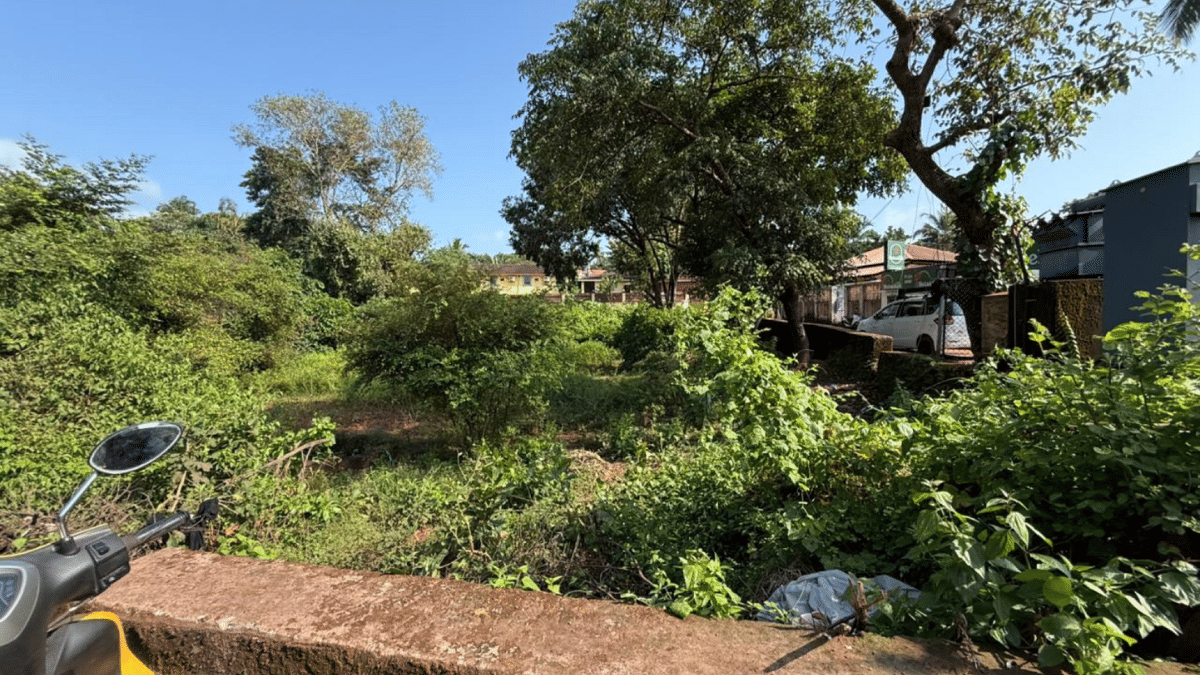
Probes into such cases gained impetus after the ED stepped in, he said. “Although the procedure of getting the land back appears to be tiresome, we are hopeful that it has been secured and is only a matter of time before we, the rightful owners, get our property back,” Ashley further said.
But even if Ashley manages to get his land back, he will live with a regret—his father will not be able to see it. He was 87 when he died of age-related ailments last year.
Special Public Prosecutor Siddharth Samant said a large number of people from Goa, some of them with similar sounding names, have moved out in search of better economic opportunities.
“The organised (land-grabbing) syndicates first identified such properties, either left unattended or unused for decades, and then carried out large-scale forgeries to obtain them illegally,” he told ThePrint. “After proceedings, the land plots attached by the ED would be returned to the rightful owners.”
Taking the Comunidade for a ride
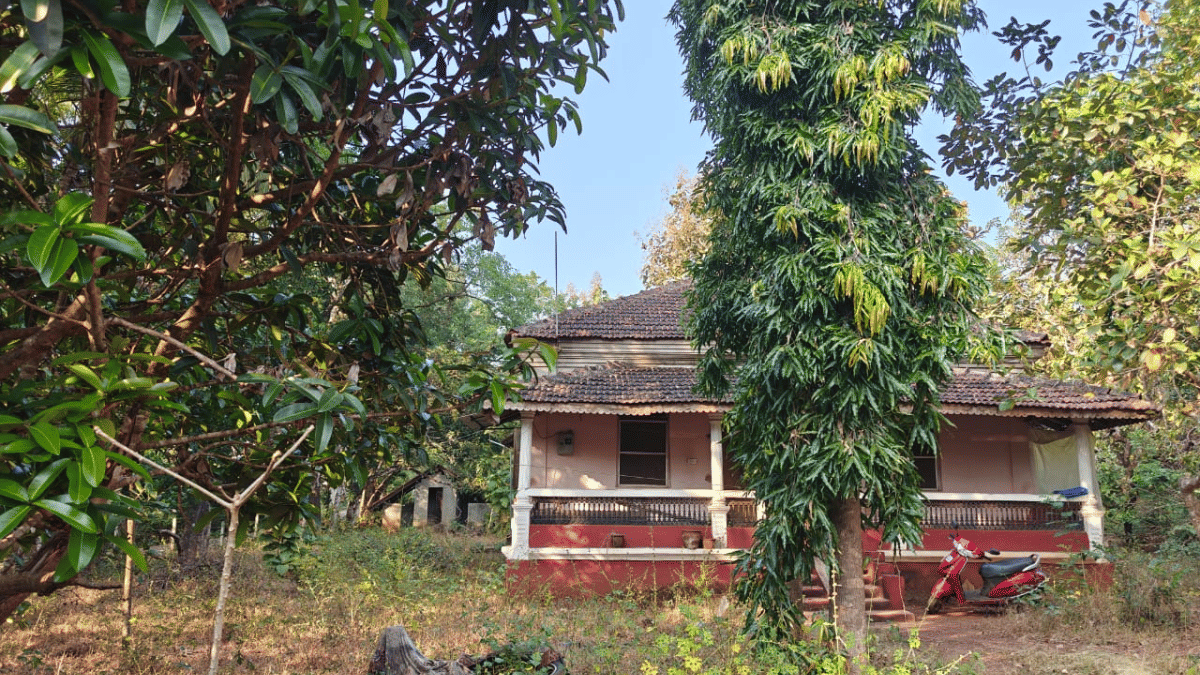
In Goa, a majority of village land has historically been owned by what is called the Comunidade (Portuguese word for community). Nelson Fernandes, attorney of the Comunidade of Assagao, said it is a system of village-level landowner associations that owns the land and allots to people based on need and fixed criteria, governed by the Code of Comunidades.
Comunidades have government-appointed clerks known as Escrivao, who facilitate the communication between the government and the Comunidades.
Sitting in the office of the Comunidade of Assagao, Fernandes got visibly angry when asked about the genesis of the land-grabbing case. He said he has been in the office for around six years and understands what actually happens.
“When I joined here in 2019,” he told ThePrint, giving an example of how somebody tried land-grabbing within his jurisdiction, “I got a notice from the deputy commissioner’s office, after one Sudesh Parsekar applied for the partition of a plot owned by the Comunidade.”
“It was the first time I got to know that some forgeries had taken place and that attempts were made to grab the land,” he further explained.
Sudesh cited papers to claim that his father Madhu Parsekar was the rightful owner of a plot measuring 1 lakh square metres out of the overall 2.22 lakh square metres owned by the Comunidade, and it should be transferred in his name.
Fernandes said Sudesh’s entire claim and documents were bogus, and he was doing this as part of a conspiracy hatched by one Shivshankar Mayekar.
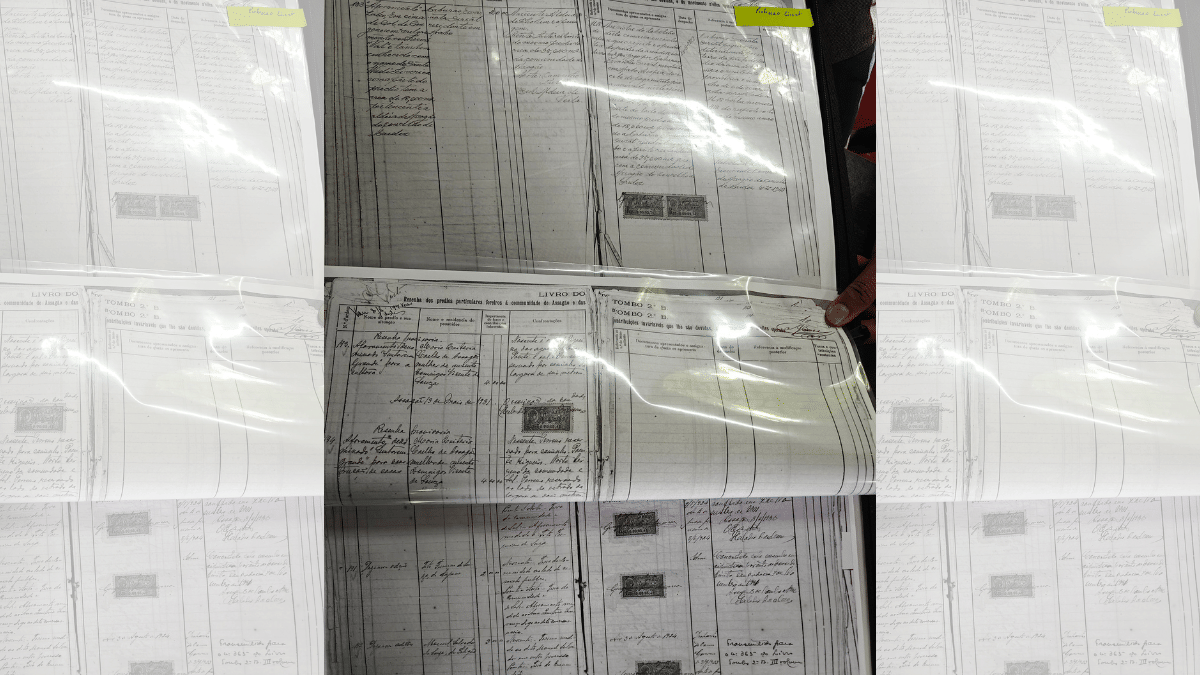
“They claimed that the Comunidade had allotted 1 lakh square metres to one Caitaon, but that is nowhere featured in the Tombo 2 book, which is the archival book maintained by the Portuguese. They were very disciplined and comprehensive in their land dealings, and they recorded in writing any allotment, the period, and the rent at which it was allotted,” he added, pointing to the pages of the Tombo 2 book.
The Enforcement Directorate concurred with Fernandes’ assessment that Mayekar is the mastermind of this entire land-grabbing scheme, targeting plots owned by Comunidades.
Primarily a proprietor of the real estate firm Shivani Developers, Mayekar has been accused of leading a land-grabbing syndicate that illegally acquired approximately 30 plots in Assagao and Anjuna villages.
The Enforcement Directorate arrested Mayekar on 1 October. Sources familiar with the case and his track record suggest he has connections with ruling party MLAs and was a special invitee to the BJP’s Goa state executive.
ThePrint has reached Goa BJP chief spokesperson Krishna Salkar through calls and messages for comment about Mayekar’s alleged association with the party. The report will be updated if and when he responds.
Fernandes said that according to calculations by government officials and attorneys for the Comunidades, the average price of the plot ranges between Rs 80,000 and Rs 1 lakh per square metres.
The ED has alleged that two Comunidade plots, measuring 2.22 lakh square metres and 2 lakh square metres in Assagao and Anjuna, respectively, were allegedly grabbed by Mayekar through his frontmen—Sudesh Parsekar and Yeshwant Sawant.
He had hired another frontman, Sanjay Sirsat, for the purpose, the agency said.
Sudesh is a member of the Anjuna panchayat, while Sawant runs a metal shop in the Bardze taluka, which includes both Anjuna and Assagao villages. Sirsat also runs a small business in the area.
While being interrogated by the ED, Sudesh and Sawant told similar stories about how they chanced upon the ownership documents—they obtained the papers relating to the specific land plots from a box at their respective homes—suggesting they were tutored to say so by the mastermind.
The plot in Assagao was transferred to Sudesh Parsekar based on documents purportedly establishing that the village Comunidade had allotted the plot to Caitano Inacio E Souza, who later sold it to his father Madhu Parsekar.
However, Caitano Inacio E Souza turned out to be a “fictitious entity”, according to chargesheets filed by both the Goa SIT and the ED. They have concluded it was purportedly created solely on paper to facilitate the fraudulent transfer of land.
The probe so far has found that Sudesh allegedly sought to get the property transferred to his name based on a series of Portuguese-era documents, including an “aforamento” (certificate of allotment) issued by the Comunidade in January 1949 to Caitano, as well as a “certidao” (certificate confirming the allotment).
Additionally, Parsekar submitted a Cessao do Aframento (letter of approval) from the then Governor General of Goa, dated 14 November 1949, and an Auto de Entrega de Posse Definitiva (letter of final possession), dated 28 November 1949.
Based on these documents, Sudesh Parsekar claimed that Caitano executed a sale deed for a portion of the land, measuring 2.22 lakh square metres, with his father Madhu Parsekar on 9 November 1950. Additionally, Sudesh Parsekar also claimed that he obtained a Power of Attorney for the entire piece of land in 2007, through which he was appointed an authorised attorney for Caitano.
In its chargesheet, the Goa SIT alleges that the entire series of Portuguese-era documents was fabricated and that none of them was found in the government office, as is the case with all such documents.
“Organised (land-grab) syndicates first identified properties either left unattended or unused for decades, and then carried out large-scale forgeries to obtain them,” says Special Public Prosecutor Siddharth Samant.
The ED probe also found similar details—Sudesh Parsekar claimed that the land was first allotted to one Caitano Inacio E Souza, who later sold it to his father Madhu Parsekar.
However, both the SIT and the ED found that Caitano was not a real person but a “fictitious entity” created by Mayekar and Sudesh to serve as a base for usurping Comunidade land for further sales. The agency made the allegations in its prosecution complaint too.
What made Sudesh’s case even more questionable was that the sale deed purportedly executed in 1950 showed that his father was an adult. In contrast, he himself stated that his father was born around 1935-40.
“As stated by Mr. Sudesh Parsekar, his father was born sometime between 1935-1940, so it is not possible for his father to have been of major age at the time of execution of the said sale deed,” the ED documented in the prosecution complaint filed last month.
Sudesh has also been accused of employing similar fraudulent methods to acquire approximately 32,000 square metres of land belonging to the Comunidade of Anjuna in the neighbouring village. Those transactions occurred around 1952, according to documents submitted by Sudesh during the proceedings.
Mayekar’s counsel Yadnyesh Kotkar has moved a bail plea, in which he said his client is a prominent member of society, and his arrest was “illegal, unwarranted and unconstitutional”.
The other henchmen
Sawant also claimed that he obtained the documents related to the Anjuna land plot from a box at his home and handed them over to Mayekar, who thereafter took control of the proceedings.
He also allegedly submitted forged documents dating back to 1952 to stake a claim on a plot that originally belonged to the Comunidade of Anjuna. He later sold the parcel to Mayekar in 2012.
However, there was a discrepancy in the documents, as the name of Sawant’s father was “Mrityunjay Esvonto Saunto” rather than “Mrityunjay Damodar Sawant”. The ED said that Sawant’s grandfather, through whom he established family lineage and claimed ownership, was Damodar Sawant.
The ED found a similar gap in the age of Sanjay Sirsat’s father when it reviewed documents relating to an 18,660-square-metre land parcel owned by Mayekar. The land parcel, located metres away from the Assagao Comunidade office, was transferred in 2012 to Mayekar and his wife by Sanjay Sirsat.
Sirsat also admitted that Mayekar arranged all the documents and split the land into two portions: 14,836 square metres and 3,824 square metres.
The smaller portion has been developed by Mayekar into flats and villas, with the assistance of Girish Ragha of the Goa-based Ashray Real Estate Developers.
Through these projects, Mayekar made a profit of Rs 8 crore, while Ashray Real Estate Developers pocketed Rs 12.3 crore from the sale of these properties, according to ED’s prosecution complaint.
ThePrint reached Ashray Developers with queries via email, but there was no response. This report will be updated if and when a response is received.
Verification of government records by the ED showed that the basis of the 2012 sale deed was a gift deed under which Sirsat’s father Visvanta (Vishwanath) Baburao Sirsat was granted ownership of the land by his parents in July 1951.
Assagao Comunidade attorney Fernandes said the accused allegedly compromised the Escrivao (clerk) and tampered with the pages of the old Tombo 2 B book to claim allotment by the Comunidade.
When the agency raided Sirsat’s premises, it recovered an electoral identification card of his father, Vishwanath Sirsat, showing that he was 55 years old as of 1 January 1995.
“Perusal of the English translation and contents of the said Sale Deed dated 16.07.1951 shows that the document recites that all parties to the transaction were of major age. However, in light of the aforementioned documentary evidence, particularly the Electoral Card indicating that Mr. Vishwanath Sirsat was born around 1940, it is impossible for him to have been a major in 1951, as he would have been approximately 11 years old at that time,” the agency said in the prosecution complaint.
“Therefore, it is conclusively established that the said Sale Deed dated 16.07.1951 is forged and fabricated, as Mr. Vishwanath Sirsat could not have been a party to any valid sale transaction at that age.”
“When I joined here in 2019, I got notice from dC office, after one Sudesh Parsekar applied for partition of a plot owned by Comunidade. It was the first time I got to know some forgeries had taken place and that attempts were made to grab the land,” says Assgao Comunidade attorney.
Additionally, the agency also submitted that the attorneys for both Comunidades at Assagao and Anjuna, Fernandes and Sebastian D’Souza, submitted in their statements that Article 416 of The Code of Comunidades, 1933 mandates that the administrator not allot more than 3 hectares of land for cultivation, and no more than 1000 square meters for house construction, unless specific building plans are submitted.
Moreover, none of those Portuguese-era documents was found in the office of the Administrator of Comunidades, unlike all legal allotments made by Comunidades.
“Portuguese-era documents were very detail-oriented. Every transaction, related to allotment and possession of land, was duly marked in the Tombo 2 B book that contains all details,” Assagao Comunidade attorney Fernandes further said.
Fake ancestors, fictitious brother
Settled with her family in the Khorlim neighbourhood in North Goa, Jennifer Carasco was alerted by her neighbour in early 2021 that a compound in Anjuna village she co-owned with her brother was being cleaned up. Her brother, Bosco Lobo, lives in Mumbai.
When she visited the compound in March 2021, she was shocked. A notice was pasted at the compound from a bank stating it was purchasing the property from the “owner, Shaikh Salim”.
When the form I and XIV—that show details of land such as owner, size of the plot and history of ownership transfer—also showed the owner of the land as Shaikh Salim, she filed a Right to Information (RTI) plea to check the history of ownership transfer.
What it revealed was even more shocking—the land was sold through a succession deed in the name of one Malvin George Lobo. Jennifer also obtained a copy of the sale deed executed by Malvin, who claimed to be the only child of George Lobo and Philomena Lobo, and used a succession deed to sell the land.
The couple had two children, and none was named Malvin George Lobo. They were Jennifer and Bosco Lobo.
Malvin George Lobo submitted his birth certificate, purportedly issued by the local hospital, along with the death certificates of the Lobo couple, to execute the succession deed. These documents successfully established, or so it appeared, that Malvin was born at North Goa’s Mapusa hospital, and that Lobo couple breathed their last in later years.
The documents submitted in the succession deed claimed that George died on 15 January 2006 and Philomena on 27 March 2008.
According to Jennifer though, her parents died in Mumbai, as evidenced by the death and burial certificates issued in Mumbai. The dates of their deaths were also different: George passed away on 5 August 2003, and his wife on 9 June 2016, according to Jennifer.
The Goa SIT booked Malvin Lobo and Salim, who had purchased it from Malvin.
As alleged by Jennifer in her police complaint, a probe by the ED has also confirmed that Malvin also turned out to be a fictitious entity, formed only to establish a false lineage to grab land measuring 1,950 square metres.
While the SIT is yet to file a chargesheet in the case, the ED has arrested local businessman Mohammed Suhail, claiming he is the mastermind of the entire plot.
The modus operandi was not limited to creating non-existent entities, forging documents, and using them for transactions.
An investigation was carried also into the ownership transfer of another land parcel, originally owned by Antonio Savio D Costa, who is from the family of couple Antonio Joan Francisco D’Souza and Ana Zebelina Antonio.
This probe led the agency to identify an additional five land parcels acquired by Suhail and Rohan Harmalkar, both of whom worked together.
In this module, the agency found, the duo used a frontman named Alcantro D’Souza and his family members to claim lineage with the Antonio couple. As part of the plan, Alcantro claimed he was a great-grandson of Antonio Joan Francisco D’souza.
During the inventory proceedings before the civil court in Bicholim, Alcantro claimed that both the couple had died by 1941, leaving neither will nor a documented successor. In the absence of any such announcement, he told the court, he and his family members are the natural successors for the land parcels.
Through the modus operandi, Alcantro won ownership rights to at least six parcels through successful inventory proceedings before the Bicholim court.
However, as the case progressed and the agency questioned him, Alcantro revealed that neither he nor his sister was connected to the Antonio Joan Francisco D’Souza’s family.
Instead, he claimed to have been tutored on the plan by Mohammed Suhail and Rohan Harmalkar. He also alleged the two took their papers to make backdated papers to manufacturer lineage.
He told the ED that in 2018, Suhail introduced him to Harmalkar and offered him to sell some plots in Anjuna by establishing ownership in his and his family members’ name before selling it to buyers and sharing a portion of profits with them.
Harmarlkar claimed the allegations and charges against him were made to tarnish his image because he has contested elections in the past, and wants to contest future polls as well.
Having been denied a ticket by the BJP in the 2022 assembly elections, Harmalkar unsuccessfully contested from the Cumbaruja constituency as an Independent. He joined the Maharashtrawadi Gomantak Party (MGP) in 2024.
In his fresh bail plea, rejected by a special PMLA court earlier this month, Harmarlkar said he was also preparing to fight the Zila Panchayat elections. These polls took place on 21 December, and he did not contest.
ThePrint reached his lawyer Vijay Toraskar through calls and email, but there was no response. The report will be updated if and when he responds.
In his statement before the ED, Suhail allegedly confessed having tampered with Portuguese-era documents of 179 plots and acquiring them through these methods.
In this module, the agency claimed, Suhail and his accomplices tampered with specific pages of the Archives Department’s books by destroying the original documents and replacing them with fabricated copies. The SIT has also arrested some government officials in this connection.
The original pages were damaged, and the fabricated ones strategically inserted to create a false lineage to claim ownership of land parcels.
In specific cases, they used this method to prove that the ancestors of individuals, including Alcantro D’souza, Caetano Fernandes, Sandric Fernandes and Royson Rodrigues were the rightful owners of the properties in question.
They then sold the plots to Suhail and Harmarlkar or directly to the other beneficiaries.
Suhail’s lawyer, advocate Ritesh Rawal, alleged that he was being scapegoated to protect high-ranking political figures in the coastal state and that Suhail lacked the resources to commit all the forgeries attributed to him.
“He did not have the money and people to submit bail bonds and sureties after getting bail in SIT’s case, and ED wants us to believe he was the mastermind of the plot,” Rawal told ThePrint at his Mapusa office, declining to name anyone.
Out of sight, out of govt records
Mell Roy has been working in Dubai as an accountant since 1994 and has settled there with his family. One Sunday, he was preparing for what he expected to be a typical, hot, and sunny day in Dubai, when his phone suddenly chimed.
“I got a WhatsApp message from one Cristiana Dias,” Roy told ThePrint over the phone from Dubai, “who informed me that my ancestral land was one of the plots that came into the grasp of a land-grabbing syndicate.”
“I am representing several such victims. Do you suggest that I look after your case, too?” Roy remembers Dias as asking him, recalling the day he was informed about the plot.
Roy said Dias had seen the sale notice in one of the state’s daily newspapers, which alerted the public to the land plot in question.
Dias had been representing the victims of the land-grabbing cases before the Judicial Inquiry committee constituted by the Goa government in 2022.
Roy inherited the plot by succession after both his parents died. His mother, Elizabeth, had died in November 1988, but the land was transferred in the name of one Sandric Fernandes, based on a sale deed ostensibly executed in November 1996.
In the complaint to the police, he also accused the then Mamlatdar (revenue officer) at the Bardez block, Rahul Desai, of overlooking the established procedure, such as to inform the party whose name has to be deleted from the Form I and Form XIV of the Goa, which store details of the land ownership and mutations.
Desai was arrested in 2022 by the Goa SIT on charges of conspiring with the land grabbers.
Similarly, Calangute-resident Hilario Fernandes was alerted by his neighbour, Debra Mascarenhas, that syndicates run by Mohammed Suhail had grabbed his plots.
“I had seen the plots’ survey numbers in the local newspaper, followed by verification in the Forms I and XIV and approached the police for an FIR,” Mascarenhas told ThePrint.
Hilario said that when he reviewed forms I and XIV for the land plot in question, he was shocked to find that the land’s ownership had changed. “I came back and filed a complaint in the case, and it was later transferred to the Crime Branch. A parallel civil suit is also ongoing with the final owner of the land plot,” he told ThePrint.
Hilario Fernandes’ two land plots, measuring 2,775 square metres and 1,175 square metres, are valued at over Rs 20 crore and were allegedly fraudulently transferred.
Hilario claimed the land grabbers took advantage of the COVID-19 pandemic, bribed government officials, and tampered with Portuguese-era documents related to land plots owned by people who were not residing in Goa.
“For the properties grabbed in Calangute, my grandfather was fraudulently shown as the rightful owner and the succession was drawn from the lineage,” he told ThePrint, adding that he is assured of getting his properties back as the ED has attached them and prevented them from being transacted.
(Edited by Ajeet Tiwari)