





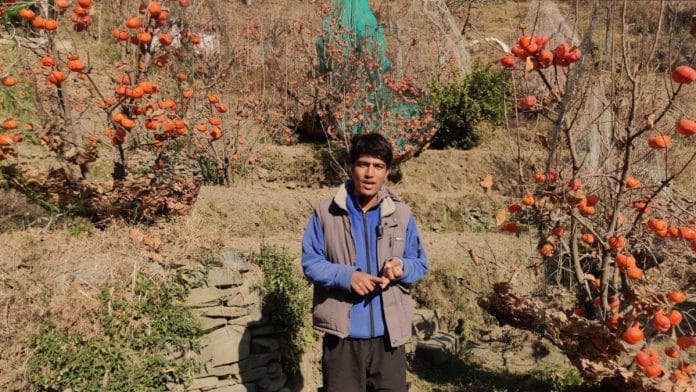



Kullu: The storied, juicy Himachali apple, the pride of Kullu’s orchards now has unexpected competition. Not from Kashmir or imported varieties, but from an unlikely contender that Himachal farmers are increasingly ditching apples for: persimmon.
In one such orchard in Kullu, farmer Sachin Thakur’s family once grew over a thousand apple trees. Today, only about 200-300 remain. Their 7.5-8.75 hectare orchard is now largely taken over by nearly 1,000 persimmon plants. Twenty years ago, Thakur’s father travelled to Chandigarh for daily-wage jobs to make ends meet. Now, just a three-month harvest window from October to early January keeps the family flush with funds.
“Our seasonal earnings are on par with JEE packages,” Thakur told ThePrint, referring to the lavish first salaries that IIT graduates often command.
The persimmon revolution in Himachal is about a decade old. It’s mostly a Kullu phenomenon, but has slowly started to spread to neighbouring districts such as Mandi. The harvest lasts just three months but demand stretches far and wide, with the top markets being Kerala, Tamil Nadu, Karnataka, Maharashtra, and Kolkata.
The new exotic fruit that has captivated urban India and been endorsed by Katrina Kaif and Bhagyashree is all the rage these days. With an impressive CV of health benefits from immunity and digestion, to potentially lowering bad cholesterol, blood pressure, and inflammation, persimmon is transforming huge tracts of Himachal Pradesh farming, now covering over 3,000 hectares of land.
Persimmon was introduced as a diversification crop when apples began showing stress due to temperature changes. It has a shorter harvest cycle, better price realisation, and growing demand in domestic markets
– Raj Kumar, deputy director, Himachal horticulture department
Once rejected as “that weird tomato-looking thing” and mispronounced as “Simran” in Maharashtra, the sweet fruit has finally got its moment. The uninitiated also call it ‘Ramphal’, but the Himachal farmers frown upon that name. They would rather you call it the ‘Japanese fruit’. And the low-maintenance persimmon has become a profitable alternative to apples, plums, pears and pomegranates. The biggest advantage for farmers is that persimmon is more resistant to a warming climate than apples. It thrives in lower and mid-altitude regions, where apples have begun to struggle.
Production has more than doubled over the past decade. In 2013-14, persimmon was cultivated over 403 hectares, yielding 519 metric tonnes (MT). By 2022-23, the area under cultivation rose to 624 hectares, with production reaching 1,201 MT. This year, persimmon production in the state is estimated to have touched 1,400 MT. Kullu district accounts for nearly 90 per cent of the state’s output.
“I currently have 300 boxes worth persimmon in my orchard, which roughly means, even now towards the end of the season, I have produce worth Rs 4-5 lakh with me,” Thakur said.
Also Read: Get ready for India’s first big fat creamy avocado crop in December. No longer ‘foreign’
Paradise of persimmon millionaires
The new fruit is giving rise to freshly minted millionaires.
Unlike other parts of Kullu, Lug Valley doesn’t have a regular signboard. Instead, a wooden gate announces it as a ‘Persimmon Paradise’. The title is well earned. The 30-minute drive from the gate to Churla, the valley’s persimmon hub, is lined with orchards draped in white nets, with scenic mountain views in the background.
Once struggling to survive with little access to water, farmers here turned to persimmons out of compulsion. Many have since become rupee millionaires. They live in newly built multi-storey brick houses, each with 2-3 parked outside, send their children to colleges in Delhi and Chandigarh, and earn over Rs 20 lakh every winter, even in their poorest persimmon seasons.
We took 100 kg to Chennai ten years ago. It was difficult to explain the importance of this fruit… Earlier the seasonal turnover used to be in lakhs, and now it’s in crores
-Prashant Kumar, fruit distributor, MSI Fragrance Fresh Fruit Pvt Ltd
“This year wasn’t great. Our sales witnessed a drop and I did business of nearly Rs 60 lakh. Last year, we did over Rs 70 lakh,” said 38-year-old persimmon farmer Gopal Krishan. Even so, he noted, the earnings were far higher than what apples would have fetched. A bad year with persimmons is still more profitable than a good one with apples.
Krishan has 4 hectares of land, on which he earlier grew 700-800 apple trees. Today, it houses nearly 1,300 persimmon plants. Of the Rs 60 lakh he earned this season, he said, only Rs 4-5 lakh will go into preparing for the next harvest.
“Rest is all profit,” he said. “We could have easily done more business but because of rain, the harvest happened before its set time. So a lot of crop was wasted.”

Churla’s reputation as the ‘persimmon village’ has its roots in a serious water shortage. Thakur said that four to five villages lie uphill from Churla, and the mountains were their primary water source. Despite being just 5 km from Kullu Churla had no reliable water supply and residents depended on tankers.
With little water for farming, villagers migrated to Baddi and Chandigarh for work. Vegetables failed, apple orchards couldn’t cope with rising temperatures, and some farmers were cheated with poor-quality rootstocks. As traditional livelihoods collapsed, persimmon, then a largely unfamiliar crop in the region, was introduced as a last resort.
Native to East Asia and widely cultivated in China, the world’s largest producer of persimmons, the fruit was suggested to Himachal farmers by the state horticulture department as an alternative crop. It required less water and offered quicker returns.
“Persimmon was introduced as a diversification crop when apples began showing stress due to temperature changes,” said Raj Kumar, deputy director of the state horticulture department. “It has a shorter harvest cycle, better price realisation, and growing demand in domestic markets, which made it a viable option for farmers looking to move away from apples.”
Thakur summed up farmers’ condition in those years with a Hindi proverb: “Ab marta kya na karta”— do or die.
The timing turned out to be perfect. An urban India was ready for a new wonder fruit. Just as the avocado rush was pushed by the pandemic, the persimmon rise was fuelled by travel. As Indians visited countries such as Italy, China, and Korea, they encountered persimmon, making the fruit recognisable when it appeared in Indian markets. Early demand was also driven by expatriates, who formed the fruit’s early consumer base.
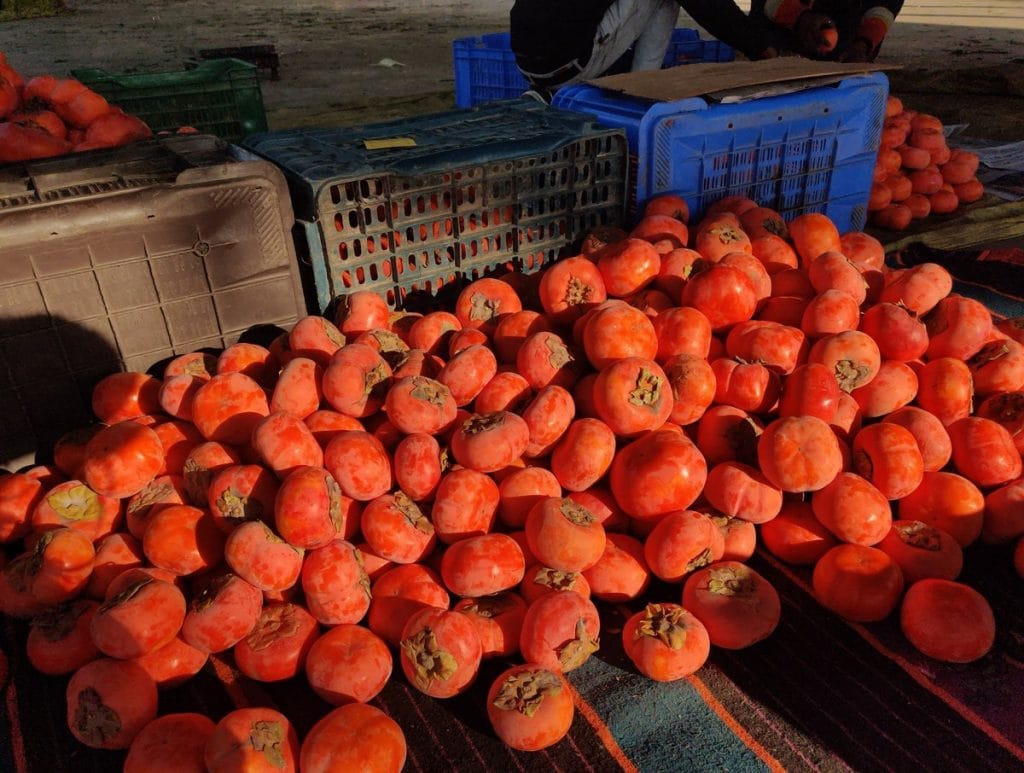
Back then, persimmons sold for just Rs 20 per kg. Thakur’s grandfather, who has worked the farm for over 25 years, was among the first to take the fruit from Kullu to mandis in Punjab, Chandigarh, and Delhi. Today, the same fruit fetches Rs 250-300 per kg.
“The condition of apples now is exactly what persimmons were back then,” Thakur added. “How the tables have turned.”
Haute cuisine with health benefits
At Omo Cafe in Gurugram, culinary director Chetna Chopra has been working with persimmon through drinking ferments, where its natural sugars and softness lend themselves to slow fermentation. Paired with gondhraj lime, the ferment develops gentle acidity and lift, balancing the fruit’s honeyed depth.
“Over time, the result almost tastes like a natural persimmon wine — rounded, aromatic, and gently complex, without feeling heavy or sweet,” said Chopra, who first sampled persimmon in Italy.
Indian farmers cultivate four popular varieties of persimmon: the crisp, non-astringent Fuyu; the jelly-like, sweet Hachiya; and the rarer Jiro and Saijo.
Ripe persimmons have a deep honey-like sweetness, a custard-like texture, and mellow notes of apricot. Chopra prefers the Fuyu, also known as the apple persimmon, “for its firm texture and balanced sweetness”.
Persimmon is no longer limited to being eaten fresh as an exotic breakfast fruit. It is finding a place on restaurant menus, with chefs experimenting with its flavour, texture, and versatility.
From salads and desserts to savoury dishes, the fruit is being used in multiple forms — blended into ice creams, turned into sauces, candied for desserts, or used as a garnish. This adaptability has helped persimmon move beyond orchards and into mainstream food culture.
“It’s a diverse fruit. It has a lot of sugar,” said chef Prateek Sadhu. At his Kasauli restaurant Naar, one dish features persimmons dried until they turn completely brown, a Japanese technique called hoshigaki. Sadhu said the colour comes from natural sugars caramelising, producing a toffee-like taste. He slices it and serves it with fish sauce ice cream.
“Sounds weird but it tasted like salted caramel,” Sadhu added.
One persimmon is richer in vitamin C than an apple, contains more fibre than a banana, and packs antioxidants comparable to berries, while being low in calories and high in fibre
-nutritionist Nida Fatima Hazari
Chopra’s first experiment with persimmon also involved drying it. At Omo, she has included the fruit in a hot sauce paired with Naga mirch, served with burgers and breads.
“The fruit’s natural sweetness softens the chilli’s heat, while charred onion and carrot add depth and roundness. It’s the contrast — heat against fruit, sweetness against smoke — that brings the sauce into balance. We want to start retailing this as the customer response has been phenomenal,” Chopra said.
The time is ripe for persimmon, Chopra said, as diners today are keener than ever on seasonality, unfamiliar produce, and natural sweetness.
“It’s also a fruit that feels approachable yet unfamiliar,” she explained. “It doesn’t demand explanation the way some ingredients do, but it still offers novelty.”
While chefs are experimenting with the fruit in inventive ways, families in metro cities are adding it to their daily fruit bowls, simply peeled and chopped. In Himachal, though, people just bite into them whole, like an apple.
Persimmon too has ‘keep the doctor away’ properties, given that it’s rich in dietary fibre, vitamins, antioxidants, and bioactive phytochemicals. Health experts say it’s low in fat and calories and supports cardiovascular health and blood sugar balance.
“One persimmon is richer in vitamin C than an apple, contains more fibre than a banana, and packs antioxidants comparable to berries, while being low in calories and high in fibre,” said nutritionist Nida Fatima Hazari. “Its powerful polyphenols and carotenoids provide strong antioxidant and anti-inflammatory effects, improving digestion, lipid profile, and metabolic function.”
Hazari recommends eating persimmons fully ripe, or using them in salads, smoothies, yoghurt, or dried as a snack.
“Better to avoid unripe fruit as its high tannin content can make it very astringent and hard to digest,” she added.
Who gets the credit?
As Krishan sat by the roadside with a group of fellow farmers, a comment from one of them about Himachal Pradesh’s horticulture department sparked uproarious laughter among the otherwise soft-spoken men.
“They have done nothing,” one farmer said bluntly. Another added: “There wasn’t even a proper road when persimmons were first planted here. How would they have reached us?”
One sore spot is the lack of processing facilities in the state. Krishan pointed out that in Churla alone, nearly 1,000 crates of persimmons go to waste each season just because they are overripe.
“When the fruit softens, it cannot be sold, but it could be used to make candies or other products,” he said. “No research, no effort has been made from their side to utilise this produce that doesn’t meet market standards.”
He added that the department lacks basic knowledge about the crop, whether it’s plantation methods and fertilisers or pest control.
“They take the credit today, but the reality is that farmers built this on their own,” he said. “The word ‘persimmon’ doesn’t even exist in their dictionary. They do nothing.”
Farmers claim it was wholesalers such as Prashant Kumar of MSI Fragrance Fresh Fruit Pvt Ltd who carried the fruit across the country, educating retailers and customers about its benefits along the way.
Kumar himself was unfamiliar with persimmons until one of his drivers in Pathankot told him that farmers in Kullu were growing a new fruit after the litchi harvest.
Curious, Kumar started with purchasing 10-15 tonnes per season. Today, his average order per season goes up to nearly 500 tonnes.
“We took 100 kg to Chennai ten years ago. It was difficult to explain the importance of this fruit. We knew that people would take time to get used to it. At that time only foreigners and people who stayed abroad and returned would recognise the fruit and buy it,” said Kumar. “Earlier the seasonal turnover used to be in lakhs, and now it’s in crores.”
Also Read: Gujarat rules North India’s coconut market. It’s edging out Kerala, Karnataka
Fall of the apple
Environmentalist Guman Singh owns half a hectare of land in Banjar, where he grows and studies a variety of crops, including cherries, plums, persimmons, pecans, lemons, and pears. His apple orchard, however, is located on much higher terrain.
“Because of rising temperatures, apples no longer survive below 6,000 feet,” Singh explained, pointing to the higher hill slopes. “That is the only place apples grow now.”
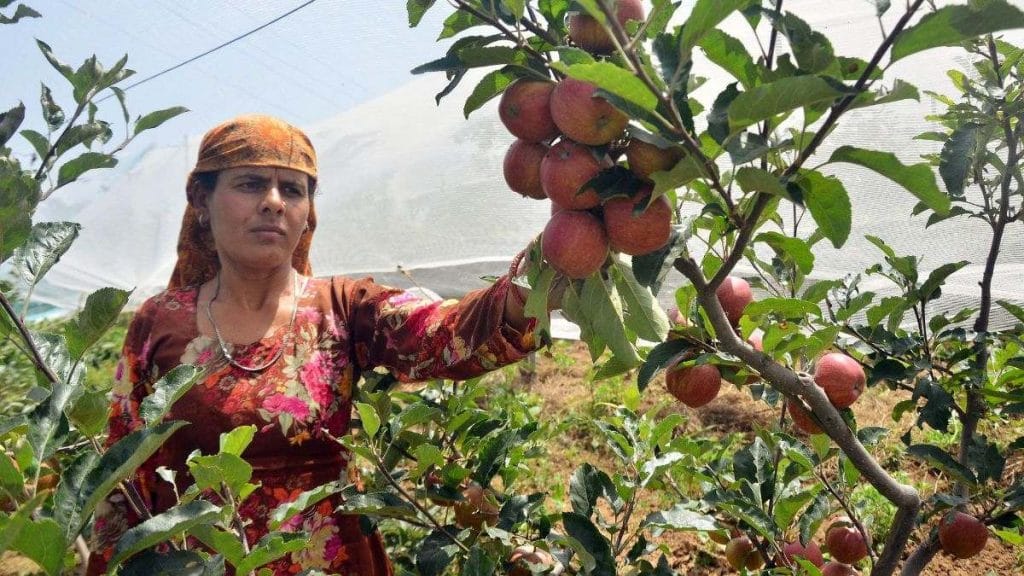
Apple orchards, once the backbone of Himachal’s horticulture, earlier thrived between 3,000 and 6,000 feet. Today, they are struggling in the lower regions. Rising maintenance costs and a growing risk of pests and disease have pushed farmers in lower altitudes to gradually move away from apple cultivation.
Many first tried growing plums, then pears and pomegranates. But over the past four to five years, persimmons have emerged as the dominant crop, particularly in Kullu.
“Across Kullu, Banjar, and Ani, around 3,000 hectares are now under persimmon cultivation,” Singh said.
Apple trees need regular medicines, fertilisers, multiple sprays, and constant pruning. With persimmons, you plant them, do some basic pruning, add fertiliser occasionally, and the rest they manage on their own
-Guman Singh, environmentalist and farmer
One of the reasons why persimmons have had staying power is that they’re low-maintenance compared to apples.
“Apple trees need regular medicines, fertilisers, multiple sprays, and constant pruning,” Singh said. “With persimmons, you plant them, do some basic pruning, add fertiliser occasionally, and the rest they manage on their own.”
Contractors now line up to lease persimmon orchards while apple growers struggle to attract even a single buyer, according to Thakur.
“By April, the leaves start appearing on the persimmon plants, and by May, contractors from across the country have already leased the orchards for the season,” he said.
Farm owners receive roughly Rs 150 per kg per plant. Each plant yields at least two crates, or about 40 kg, allowing farmers to earn a minimum of Rs 6,000 per plant per season. Contractors cover pruning and crop preparation, while protective nets are supplied at subsidised rates by the horticulture department, making it an exceptionally profitable deal for farmers.
“But when it comes to our apple orchards, we can’t find contractors at all…even today. We struggle to sell our produce,” Thakur added.
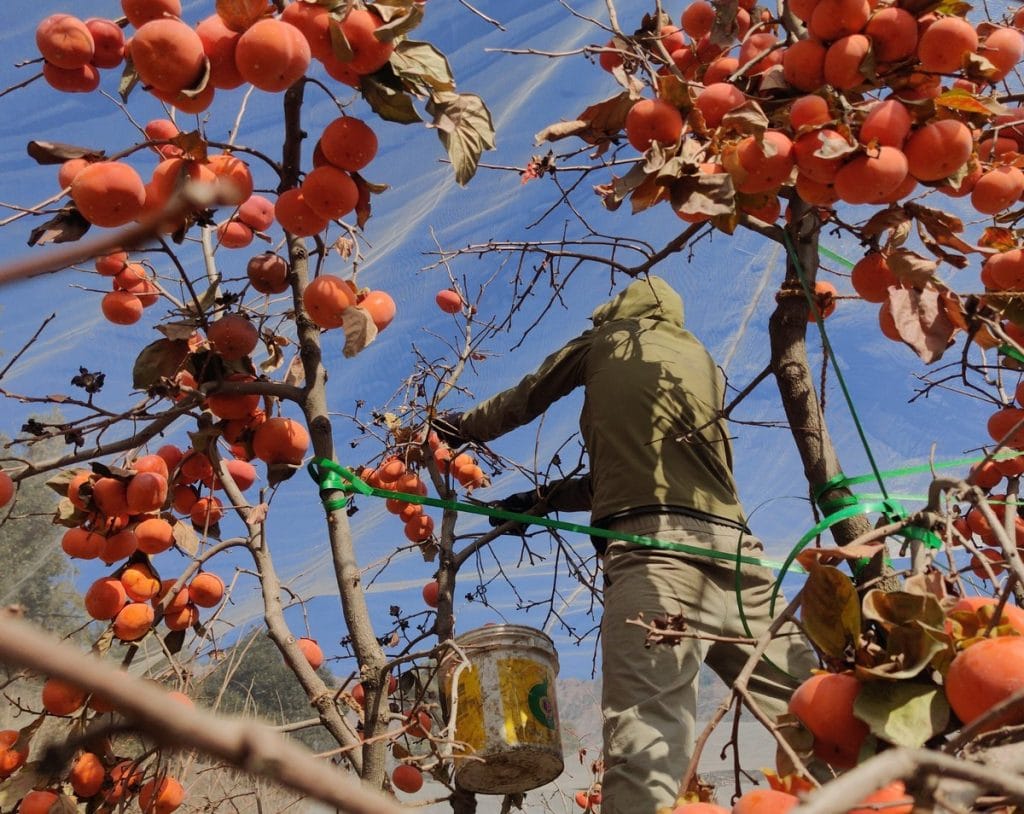
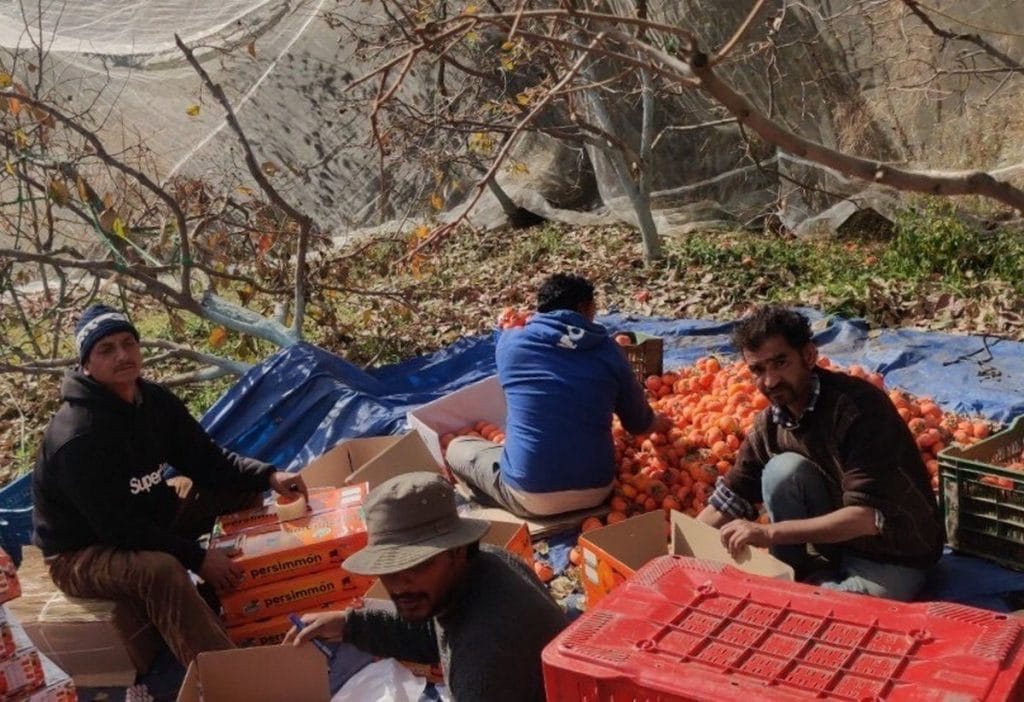
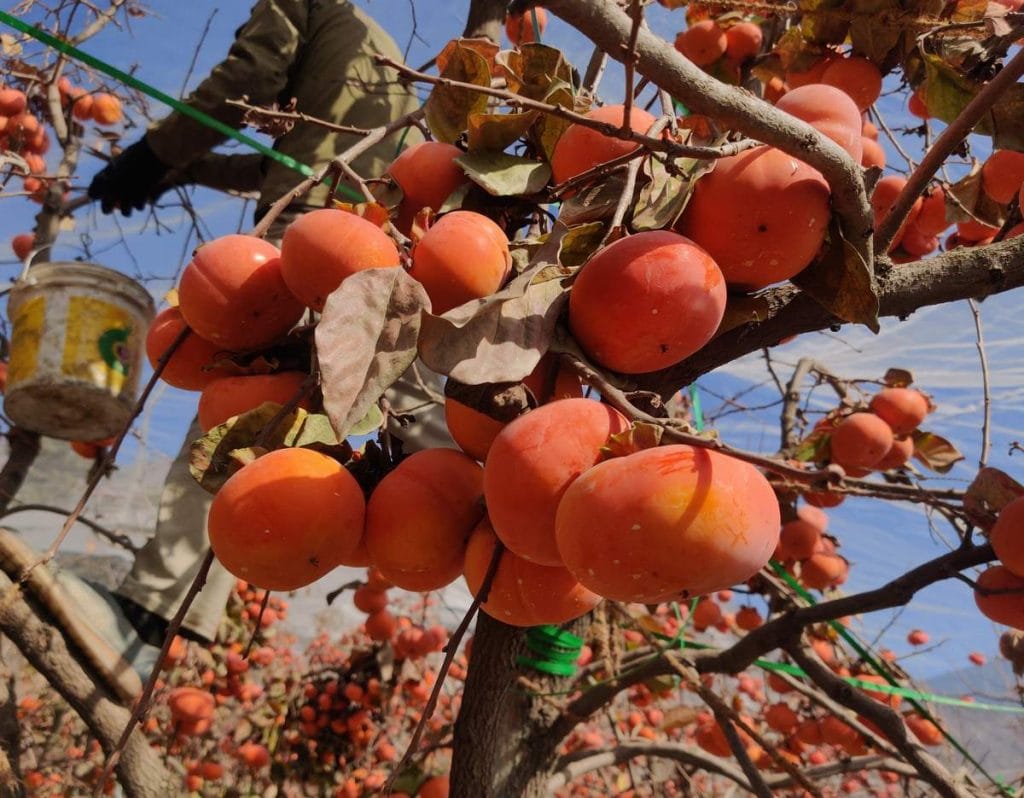
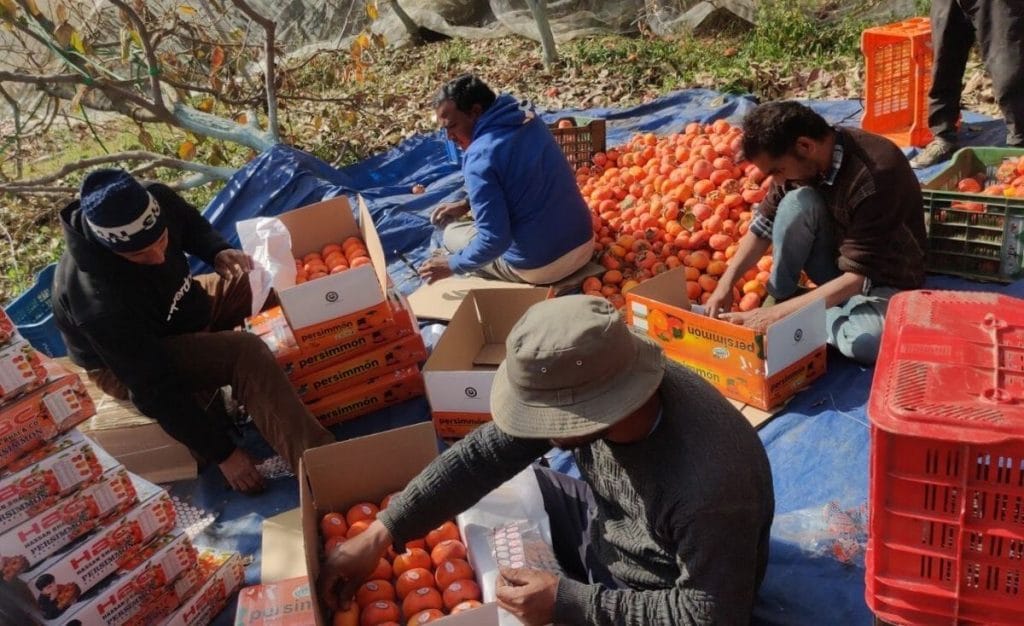
At Thakur’s persimmon orchard, the action never stops in harvest season. Workers climb trees to pluck fruit while others pack crates at lightning speed. The orchard hums with movement and chatter. Climb above 6,000 feet to the apple orchard and the scene changes. Harvest season is over. The trees stand still, untouched, with young apples hanging on the branches as if frozen in time.
(Edited by Asavari Singh)
I’ll note this case study down for anytime someone asks if, instead of ‘alternative development/modernity’ (or any of its fancy trade names), it is viable to talk of an ‘alternative TO development/modernity’.
Thanks for this write up. Living in Western Europe, I have eaten lots of persimonn. I think the farmers should also try markets beyond India.