








On Monday, the Punjab Cabinet cleared the ‘Punjab Govt Food Programme’ to provide wheat, dal, sugar, oil, turmeric, and salt to 40 lakh beneficiaries covered under the 2020 Pradhan Mantri Garib Kalyan Anna Yojana (PMGKAY), naming the move ‘Meri Rasoi’.
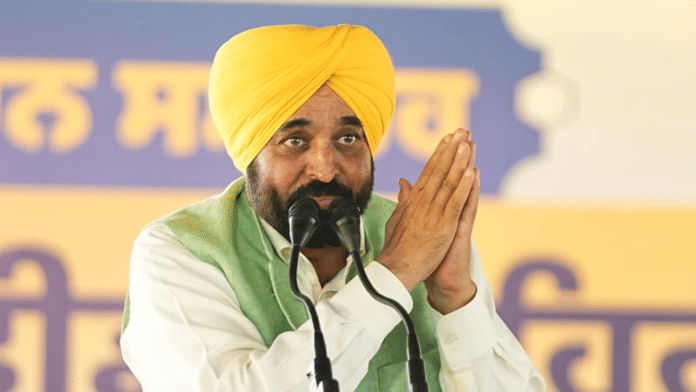
The chief minister told a press conference ahead of the Cabinet meeting that this “path-breaking initiative”, beginning in April, was aimed at targeting the poorest of the poor in Punjab.
Mann said that each Meri Rasoi kit will include two kg of urad dal, chana dal and sugar, one kg of iodised salt, 200 g of turmeric powder, and one litre of mustard oil.
These kits will be distributed quarterly—typically in April, June, October and December—and are intended to improve the nutritional intake of economically weaker families, especially children, who have been found to suffer from undernutrition.
“The Meri Rasoi scheme builds on existing wheat distribution under the PMGKAY by adding protein in the form of dal, cooking essentials and condiments, thereby broadening the food assistance package,” said a senior food and civil supplies department official.
The government has earmarked nearly Rs 1,000 crore for the programme’s rollout, with Markfed (Punjab State Cooperative Supply and Marketing Federation) as the nodal agency for kit preparation and the Department of Food and Civil Supplies responsible for distribution and quality control.
Apart from the annual bill of Rs 2,600 crore paid by the Government of India (GoI) for wheat being distributed quarterly under the PMGKAY initiative, the ‘Meri Rasoi’ scheme will cost the cash-strapped state government another Rs 1,000 crore, covering procurement, packaging and distribution.
The AAP government says this will be budgeted in the 2026-27 estimate with provisions for quality assurance and supply continuity.
Mann Government’s 'Meri Rasoi' is moving beyond basic ration to real household support.
Along with free wheat, 40 lakh families will also receive a nutritious food kit, so everyday kitchen needs are covered. The kit includes pulses, sugar, iodised salt, turmeric and mustard oil,… pic.twitter.com/3il05bUlz5
— AAP Punjab (@AAPPunjab) February 23, 2026
Over nearly two decades, the Punjab government’s Atta Dal scheme has evolved through multiple redesigns, eventually merging with national food-security entitlements. The atta component of the scheme has actually been wheat, while dal was distributed intermittently till 2017, after which it was completely stopped.
The financial burden of the scheme on the state government eased after it was merged with the Central government’s National Food Security Act in 2013, which provided subsidised grain to the poor. In 2020, it was decided to provide beneficiaries under the Act grain free of cost under the PMGKAY.
Thus, the scheme’s core aim of providing subsidised grain to the poor gradually evolved into giving grain free of cost.
‘Competitive populism is ruining Punjab’
Experts say that the Punjab government, with a debt burden of Rs 4.17 lakh crore, might not be able to reconcile its generous freebie promises with its constrained budget. If the government fails to execute the scheme in the year leading up to elections, it could prove more harmful than beneficial.
Ranjit Singh Ghumman of Amritsar’s Guru Nanak Dev University, a renowned financial expert on Punjab, told ThePrint that such populist measures were aimed towards electoral gains and led to no economic development of the state.
“Such measures point towards the lack of political will to tackle core issues like employment and rural infrastructure,” said Ghumman.
He added that if the expenditure on such schemes were diverted towards food processing by Markfed, it could lead to the rural educated youth getting employment. “Instead, Markfed has now been saddled with this work.”
Ghumman said that he was not against subsidies but against subsidies being given across the board.
“Subsidies should be targeted and graded according to the paying capacity of the beneficiary. The only things free that the government should be focusing on are quality education and health; instead, the focus is on giving free food and power even to those who don’t need it.”
He said that freebies were, in a way, a “bribe” to voters, especially when they were rolled out before polls. “This unfounded race of competitive political populism will never end once a benefit is given; it is almost impossible for any subsequent government to withdraw it.”
“It is also a part of a deeper design, a growth paradigm, a global model that is based on not generating employment, where the core message is that even if you do not do any work, we will not let you die,” said Ghumman.
Leading Punjab economist Sucha Singh Gill, who headed the economics department at Punjabi University in Patiala, told ThePrint that the fiscal situation of Punjab was “extremely grim” and announcements of freebies and doles were only worsening the situation.
“The latest announcement of the Punjab government has been inspired by the election results in Bihar, where the BJP won hands down largely due to freebies,” said Gill.
“The Punjab government is already hugely in debt and will have to take more loans to fulfill its populist promises. Almost 30 percent of Punjab’s entire budget is used to service loans. It is a debt trap that can only lead to social chaos. And we are already seeing the first signs of it with increasing violence stemming out of rampant unemployment.”
Gill added that the GoI had lost its moral authority to check states because it was itself so hugely in debt. “The Government of India needs to lead by example.” .
Pramod Kumar, who heads the Institute of Development and Communication in Chandigarh, said that the conversion of freebies into votes doesn’t necessarily have a direct connection.
“Factors like trust and ideology, apart from doles, have an equal role to play in order to have an electoral impact. It’s never one thing; it’s a bouquet of factors,” he said.
Also Read: Ink, gin & a ‘witch hunt’: Inside Mann govt’s synchronised blitz on Punjab Kesari
‘Govt should reclaim development agenda’
Renowned economist Lakhwinder Singh Gill, professor at the Thapar School of Liberal Arts and Sciences in Patiala, said that liberalisation had led to the privatisation of the development agenda, leaving the government with little stake in development activities.
“Since the state has no agenda to invest in economic activity and development, it creates a vacuum to showcase politically. And if political leaders have to win votes, they have to indulge in giving out freebies and doles since they do not have an alternative,” said Gill.
“The only solution is for the government to reclaim the development agenda and public policy. Otherwise, in order to remain in political power, the only way votes will be sought is by expanding the welfare system through doles.”
Naresh Singla, an associate professor at Central University of Punjab in Bathinda, told ThePrint that freebies are offered primarily for electoral gains rather than as part of long-term structural policy.
“Freebies offer instant relief by increasing disposable income of vulnerable sections. This also boosts local economic activities, particularly during economic slowdowns. Consequently, freebies act as social safety nets and support inclusive growth,” he said.
Singla added that quite often, excessive and poorly designed measures increase revenue expenditure, worsen fiscal deficits and public debts, and end up crowding out productive capital investments in the economy, which impedes long-term growth prospects.
“Competitive populism among political parties further erodes fiscal discipline. Freebies are crucial for economic resilience in the initial stages of development. But these should be gradually translated into productive capital investments to ensure fiscal sustainability and promote long-term development.”
He added that Punjab’s economy continues to face high revenue deficits, rising public debt, and shrinking capital expenditure.
“A shift from consumption-heavy populism to productivity-linked investment is the key determinant for restoring fiscal health while safeguarding social welfare. Boosting rural income through farm diversification to livestock and allied agricultural enterprises and rural industrialisation is vital for the state’s economy,” he said.
“Lastly, strengthening social governance and social compliance of the institutions is essential for a multiplier and long-term impact on the development of Punjab’s economy.”
Past experiments met with limited success
In the 2007 Atta-Dal scheme, almost 13.5 lakh Below Poverty Line (BPL) beneficiaries received heavily subsidised wheat and pulses. Wheat was provided at Rs 4 per kilogram and pulses at Rs 20 per kilogram every month, with an upper limit set at 25 kg per month.
By September 2009, Punjab’s coffers were struggling to meet the financial commitments of the scheme and dal distribution became intermittent.
The enactment of the NFSA in 2013 by the GoI entitled eligible citizens to subsidised food grains through the Targeted Public Distribution System (TPDS), mandating 5 kg of grain per person per month at subsidised rates to “priority households”. There is no upper cap for this scheme.
The income criteria for eligibility for the scheme have changed over the years and are set by the state governments.
Cardholders of the old atta dal scheme were included in the GoI scheme for the distribution of wheat, and the number of beneficiary families went up to over 36 lakh by the end of 2017. Dal continued to be distributed by the SAD-BJP government, though intermittently.
In 2017, when the Congress government came to power under Amarinder Singh, Punjab announced that the new atta dal scheme would continue, but only after biometric verification.
A government white paper on state finances that year said that to meet the cost of implementing the atta dal scheme, the SAD-BJP government arranged funds from the State Procuring Agencies (SPAs).
These agencies diverted funds from the credit cash limit secured from the GoI for the annual procurement of wheat and paddy. Unpaid liabilities of Rs 1,747 crore were still outstanding as on 31 March 2017, added the white paper.
The white paper further noted that from 2012 to 2017, dal had only been supplied for 16 months. The then Punjab government continued with the scheme funded by the GoI but discontinued the distribution of dal altogether.
In 2020, following the Covid outbreak, the beneficiaries under the National Food Security Act (NFSA) were made part of the PMGKAY and even the subsidised cost of grain was done away with.
When the AAP party came to power in 2022, its white paper on state finances said that the unpaid pending liabilities of state procurement agencies of Rs 1,747 crore since 2017 had increased to Rs 2,274 crore in 2021-22.
It also undertook a verification drive of beneficiaries in 2024, with the opposition alleging that over 11 lakh beneficiaries had been excluded. The AAP government also experimented with giving flour instead of wheat, but was unsuccessful and reverted to giving wheat.
The PMGKAY beneficiaries include almost 40 lakh cardholders, who, apart from receiving wheat, will now receive dal and other condiments from the Punjab government.
(Edited by Sugita Katyal)
Also Read: Why Punjab CM Bhagwant Mann’s actions in missing saroops case may be a risky political gamble