





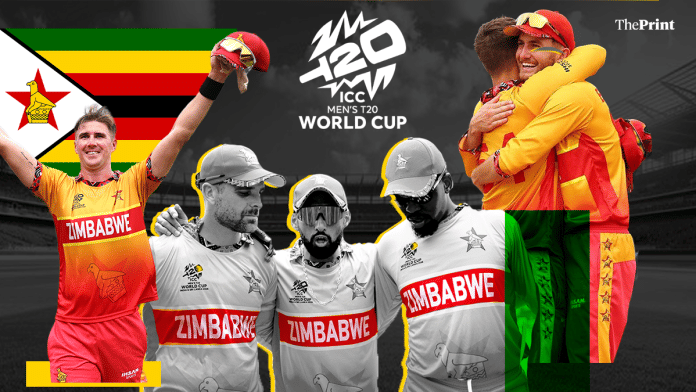



New Delhi: Zimbabwe have qualified for the Super Eight stage of the 2026 T20 World Cup as rain washed out their game against Ireland on February 17. After their victories over Oman, and before that against the mighty Australians, Zimbabwe needed just a point to secure the historic qualification.
And the match in Sri Lanka’s Pallekele was abandoned without a toss due to rain, giving one point each to Ireland and Zimbabwe. Notably, it is the first time Zimbabwe have progressed to the Super Eight stage of a T20 World Cup, two years after they didn’t even qualify for the event.
Zimbabwe’s performance over the past several years suggests they are a world cricket minnows. But this has not always been the case. Before becoming the ‘easy points’ for opponents, Zimbabwe, back in the 80s and 90s, were considered one of the most dangerous teams by opponents.
When Zimbabwe entered the world stage in the early 1990s, the cricketing world saw promise. The country gained Test status in 1992, and within years began upsetting big teams in bilateral series and ICC tournaments.
The likes of Andy Flower, his brother Grant Flower, Dave Houghton, who holds the highest individual Test score for Zimbabwe (266), and Henry Olonga cemented Zimbabwe cricket’s legacy.
Yet what followed was not a steady climb from what they built, but a crashing downfall. Former president Robert Mugabe’s regime (1980-2017) impacted Zimbabwean cricket tremendously.
In the story of Zimbabwe cricket, the thin line between promise and potential does not often get crossed. From the optimism of the 1990s to the existential crisis of the following decade, and then the comeback in 2026—even though in the shortest form of the game— their journey has truly been a roller coaster.
The 2026 moment
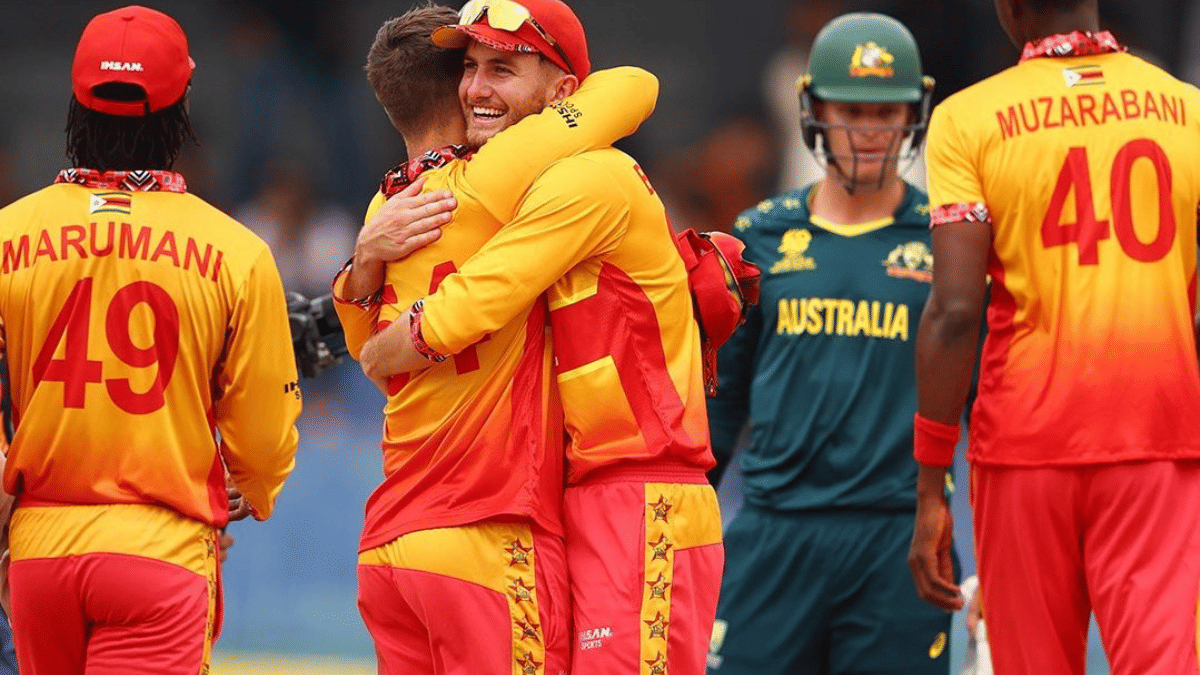
In the ongoing T20 Men’s World Cup, Zimbabwe has come a changed team. They defeated a heavyweight team like Australia to become the table-topper in their group and qualify for the next stage.
But they have set their goals higher this world cup.
“Super 8 was part of our goal, but it wasn’t the ultimate goal,” skipper Sikandar Raza told the team in his dressing room speech after the Super 8 qualification was secured.
“While I am okay with you guys enjoying it, but once we leave this changing room, boys, it’s less than 48 hours for the next game. Please, let’s just not take our sight off from the main target,” he said, in a video that was shared by the ICC.
He further spoke about how their fight isn’t just for qualification or title. It’s something bigger — “respect”.
This team ❤️
No words to describe what we all feeling today but we are aware what lies ahead and in sha Allah we remain committed and focused
Keep praying for us and in sha Allah we keep going
Alhamdulillah 🤲 pic.twitter.com/JH7nLlRKyN
— Sikandar Raza (@SRazaB24) February 13, 2026
“When the world talks about Zimbabwe from now on, we set out for that goal, that they must talk with respect. We have to keep fighting for their respect,” Raza added.
The glory days
In their first-ever international match, Zimbabwe stunned Australia by 13 runs in a 1983 World Cup match at Trent Bridge, with Duncan Fletcher scoring 69 and taking 4 wickets.
Zimbabwe’s early years on the international stage belied the limited infrastructure and it had back home.
In the 1990s, players like Andy Flower, Heath Streak, Grant Flower, Alistair Campbell and Pommie Mbangwa made sure the team punched above its weight. They were the harbingers of a cricketing culture that went on to flourish in schools, clubs and communities across the country.
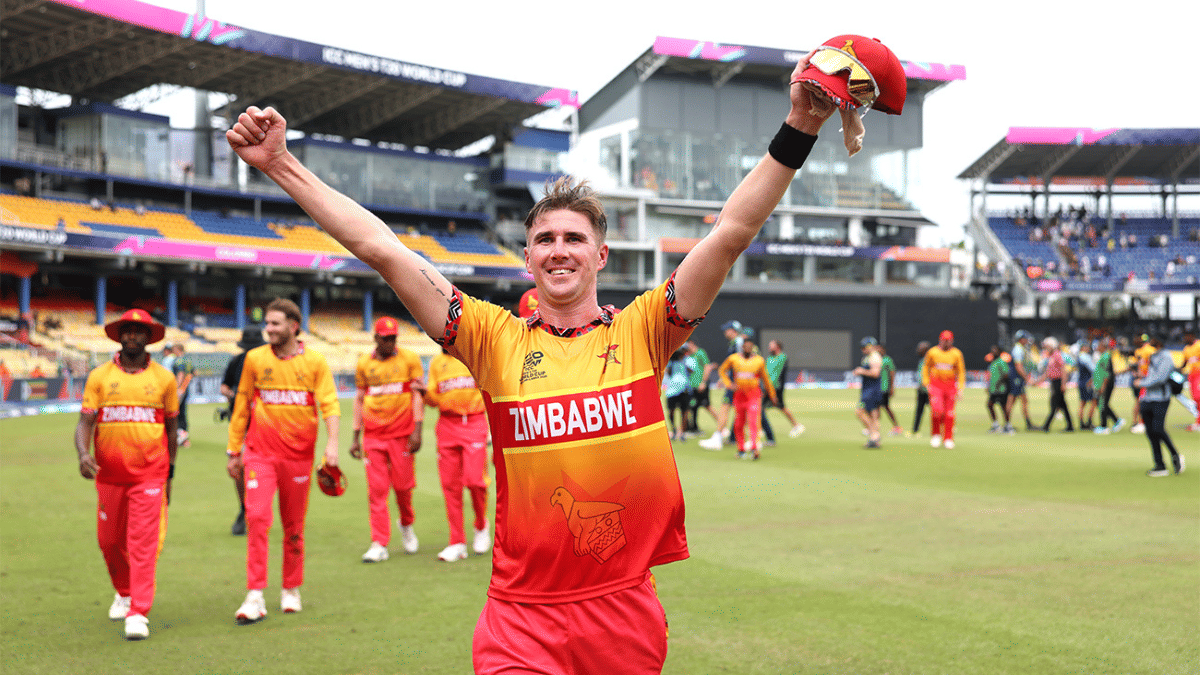
In ODI cricket, Zimbabwe stunned elite sides in the 1990s and early 2000s. Their most famous win was beating Australia in the 1999 World Cup in Nottingham. In the same tournament, they also defeated India by 3 runs in a group stage match.
Zimbabwe’s first ever Test victory against India came in 1998 in Harare, when they defeated the visitors by 61 runs.
The 80s and 90s cemented Zimbabwe’s reputation as a serious threat for rivals. Even their domestic club cricket was strong, working as a supply line of talent, and also as a competition that pushed the national team’s rise.
But, before Zimbabwe could become a force to reckon with in the global cricket world, their internal conflicts triggered their downfall.
The decisive rupture came in 2004-05, when a bitter dispute between senior players, the Zimbabwe Cricket Union (ZCU) and the government led to one of the darkest chapters in the nation’s sporting history.
Politics & bans
A country’s sporting circuit often mirrors the trajectory of its governance and economic health. India’s steady rise over the past two decades, for instance, is reflected in its sporting ecosystem. On the contrary, Pakistan’s struggles have echoed broader structural challenges at home.
For Zimbabwe too, the decline was driven by a damaging mix. There were turbulent land reforms, unsustainable fiscal policies, heavy military expenditure, and prolonged international isolation.
Then there was political interference, player strikes, and declining performance. The era is famously marked by Andy Flower and Henry Olonga’s 2003 “black armband” protest against the “death of democracy”.
‘When world talks about Zimbabwe from now on, we set out for that goal, that they must talk with respect,’ skipper Sikandar Raza
By the late 2000s and early 2010s, Zimbabwe cricket became a case study in how off-field instability can erode on-field success. Plagued by delayed player payments, infrastructure decay, and mounting debts, the governing body struggled to maintain regular fixtures and competitive standards.
In response to a talent drain and internal chaos, Zimbabwe voluntarily suspended itself from Test cricket between June 2004 and January 2005, a move that robbed a generation of players of critical exposure and growth opportunities.
In the following Test series in January 2005, Zimbabwe slumped to a 226-run defeat against Bangladesh. It was a historic victory for Bangladesh as it was their first-ever Test victory in 35 attempts.
What followed were years of turmoil and uncertainty. A big blow came in 2019, when the International Cricket Council (ICC) suspended Zimbabwe Cricket over government interference and mismanagement. The suspension froze vital ICC funding and sidelined Zimbabwe from key global qualifiers.
While later lifted, the damage was palpable, money that should have nurtured youth development and facilities went instead to survival tactics. The lack of regular international exposure further deepened skills gaps.
Zimbabwe failed to qualify for two consecutive ICC World Cups, most notably missing out on the expanded 2024 T20 World Cup after losses in the Africa qualifiers.
Grassroots cricket deteriorated as well. Once-fertile school programmes like Prince Edward and Churchill, which had produced multiple national captains, struggled to keep basic facilities running.
Club cricket, the backbone of Zimbabwe’s talent pipeline, withered, leaving little structure between schoolboy play and professional competition.
Veteran all-rounder Sean Williams later described his career as “a rollercoaster … mainly downs,” a blunt but accurate reflection of Zimbabwe’s turbulent two decades.
Attempt to revive
Even at their lowest ebb, there were glimmers of resilience. Zimbabwe returned to Test cricket in 2011 after a long hiatus.
Progress was slow. In over 14 years, Zimbabwe played only around 40 Tests, an average of under three per year. Some years saw zero Tests, reflecting wider scheduling and resource challenges.
Domestic cricket, while still fragile, started finding its feet again. Franchise competitions like the Pro50 Championship, the Domestic T20, and the Logan Cup persisted, offering local talent continuity and competitive reps.
In July 2025, Zimbabwe hosted major international series involving South Africa and New Zealand, giving local fans rare, high-profile cricket on home soil and offering players exposure against top-tier opposition.
That said, Zimbabwe’s national team is not the regular powerhouse it once aspired to be, but it is far from defunct. Their recent win over Australia in the 2026 T20 World Cup just proved that. It was a moment that rekindled national pride and global attention.
But, to continue the sustainable success of cricket, Zimbabwe must redouble efforts on infrastructure, funding, and regular international exposure, not just sporadic triumphs.
(Edited by Ajeet Tiwari)
Also Read: Bangladesh cricket body sacks official who said non-performing players should ‘return money’