







In Episode 1831 of Cut The Clutter, Shekhar Gupta turns to athletics after a long time, relying on the conclusion of the London Marathon 2026 to explain how long-distance running has been transformed by science, training and technology. He breaks down how Sabastian Sawe, Yomif Kejelcha and Jacob Kiplimo all broke the previous men’s world record in London, how Tigst Assefa set a new women’s mark, and how super shoes, nutrition and anti-doping vigilance have changed the sport. He also places the achievement in perspective with India’s own marathon history and an Olympic sprint scandal.
Here is the full transcript edited for clarity:
Today we are talking about sport, and this is not cricket. This is about running, about athletics, about track and field. In this case, track, the toughest test of all: the marathon.
And see what has happened with marathon running just this Sunday. Two world records have been broken, for men and women. For the men’s record, the two-hour barrier has been broken. What does it mean? The distance of 42 km, or 26 miles, has been done in less than two hours. Not just that, a good 65 seconds have been shaved off the earlier marathon world record that was set in Chicago in 2023 by Kelvin Kiptum, also of Kenya. That was, as I told you, 2:00:35.
Kenyan Sabastian Sawe, 31, has done the London Marathon in 1:59:30. That is something quite remarkable in the history of athletics, or in the history of long-distance running.
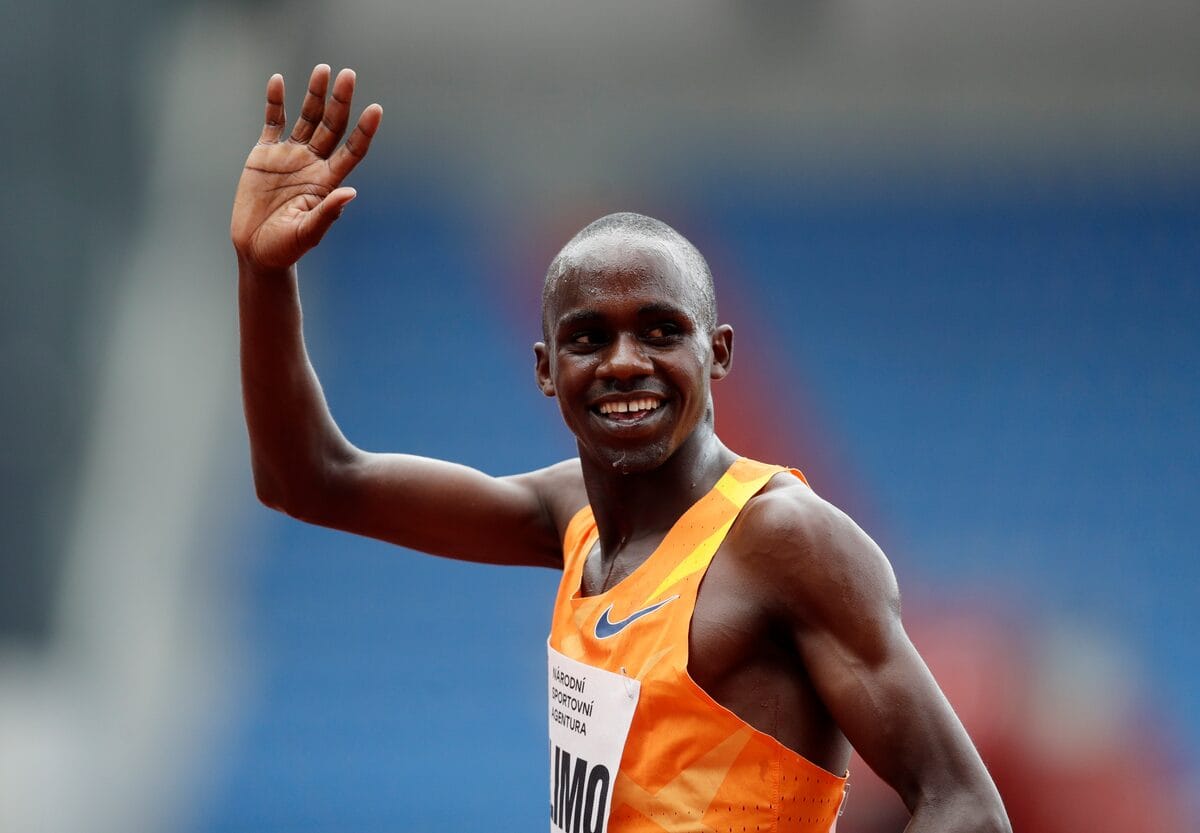
Now, it is not just that. It was an incredible race in the sense that, at that London Marathon, the number two, Ethiopia’s Yomif Kejelcha, also broke the two-hour barrier. He did 1:59:41. So, he also broke the two-hour barrier by 19 seconds, and he also broke the earlier world record by 54 seconds. And if you think that is not impressive enough, then come to the number three. The man who came third, Uganda’s Jacob Kiplimo, also beat the earlier world record by clocking 2:00:28.
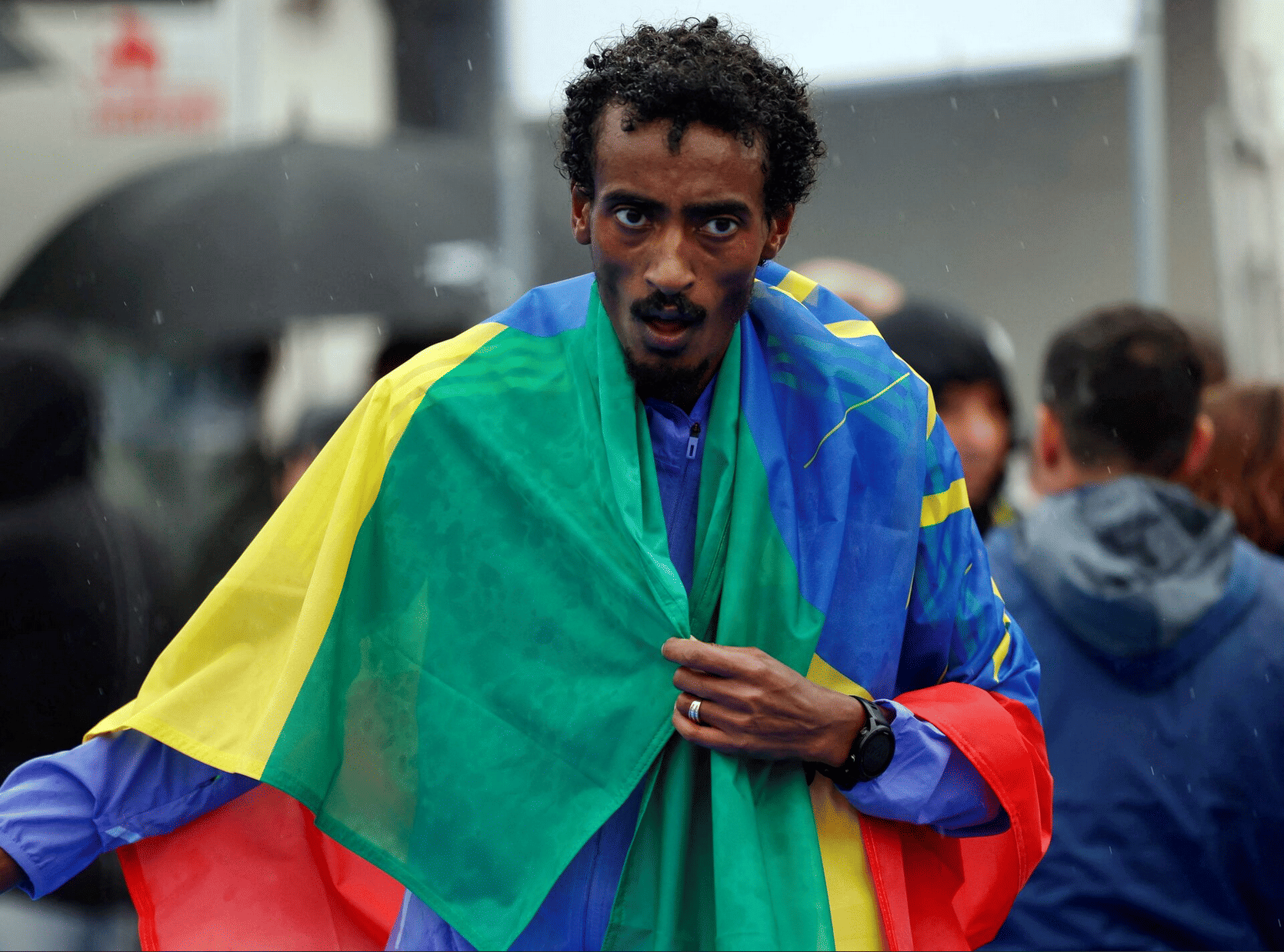
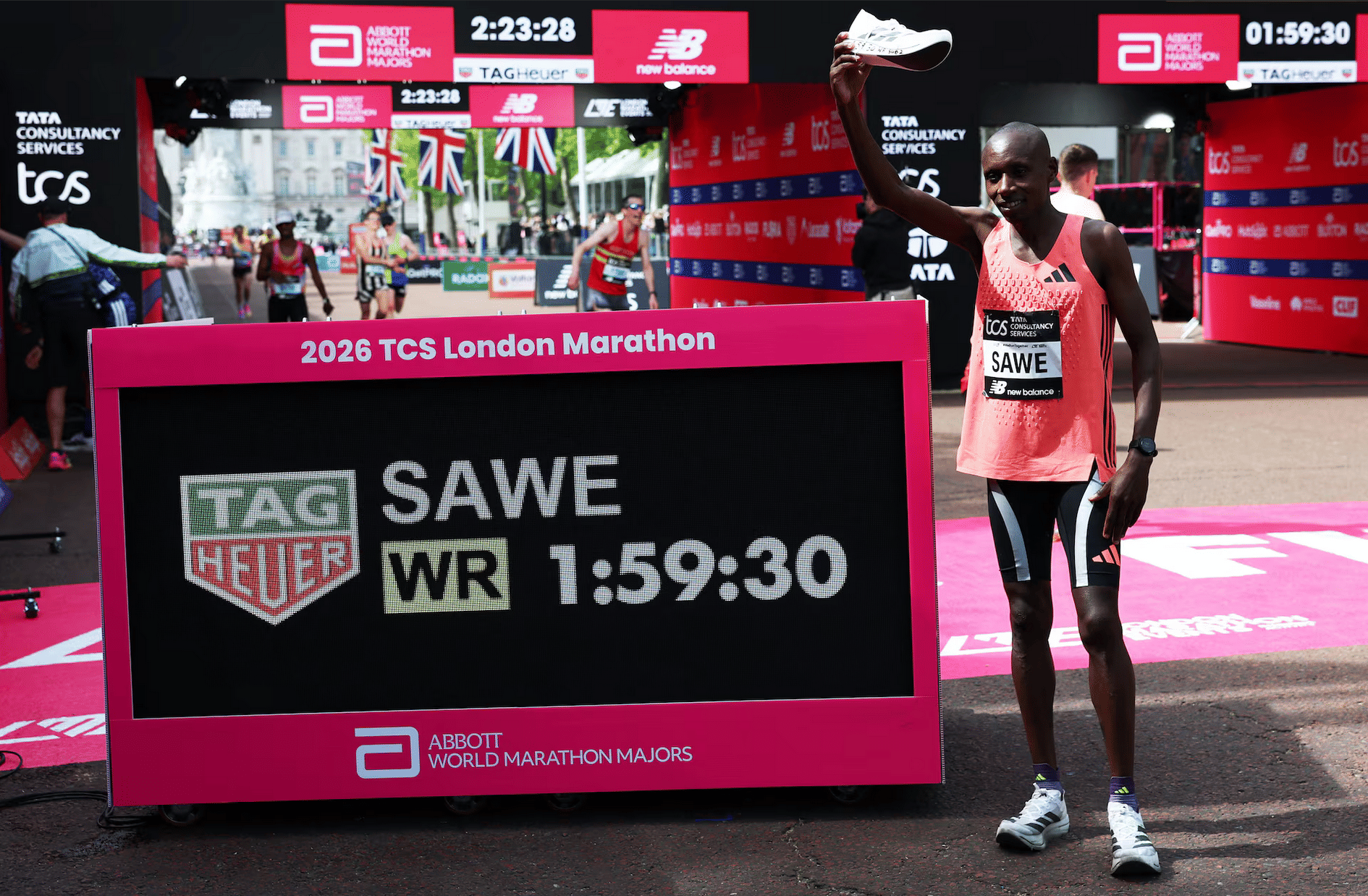
Just think about it. 42 km done in less than 120 minutes. What that means is that these runners are averaging under 3 minutes per kilometre. That tells you a story of endurance, a story of strength, and also the story of science and technology. And that technology comes in by way of new shoes. This is the era of super shoes. This great tussle, or great competition, between the greatest runners of the world is also what has been described as an arms race, or the athletic equivalent of an arms race, between Adidas and Nike.
And this is going on. New technology is coming in. The shoes have to conform to a certain weight, but they are becoming lighter and lighter. They also provide more cushioning, but they have to conform to a certain amount of padding. They cannot go above that. So World Athletics has fixed a limit of 40 mm. Some of these shoes end up at 39 mm.
And more than that, there is also the nutrition element, because these athletes now, long-distance runners, every gram of carbohydrate they consume while running is monitored. Before that, they are given other supplements, all legal.
Sawe himself has gone through many rounds of testing. Just last year, before the Berlin Marathon, he had been tested 25 times. Now he has been tested as often as the international federation wants them to be tested. More than that, his sponsors have allocated another amount of $50,000 to the World Anti-Doping Agency (WADA) and other agencies that test him, to keep testing him especially so that he never ends up on the wrong side of the law, because this is a very competitive business.
Now, I will tell you also how they manage nutrition of these runners as they run. If you see Sawe through his run, he was consuming carbohydrate at 115 gm per hour. Also importantly, before the run he had been given a shot of sodium bicarbonate, all very legal, so that the carbohydrate that is being burnt in his body does not cause a lactic acid build-up in his muscles, which can cause burning, which can cause pain, because you are pushing at the outer limits of human endurance.
See how science, technology, technique and training have changed long-distance running.
This is the fourth time since 2014 that the world marathon record has been reset. More importantly, in these 12 years since 2014, the world marathon record has been cut by 3 minutes 7 seconds.
I will give you an example also, so we can feel both good about India but also be a bit realistic about where we stand. India’s marathon record, for example, the men’s marathon record, was our most durable athletics record, our most durable track record, it stood in the name of Shivnath Singh. Shivnath Singh was then a havildar in the Bihar Regiment. He retired as a naib subedar. He ran 2 hours 12 minutes.
That stood for 48 years unchallenged. It is exactly two weeks back that another Army runner, Sawan Barwal, also a havildar, broke Shivnath Singh’s record by completing it in 2:11:58. So, he shaved two seconds off Shivnath Singh’s record.
It is a different matter also, because we are talking about this, that I should mention to you that Shivnath Singh, the legendary runner, globally renowned, also famous because he ran barefoot and astounded the whole world when he ran the Montreal Olympics in 1976 barefoot and finished number 11. Everybody was astounded.
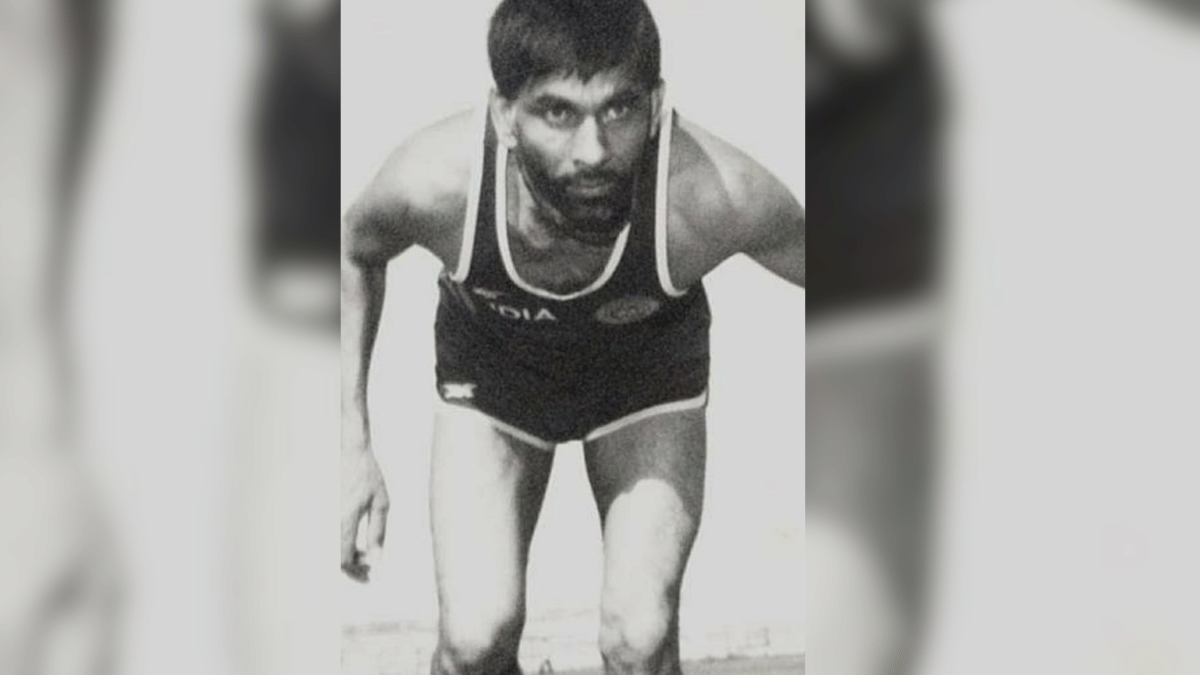
Of course, Shivnath Singh, like many athletes of his era, owed a lot of his success to a wonderful coach whom I had the privilege of knowing, Ilyas Babar.
That said, we can also reflect on the fact that so many of our athletics, track and field records, last such a long time. They are much too durable. They should be broken a lot more often, as has happened with the international marathon right now.
What is the best description for what has happened this time with the marathon in London? There are lots of stories written. There is a lot of lyrical prose written by sports writers, because they rarely get an opportunity to hold forth like this. I see a story by Liam Tharme in The New York Times, and the line there says the London Marathon proves true to the old adage about London buses, that you wait ages for one and then two come at the same time.
So, you wait ages to see one sub-two-hour marathon run, and now you get two at the same time. You get two world records, men’s as well as women’s.
And you know what? In any race, as in this race, the field matters. Sawe said that one of the reasons he ran so well is because the field was so good that the others were competing and he was competing with them. So very often you will find in competitive track and field events that the ultimate performance depends on the quality of the field. In this case, if the top three all broke the existing world record, then you know how close the field was and how competitive it was. I will soon bring you to the women’s marathon also. All three finished within 2 hours 16 minutes. That has not happened before.
The men’s sub-two-hour mark had happened earlier, seven years back. But why do we not consider that? Because that was set by Eliud Kipchoge in 1:59:40. But that was done in controlled, curated conditions. So that was not valid for records. For records, you have to have a natural environment. In this case, London; and the London Marathon is not the best for timings because the route has a lot of turns. In spite of that, we got this performance.
HISTORY REPEATS ITSELF 🤩
🇪🇹’s Tigst Assefa defends her TCS London Marathon crown, breaking her own women’s-only marathon world record once again with 2:15:41 👑
She lowers the very mark she set here last year by 9 seconds 😤 pic.twitter.com/au50cWlhTK
— World Athletics (@WorldAthletics) April 26, 2026
Now, about women. Tigst Assefa of Ethiopia. Ethiopia, Kenya, Uganda: they are the ones who rule the roost when it comes to long-distance running. Assefa set the women’s marathon world record with 2:15:41. That shaves nine seconds from her earlier record. After her, Kenyans finished number two and three. And as I told you, all three finished within 2 hours 16 minutes. Assefa, in any case, broke her own record.
Once again, see how they have run. Assefa is more a conventional runner in the sense that runners do the first half in 60:40, that is 60 minutes 40 seconds, and the second half in 69:10. That is the general split. However, Sawe ran this race in a different way. He ran his second half faster than the first half. Normally, you would think that runners use their energy and use their strength to build a lead and then sustain it.
In his case, he actually became faster in the second half. I will give you data as we come along. In Sawe’s case, he did the first half in 60 minutes 30 seconds and the second half in 59 minutes 1 second. So considerably faster in the second half. How much strength does he have? You can imagine. And generally, if you look at his final two stretches of 5 km each, he did them in 13 minutes 54 seconds and 13 minutes 42 seconds. A man or a machine, you figure out. But once again, you marvel at the endurance and the strength of the man, both chasing him up very close by, each one just a few seconds away.
Welcome to a new era of fast.
The #Adizero Adios Pro Evo 3. Now officially the sub-2-shoe. pic.twitter.com/yOCWO9zXRJ
— adidas (@adidas) April 27, 2026
Now, I told you earlier that this is the decade of the super shoes, and this is Adidas versus Nike. Adidas has come with a range called the Adidas Adizero Adios Pro Evo. Now Sawe, Kejelcha and Assefa ran in the Pro Evo 3, which is not available in the market yet but will be available in a month or so. Nike has a competing product called Vaporfly.
There has been a pivot to a new kind of long-distance running shoe. These are chunky, maximalist, carbon-plated. They look like they have a white sole, but they are very light, lighter than a pack of cards or a newborn kitten. With the design, given their giant soles and rigid plates where lots of carbon is used, these shoes have cushioning that acts like a spring. So it is not as if you are jumping on it. It is all very precise engineering. It is high-tech. It acts like a spring. This high-tech foam gives you more return for your energy.
So once again, it is not propelling you, but it is improving your efficiency overall in calculation. This improves, because your forefoot gives back more energy. This improves running efficiency anything between 2 to 4 percent. Now you can say, “Oh come on, this is new technology, how can you compare these records with past records?”
Very often people ask me how I know about sport. How can you talk about sport? Of course, I was not a long-distance runner or a sprinter or an ace batter or bowler. But I am a journalist who covered a lot of sport, and among sport I covered was not just cricket but also Olympic sport. So, I did cover the Asian Games in Beijing in 1990, the entire Games, and also the Seoul Olympics in 1988. And I had the good fortune, or reporter’s luck, of being present to watch the men’s 100 metres race, which has sometimes been called the most brilliant or the most scandalous race in the history of the men’s 100 metres.
That is the race in which the top four broke the 10-second barrier, just as for the marathon, two hours has been the holy grail. For the men’s 100 metres, 10 seconds had been the holy grail. That was broken by Jim Hines, the American in Mexico in 1968, who did 9.95 seconds. Since then, more than 220 runners, I think, have broken that record, so now sub-10 is being run routinely by the top sprinters of the world. In Seoul, it was not still so commonplace, and it was remarkable that all four ran sub-10 seconds.
The new world record was set by Ben Johnson, 9.79 seconds. Carl Lewis was number two, 9.92. Linford Christie, 9.97. Calvin Smith at number four, 9.99. There is a reason why I am telling you about Linford Christie, who was number four as well.
That night, while all of us were marvelling, having seen this race and wondering how much faster human beings will get, or how much faster man will get, because this was the men’s event, late at night I was playing around with some computers at the media centre or the press centre at the Seoul Olympic Village. It was quite empty at that point, and I found Lokesh Sharma, my old friend, then correspondent for The Telegraph. So just as I was covering the Olympics for India Today, he was covering it for The Telegraph. He came running to me. This must have been around 3 a.m. We are insomniacs around 3 a.m. And he was looking very excited.
I said, “What do you mean, Ben Johnson?” He said, “Fail.” And then we went running, and then we figured out that a lot of the officials there were whispering that Ben Johnson’s urine sample had failed the dope test after his gold medal run, and as a result of which ultimately he was deprived of the gold. Carl Lewis got that gold medal. Linford Christie got upgraded from bronze to silver, and Calvin Smith got the bronze.
That is the reason I am mentioning the number four also. It has also been called the most scandalous 100 metres race because six of the eight finalists, including Carl Lewis at some point or the other, got caught for doping. Their offence was of different degrees.
(Edited by Tony Rai)