





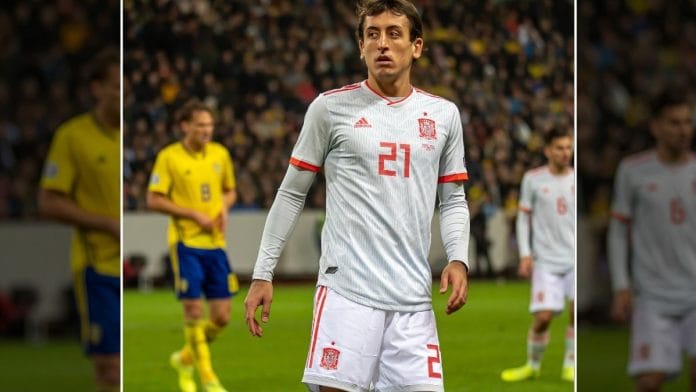


New Delhi: Spain failed to make an impact in their first game against World Cup debutants Cabo Verde after the match ended in a goalless draw. Despite dominating the match with a possession of 74 per cent and a total of eight shots on target, Spanish striker Mikel Oyarzabal set an unwanted record. He became the first player since 1966 to play the first 30 minutes of a World Cup match without touching the ball once.
The draw came as a shock to the world, grabbing headlines. With this, an old problem of Spain resurfaces—possession without penetrating the defence line. This has been a perennial problem for Spain for the past decade.
Spain’s possessive football, also known as tiki-taka, indeed delivered success, including back-to-back European Championships in 2008 and 2012 and the FIFA World Cup trophy in 2010. However, things have changed since 2014. The very football which Spain enjoyed became a burden for them.
Spain’s decade-old problem
In the 2014 FIFA World Cup, which was hosted by Brazil, Spain was eliminated from the group stage despite enjoying most of the possession in its defeats against the Netherlands and Chile. Four years later in Russia, Spain completed more than 1,000 passes against the hosts in the Round of 16 before crashing out on penalties after a 1-1 draw.
The same thing happened in 2022 when Spain recorded nearly 77 per cent possession against Morocco in the Round of 16 and attempted several short passes. But, they failed to penetrate the defence in the entire match and got eliminated in the penalties again.
And, the draw against Cabo Verde has a familiar tale to tell. Luis de la Fuente’s side was in total control of the ball with 764 passes completed. However, most of the ball possession did not bother Cabo Verde’s defence. The African debutants remained organised and patient, allowing Spain to circulate the ball without any danger from the attacking front.
Also read: No one has defeated the Netherlands in under 90 minutes. In Japan draw, the record remains
‘There are no small opponents here’
Experts and football analysts have pointed to Spain’s structural issue.
“The issue was largely due to Spain’s tactical design, which failed to feed the striker despite dominating possession,” Opta stated in their report.
Meanwhile, after the final whistle, Fuente said that Sapin should have won the fixture.
“In our heads, there’s positivity and a desire to improve. We should have won today’s match with everything that happened, with all the favourable situations we created, but we lacked freshness and clinical edge. We need to keep growing and gaining rhythm. That’s the big goal in the days we have until the next game,” he said.
The opponent was a very physically strong team, Fuente said, adding, “We knew they were going to set up with a very low block and with very powerful players. If you add to that the fact that we lacked freshness, then this happens. Football is like that – there are no small opponents here.”
With Saudi Arabia next on 21 June, Spain needs to deliver from its high possession. They are scheduled to face Uruguay in their final group stage fixture.