



New Delhi: One of neuroscience’s longstanding mysteries has been how the different regions of the brain develop, whether they are created by the same family of cells, or if multiple hands help in the creation of the most complex human organ. Researchers have now found that the front and the back of the brain are not created by the same embryonic cells.
The findings were published in Nature Neuroscience on 18 September by researchers at Stanford University’s Department of Developmental Biology.
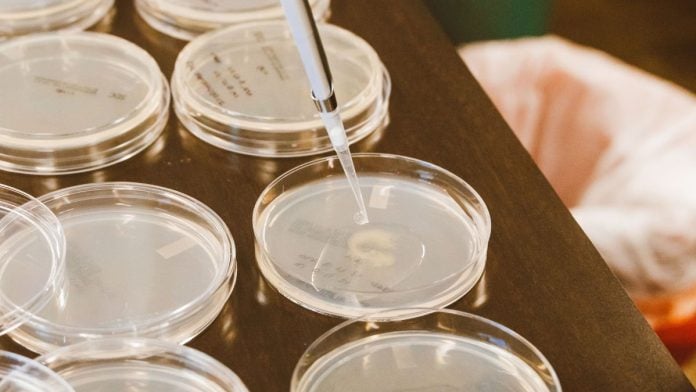
“We’ve shown for the first time that the front of the brain arises from a totally different progenitor cell than the back of the brain. Our discovery means that we can now grow neurons from the back of the brain, the hindbrain, in a petri dish and study their functions,” Kyle Loh, associate professor of developmental biology, said in a statement.
The human brain has three main regions — the forebrain, midbrain, and hindbrain. While the forebrain is in charge of language, consciousness, and abstract thinking, the hindbrain or brainstem, found at the back of the skull, controls essential functions like heartbeat, breathing, and sleeping. The neurons of the hindbrain also control the muscles of the face, tongue, and throat.
For decades, scientists have tried to generate hindbrain cells in the lab but have failed. Because of this, researchers have been unable to study diseases such as spinal muscular atrophy and amyotrophic lateral sclerosis which affect the brain stem.
“Previous attempts to make hindbrain neurons likely tried to coax forebrain and midbrain progenitors into hindbrain cells, which our study shows is not possible,” co-author Rayyan Jokhai said in a statement.
“In stem cell biology, people are always fixated with creating the end cell type, like the neuron. But it’s important to begin at the earliest stages of embryonic development. Our careful attention to that early time point allowed us to find this fundamental split in brain development,” Jokhai added.
The team chanced upon the discovery while they were examining developing mouse embryos. They found two different types of progenitor cells, of which one expresses a gene that turns it into the forebrain and midbrain, while the other creates the hindbrain. From the earliest stages of development, these two cell populations do not overlap.
“I was surprised at our findings because the word ‘brain’ implies a contiguous organ that likely has a singular origin. But even 500 million years ago, there were these separate neural systems, which now almost operate as one, which is very cool,” Jokhai said.
The researchers have now, for the first time, been able to turn human pluripotent stem cells, the kind of cells that can create any cell in the human body, to turn into functional motor neurons in the hind brain. These findings could significantly impact research into diseases that affect the brain stem.
Now that scientists can grow brain stem neurons in a petri dish, they can also probe into what might go wrong with those neurons, helping answer some of medicine’s burning questions.