





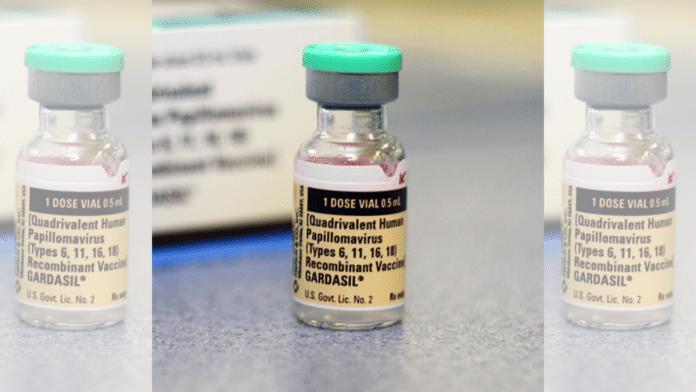



New Delhi: As India launches its nationwide HPV vaccination programme, a new study suggests that while this intervention is urgent, it is only one part of the solution. Rolled out in February 2026, the campaign aims to vaccinate over 1 crore 14-year-old girls annually against HPV, the virus responsible for most cervical cancers.
While this is a critical step toward preventing reproductive cancers among younger women, the study, published in the journal Clinical Epidemiology and Global Health, shows that the burden of reproductive cancers in India is more complex, peaking between 40 and 59 years. Among women, cervical cancer accounts for about 50 per cent of cancer cases, followed by ovarian and endometrial cancers — a pattern seen across regions. In men, prostate cancer dominates. Overall, the lifetime risk of reproductive cancers stands at 1 in 34 for women and 1 in 68 for men, the study finds.
These findings highlight a growing mismatch. While prevention efforts are focused on younger populations, a substantial and rising burden of cancer is concentrated among middle-aged and older adults.
Cancer trends
The Global Cancer Observatory (GCO) predicts that cancer cases will rise to 32.6 million worldwide by 2045. India already carries the third-highest cancer burden globally, with an 11 per cent lifetime risk of developing the disease.
The study analysed data from 37 population-based cancer registries (PBCRs) across India, compiled by the National Cancer Registry Programme and the Tata Memorial Centre, Mumbai. These registries, operational since 1981, paint a picture of cancer trends across urban and rural populations, socioeconomic groups, and regions.
Looking at the cases diagnosed between 2012 and 2017, researchers found an age-linked pattern: incidence rises sharply in adulthood, peaking between 40 and 59 years, and remains high beyond 60. This trend holds across regions, with women bearing a disproportionate burden, especially in midlife.
“This is the most important epidemiological shift we are seeing right now. A mix of factors is driving it — rising obesity, diabetes and sedentary lifestyles, changing reproductive patterns like later marriage and longer life expectancy, said Shobha. At the same time, better detection and urban registries are picking up more cases — many women now in their 40s and 50s grew up without HPV vaccination. Prostate cancer is also rising in urban India, shaped by an ageing population and improved detection,” said Shobha K, head of the gynaecological oncology department, Kidwai Memorial Institute of Oncology, Bangalore.
Regionally, the pattern varies. In northern India, the study reports the highest incidence in the 40-59 age group, while among older populations, the highest rates are seen among men in the north and women in the south.
“Endometrial cancer is largely associated with more affluent populations. Prostate cancer shows a similar trend, and a small proportion is hereditary,” said Chithrathara K, Consultant of Surgical and Gynaecological Oncology at VPS Lakeshore Hospital, Kochi.
Despite these shifting patterns, early detection remains a major gap. While timely and affordable treatment can reduce cancer deaths and organised screening has lowered mortality in high-income countries, India continues to lag in screening coverage.
Also read: Rhinos roamed all of north India 3,000 years ago. How did they get confined to Kaziranga
Need for a multi-pronged approach
In India, cancer screening is largely opportunistic, with most cases diagnosed at advanced stages. As per the National Family Health Survey of India (NFHS-5), fewer than 2 per cent of women have ever been screened, compared to 70-90 per cent in European countries.
“Most cervical cancers in India are still diagnosed at a late stage, and we don’t yet have effective screening for endometrial or ovarian cancers. Globally, cervical cancer is one of the few cancers for which population-level screening is feasible, but scaling this in India is challenging. Even relatively simple tests like the Pap smear require resources and infrastructure that are difficult to provide at such a large scale,” said Sharath Sasidharan, Consultant, Surgical Oncology, Aster Medcity, Kochi.
According to the study, while cervical cancer rates are gradually declining in urban India, they remain high in rural areas. However, these barriers extend beyond a lack of infrastructure. Even low-cost approaches such as Visual Inspection with Acetic Acid (VIA), introduced in 2016, have seen limited uptake — likely due to limited access, awareness, and stigma associated with reproductive cancers.
The ongoing HPV vaccination drive in Maharashtra is witnessing a similar trend — reaching less than 1% of its target in the first 10 days. In response, authorities have initiated awareness campaigns and are working closely with community leaders to build trust and address concerns on the ground. ASHA workers are being mobilised to engage directly with families and encourage uptake, alongside efforts to curb the spread of misinformation.
“Reducing stigma around reproductive cancer, where social norms often wrongly link the disease to sexual behaviour and deter women from seeking screening, is just as important as improving access,” said Sasidharan. “Awareness, women support groups, and community-led efforts are equally important as strengthening healthcare systems”.
Experts say that the response to the increasing cancer burden must be a multi-pronged approach, from prevention to early detection and timely care — a more integrated, systems-level strategy.
“Think of cancer control as a three-layer pyramid,” said Shobha. “At the base is population-level prevention — HPV vaccination, tackling obesity, controlling tobacco and alcohol use, and improving health and reproductive literacy. The next layer is organised screening, from scaling up cervical cancer screening through HPV testing or VIA to targeted approaches for breast, endometrial and prostate cancers. At the top is early diagnosis — strengthening primary care to recognise symptoms, fast-tracking referrals, and building district-level diagnostic hubs to catch cancers earlier.”
Vaccination may be the starting point, but reducing cancer deaths will depend on how well prevention, screening, and early diagnosis come together.
(Edited by Aamaan Alam Khan)