



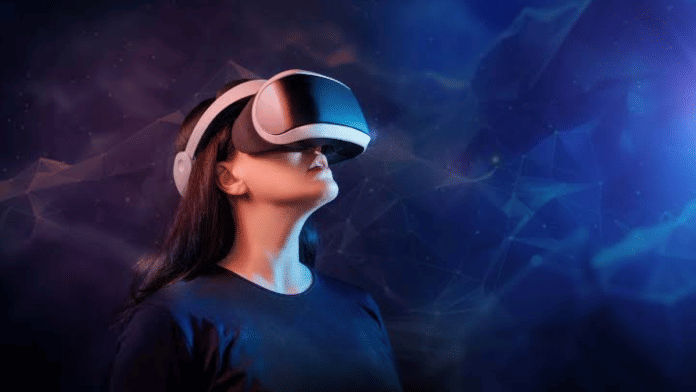
New Delhi: What if people could recognise that they were dreaming while still asleep? A new study suggests that virtual reality, combined with meditation, could help people lucid dream.
The study, titled “Virtual reality as a metacognitive training tool for lucid dreaming,” was published in Frontiers in Psychology on 28 September. Research from the University of Trento in Italy explored whether immersive simulations could help people become more aware of their surroundings, even when those surroundings are part of a dream.
Lucid dreaming occurs when a person becomes aware that they are dreaming while the dream is still unfolding. Some lucid dreamers can also exercise a degree of control over what happens in their dreams. While around 55 per cent of people report having experienced at least one lucid dream, regularly experiencing them is considerably less common.
Training the brain to recognise dreams
Researchers recruited 38 participants with little previous experience of lucid dreaming. They divided them into three groups each followed a five-week base training programme involving daily checks and dream diaries.
The first group received VR training on top of their regular regimen designed specifically to encourage lucid dreaming. Participants first practised open-monitoring meditation, which involves observing thoughts and experiences without immediately reacting to them. They then entered virtual environments containing unusual scenarios, such as objects behaving in ways that defied the laws of physics or sudden changes in their surroundings.
Whenever participants encountered something unusual, they were encouraged to question whether what they were experiencing was real and perform reality checks. The exercise was intended to develop the habit of questioning their surroundings, which could eventually carry over into their dreams.
The second group used VR environments unrelated to dreaming, while the third followed only the standard training programme.
The results were encouraging. Participants who received dream-oriented VR training reported 26 lucid-like dreams, compared with 11 in the standard-training group and only four in the group that used unrelated VR. At least one lucid-like dream was reported by 84.6 per cent of participants in the experimental group, against 61.5 per cent in the standard-training group and 33.3 per cent in the VR-control group.
What makes the approach promising?
The findings suggest that simply using VR may not be enough. Instead, a combination of meditation and deliberately unusual virtual experiences could help people develop the awareness needed to recognise when they are dreaming.
“Lucid dreaming can benefit people with nightmares by allowing them to transform their nightmares into positive dreams and feel greater agency in their dreams,” neuroscientist Daniel Morris told Live Science. Although he was not part of the study, Morris said that it could have practical benefits.
However, researchers caution against drawing broad conclusions from the findings. The study involved only 38 participants, and its design did not establish whether meditation or dream-like VR experiences contributed more significantly to the results.
Nevertheless, the research opens up possibilities for exploring lucid dreaming as a potential therapeutic tool, particularly for people experiencing recurring nightmares. Morris also suggested that future research could investigate its applications for people with anxiety and post-traumatic stress disorder (PTSD).