



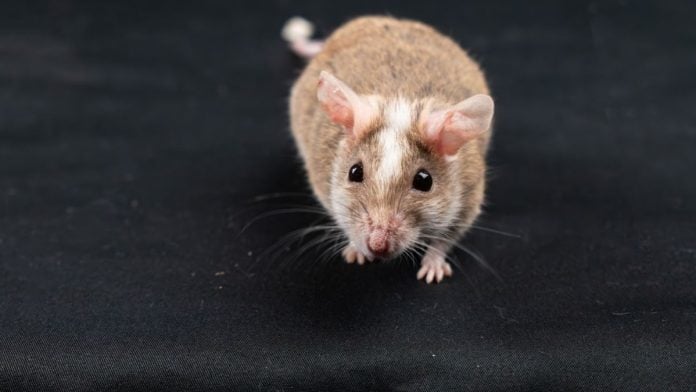
New Delhi: Mice that Parkinson’s-like symptoms slowly recovered over a year after being exposed to a pesticide, without even being treated for the illness. The finding might help scientists understand how brain cells respond to damage and whether some of these changes can be reversed.
The study, published in iScience, looked into the long-term effects of rotenone, a pesticide that interferes with mitochondria — the structures inside cells that produce energy. Researchers from the Department of Cell Biology, Neurobiology and Anatomy, Medical College of Wisconsin in the US, found that the brain’s dopamine-producing system might have ways to recover from certain types of damage.
Parkinson’s is a neurological disorder that affects movement. It is associated with the loss of neurons that produce dopamine, a chemical that helps the brain control movement. People with the condition experience tremors, muscle stiffness, slowness of movement and problems with balance.
To investigate how pesticide affects the brain over time, researchers gave young adult male mice daily injections of rotenone for 21 days. In just a few weeks, the animals began to move slowly, travel shorter distances and struggle to balance themselves on a rotating rod. But the symptoms did not last as long as scientists had expected.
The mice’s performance in tests improved over the next few months. They soon became almost as active as mice that had not been exposed to the pesticide. By seven months, the rotating-rod test too did not affect them.
Neuroscientist Xuelin Lou told ScienceAlert that the results were “totally unexpected”.
Also read: Cancer vaccines move a step forward. Moderna-Merck trial finds lower death risk in trial
Did the brain cells recover?
The researchers examined the mice’s brains for changes in dopamine-producing neurons. These cells are found in a region called the substantia nigra, which plays a key role in controlling movement. After the mice were exposed to pesticides, the number of cells linked to dopamine production was about 40 per cent lower. However, they found that the overall density of nerve cells did not change. This suggests that some of the neurons had temporarily stopped producing enough dopamine to be recognised as a dopamine-producing cell.
“Our findings suggest that they just lose their identity,” Lou told ScienceAlert.
After 12 months, the number and density of cells carrying the dopamine-related marker were comparable between exposed mice and age-matched controls, although the marker’s signal remained weaker in the exposed animals.
The researchers do not know what allows such cells to “recover” in mice and the team is investigating what this could mean. The study also warns that the results should be interpreted cautiously since the experiment involved only male mice, and the animal’s disease did not have all the characteristics of Parkinson’s disease.
The pesticide, rotenone, might have also just made the mice temporarily sick and weakened their muscles, therefore affecting the experiment.
“The findings do not mean that pesticide exposure is harmless or disprove the association between pesticide exposure and Parkinson’s disease risk. The conclusion from this work should not be directly extrapolated to patients or workers under risk,” Lou said.