






New Delhi: The Indian National Space Promotion and Authorisation Centre, or IN-SPACe, has issued comprehensive guidelines to govern the reentry of space objects into Earth’s atmosphere.
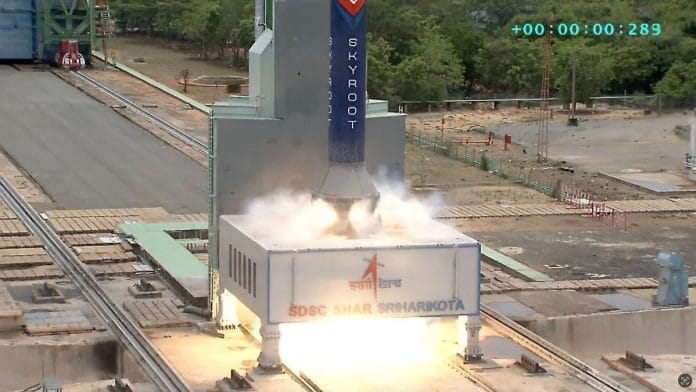
IN-SPACe officials said Wednesday that after the recent launch of India’s first private rocket, Vikram-1, more private companies are set to venture into space. In such a scenario, it will be imperative to have norms ensuring a safe, supervised reentry of space objects.
The agency said that any planned reentry of a space object by an Indian entity, “within or outside the Indian territory”, will now require permissions from IN-SPACe. In case a foreign agency wants to conduct the activity in Indian territory, it will also require IN-SPACe’s authorisation. This, in turn, must be routed through an Indian incorporated company, including subsidiaries, joint ventures, or collaborations with Indian entities.
Atmospheric reentry is the process by which a space object returns to Earth. It involves a carefully planned series of manoeuvres to control speed and protect the object from aerodynamic heating.
“Only the Space Objects that are designed to survive Re-entry or planned for Reentry, within or outside the Indian territory, shall need a separate Re-entry authorisation from IN-SPACe,” said the document, titled ‘Norms, Guidelines and Procedures for Authorisation for Undertaking Planned Re-entry of Space Objects’.
The document also clarified that if a space object reenters Earth’s atmosphere naturally as part of its planned end-of-mission disposal, where it is expected to burn up, melt, break apart, or otherwise be destroyed so that very little debris reaches the ground, operators will not need to obtain a separate re-entry authorisation.
What new guidelines say
The authorisation rules stress that private companies seeking permission for planned atmospheric reentry of space objects must submit a detailed risk assessment, too.
Applicants must provide details of the predicted reentry corridor, arrangements for tracking the object, technical parameters, mission planning, and casualty assessment to ensure safe reentry and minimise damages to third parties.
The project will also require a NOTAM (Notice to Airmen), along with maritime danger-zone notification, for final authorisation. This has to be submitted at least 45 days before planned reentry.
“Any change in reentry mission, including the change in the trajectory of return, time of reentry, or any other parameters declared in the application, shall be intimated to IN-SPACe as soon as possible, and may require a fresh authorisation or amendment to the authorisation as decided by IN-SPACe,” said the document.
(Edited by Prasanna Bachchhav)
Also read: What is the breakthrough in China’s artificial sun project? A 6.5 Tesla magnet