





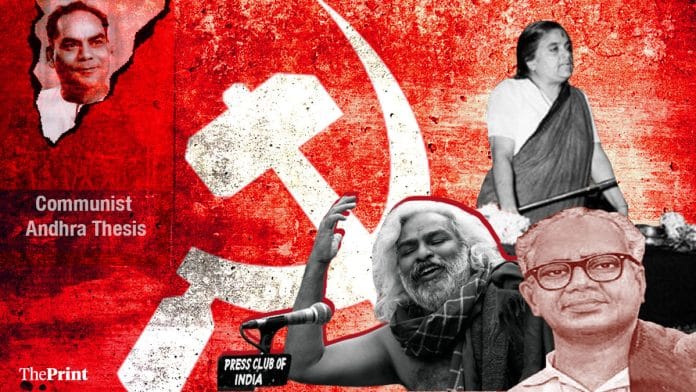



Hyderabad: As Union Home Minister Amit Shah declared in Parliament on 30 March that India was free from Left-wing extremism, many warned that the residual ideological scaffolding would take longer to defeat. The fountainhead of that ideology lies in Andhra Pradesh of the early 1900s — the era which birthed the original ideologues of India’s Red Revolution and the People’s War Group in the decades thereafter. It was called the ‘Andhra Thesis’.
It was written in 1948 by Andhra’s Marxist leading lights, long before Charu Majumdar, founder and general secretary of the Communist Party of India (Marxist-Leninist), authored the ‘Eight Documents’ in 1965, outlining the ideological principles of militant communism in India. In many ways, the Andhra Thesis set the ground for Majumdar’s Naxalbari movement in West Bengal in 1967, considered the second wave of Maoist insurgency in India, said 88-year-old Sarampally Malla Reddy, state secretariat member of the Telangana Communist Party of India (Marxist).
The frame of this thesis was simple but seductive in the heady post-Independence years – that an Indian revolution should follow the Chinese path of protracted people’s war.
While West Bengal became synonymous with Naxalism, the first and last waves of this movement were witnessed largely in united Andhra Pradesh—beginning in the 1930s and culminating in the deadlier, weaponised communism of the People’s War Group in the 1980s.
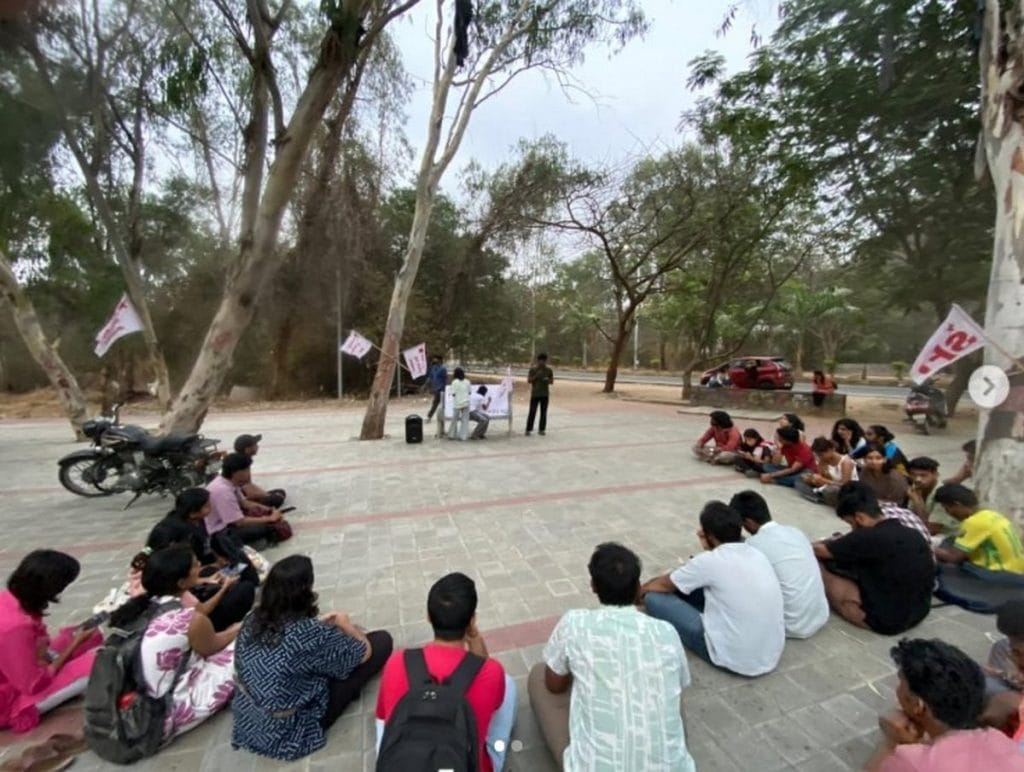
In the last four decades, many prolific writers have decoded Communism’s contribution to Andhra and the country, but the descriptions of mathematician, lawyer, and human rights activist late Prof K Balagopal and Malla Reddy are most often read out to comrades.
“Ignited. Instigated. Immortalised.” This is how Malla Reddy described united Andhra Pradesh’s contribution to India’s communist movements since the early 1900s, where all forms of the Communist Party of India—Marxist, Leninist, and Maoist—operated.
From the poorest peasants to the progressive illuminati, the communists of Andhra Pradesh brought together a handpicked set of people but spoke for all. Communism in Andhra looked different in every era, a reading of Malla Reddy’s hand-scribbled notes revealed. The leaders used their social access to legitimise discontent by encouraging dissent to fight casteism and classism, and to stand up for feminism and artistic freedom.
“Social justice and populism were the Left’s domain long before welfare politics of today’s parties became kosher. It changed the order of things in the fertile lands of the Krishna and the Deccan Plateau that were ironically emancipated and later ravaged by the undulating graph of the Communist party’s history,” Reddy read out from his notes browned by years of struggle but kept intact by his fecund imagination.
The Andhra communist literature lit a match that took India seven dangerous decades to put out.
Also Read: Maoist insurgency has been defeated. Naxal ideology likely to survive
India’s Red Square
United Andhra Pradesh was a fertile ground for communist ideology even before the Telangana region became the axis of the legendary Telangana armed struggle between 1946 and 1951. Andhra was touted as the intellectual capital of communism in India. It was popularly referred to as India’s Red Square in South Asian communist literature, drawing parallels to Moscow’s Red Square — home to Lenin’s mausoleum and the ideological, historical, and political heart of the Soviet state.
Staunch Communists such as T Nagi Reddy and Devulapalli Venkateswara Rao, who championed the Telangana agitation against the landlords or Doras, were votaries of denouncing British imperialism and American hegemony in tandem.
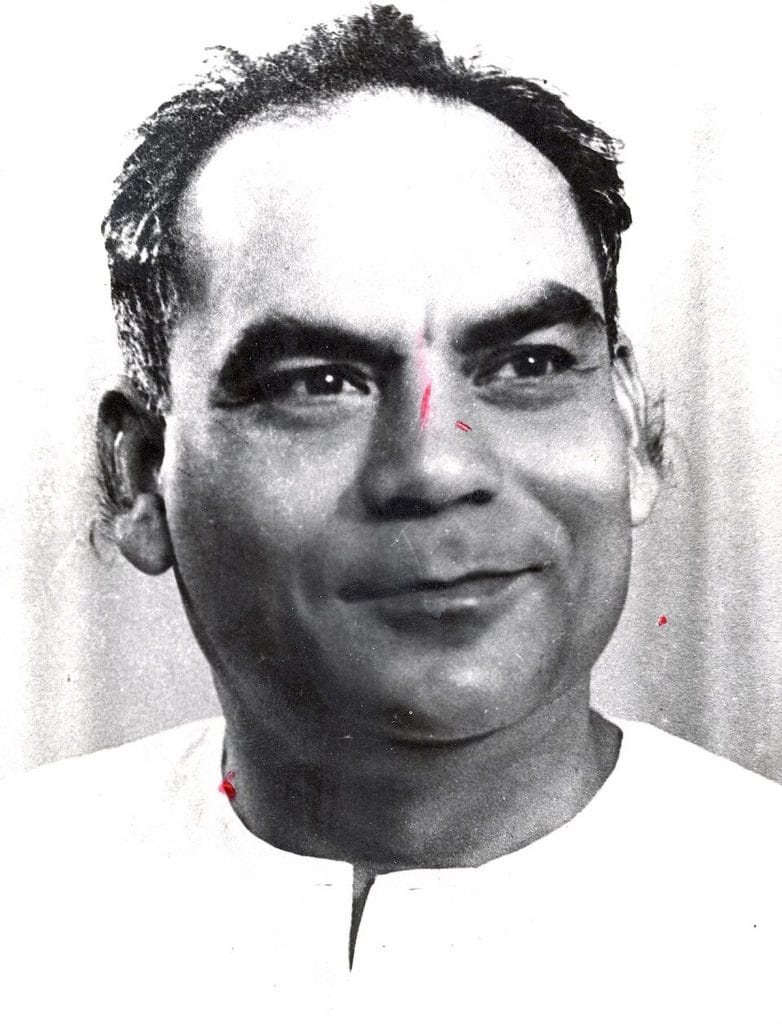
The Communist Andhra Thesis, articulated in 1948, was circulated as the definitive path for the Indian revolution. The pivotal document, which became the “New Red Document” of the Communist Party of India (CPI), argued that rich landlords should not be fought but neutralised or cajoled into joining the ranks of the revolution. Marxist literature was nativised by Rao and Reddy, and copious amounts of text substantiated the need for democratic and socialist movements to be supplemented by armed struggle.
It wasn’t just about inciting attacks here and there. It was laying the ground for a violent overthrow of the prevailing system.
Rather than confining the movement to urban strikes and protests, the Andhra communist leadership revised its core strategy to building partisan armies in the countryside. Operationally, the ‘Maoist Path’ meant that comrade bases would be formed in villages that would slowly encircle cities, forcing the administration to cave to the communists’ demands.
“The Thesis explicitly called out the distinction between Marxism and Maoism,” Professor Purendra Prasad of the University of Hyderabad’s School of Social Sciences told ThePrint. “The Andhra committee argued that the Indian bourgeoisie was not the enemy of the People’s Democratic Revolution; rather, the State, being the oppressor, was the enemy. This thesis is considered foundational to what later became the Naxalite movement in India.”
A reckoning for the Nizam—and Congress
Like most revolutions, this one started in the agricultural farms too.
The last Nizam’s regime from 1911 to 1948 has been alluded to by historians and anthropologists as ‘the best of times and the worst of times’, borrowing Charles Dickens’ reading of the French Revolution in A Tale of Two Cities.
While the capital of Hyderabad flourished as a centre for global trade, the hinterland was squelched under a feudal monarchy. Backed by the Nizam, landlords terrorised peasants with crushing taxes and forced labour without pay, called vetti. Historical land records in the Telangana State Archive detail that the Nizam’s henchmen each held upwards of 15,000 acres during the Asaf Jahi dynasty. Recorded mostly in Urdu and Telugu, the now-translated documents show arable land gifted across administrative divisions under Muntakhab (ownership documents), Farman (orders), and Sanad (certificates) by the Nizam.
Our men may be gone, we may have laid down our arms, and the old ways of oppression may not exist. But as long as the proletariat suffers at the hands of the bourgeoisie, we will live in one form or the other
— Sarampally Malla Reddy, CPI(M) leader
The Dora Samrajyam, or empire of landlords, concentrated land so heavily that some effectively owned villages at a stretch. Only children from landlords’ homes could enter the formal academic system since those of the poor were deployed as unpaid labour in the farms, writes Prof P Ramesh of the Department of History in Nizam College, Osmania University in a 2022 paper titled ‘Origins of Communist Ideology and Literature in United Andhra Pradesh’.
Agrarian distress, compounded by droughts and extreme poverty, was made worse by the Nizam’s Razakar army, which committed atrocities against Hindus and the marginalised, particularly women. “Forced conversions into Islam and cruelty meted out to men who joined the Indian freedom struggle marked the feudal monarchy of the last Nizam Mir Osman Ali Khan,” Ramesh writes.
This brutalisation, along with the suppression of the Telugu language and culture — despite 88 per cent of the Nizam’s population being Hindu — readied the ground for insurgency.
The spark that lit the tinderbox came on 4 July 1946, with the killing of Doddi Komaraiah. A local sangham leader from a shepherd family in Kadivendi village of Nalgonda district (now Warangal), Komaraiah was gunned down by Nizam-appointed landlords.
Komaraiah’s martyrdom was seized upon by DV Rao, then secretary of the Nalgonda District Committee of the CPI, to ignite one of India’s longest peasant revolutions— the five-year Telangana peasant uprising, which claimed the lives of 4,000 peasant-communists.
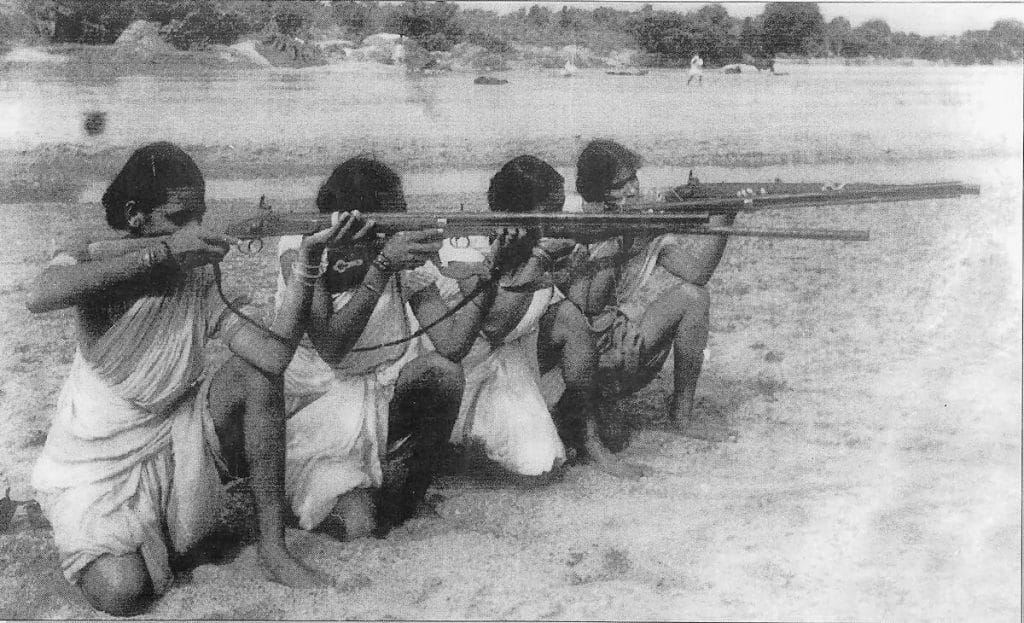
Naya Adab (New Salute), a communist magazine authored by Rao, held his comrades together. Along with T Nagi Reddy, Ravi Narayana Reddy, Baddam Yella Reddy, Chandra Rajeshwara Rao, and Makhdoom Moinuddin, the CPI organised armed squads or dalams that established rule over 3,000 villages in Telangana.
PC Joshi, then the general secretary of the CPI, organised weapons to be delivered to Hyderabad, and the guerrilla fight against the Nizam’s regime spread from Warangal and Nalgonda to many other parts of the Telangana region. Even after the annexation of Hyderabad in Nehru-Patel’s Operation Polo in 1948, the insurrection continued. DV Rao’s important text, Refutation of Wrong Trends Advocating Withdrawal of Telangana Armed Struggle, called for the struggle to persevere, and so it did until 1951.
By the time the agitation wound down, it had shaken up the social order of Telangana. The zamindari system was abolished and 10 lakh acres redistributed to poor farmers. Forced labour and feudal tax slabs were dismantled. Grama Rajyams — village governments — were established in over 3,000 villages. And women, long confined to their homes, were enrolled in schools, inducted into dalams, and accorded land ownership for the first time.
Once the Communists officially withdrew from the agitation, they readied themselves for the 1952 general election. Fighting under the People’s Democratic Front (PDF) banner — the CPI was banned by Nehru and Patel after Operation Polo — they came up as the main opposition to the Congress and swept the Telangana region in the Hyderabad State Election.
Such was their influence that Raavi Narayan Reddy, a founding member of the CPI, polled more votes than Nehru when he entered Parliament in 1952 after India’s first general election as an independent nation.
A petri dish for Communist experimentation
If class struggle was the predominant motif of the Telangana Agitation, the communist movements that took root in Andhra at least two decades earlier, in the 1920s, were about caste subjugation. The anti-caste movement was led by Brahmins here.
The spread of socialist ideas in the Andhra region began with Bhogaraju Pattabhi Sitaramayya, a Niyogi Brahmin who was the first Governor of Madhya Pradesh, founder of the Andhra Bank, and a Congressman who ran for the INC’s presidency as MK Gandhi’s candidate against Subhash Chandra Bose in 1939. Sitaramayya was greatly influenced by the Soviet Union’s October Revolution of 1917. Vladimir Lenin and Leon Trotsky’s promise of “peace, land, and bread” resonated deeply with him.
Author V Lakshma Reddy writes in History of Left in Andhra during the Freedom Struggle of Sitaramayya’s famous article for Andhra Patrika in 1921. The Ugadi edition carried a piece titled “Soviets” in which Sitaramayya drew parallels between Russia’s revolution and the Home Rule Movement of 1917 and the Swadeshi Movement launched by Lal-Bal-Pal, making the case for active resistance against the British.
Unlike the Russian, Cuban, and Chinese revolutions, Indian (mainly Andhra’s) Marxism hasn’t been ‘Socialism from Above’. In seven decades, the Communist revolution in India has enveloped people from different strata of society
— Satish Chennur, assistant professor of sociology
“That nearly 1.5 million Indian soldiers were sent to join the British troops in WW-I troubled him deeply and he believed that a Russian-like Bolshevik movement could put an end to the economic misery, war losses, and the autocracy of the Crown,” Lakshma Reddy writes.
Sitaramayya and Unnava Lakshminarayana, also a Niyogi Brahmin and a firm disbeliever of caste, worked toward the economic development of workers. Lakshminarayana was the first Telugu poet and author to champion the elimination of social and economic inequality. In his 1922 novel Mallapalli — set in a village of ‘untouchables’ in Guntur district — he makes a specific mention of the Bolshevik Revolution.
Author V Krishna Rao writes in Communism in Andhra Pradesh of Unnava’s contribution to social uplift in Andhra. As early as 1902, he advocated widow remarriage and arranged for widows to be remarried. Saradaniketan, the school he set up in 1922 for girl children, later became a venue for communists to congregate when the CPI was formally established at Kanpur in 1925.
While leaders from Bengal, Maharashtra, and other parts of northern India played a major role in the initial years of the CPI, stout-hearted, Tashkent-trained Communists from the South advocated a separate wing to highlight the struggles in the Bangalore and Madras Presidencies. When their idea was met with resistance, four prominent Telugus under the leadership of Puchalapalli Sundarayya, fondly referred to as Comrade PS, established the ‘Andhra Line’ in 1934. It eventually became a dominant ideological force in itself, directing the formation of CPI (M), CPI (M-L), and CPI (Maoist), nudging the party toward armed peasant struggle.
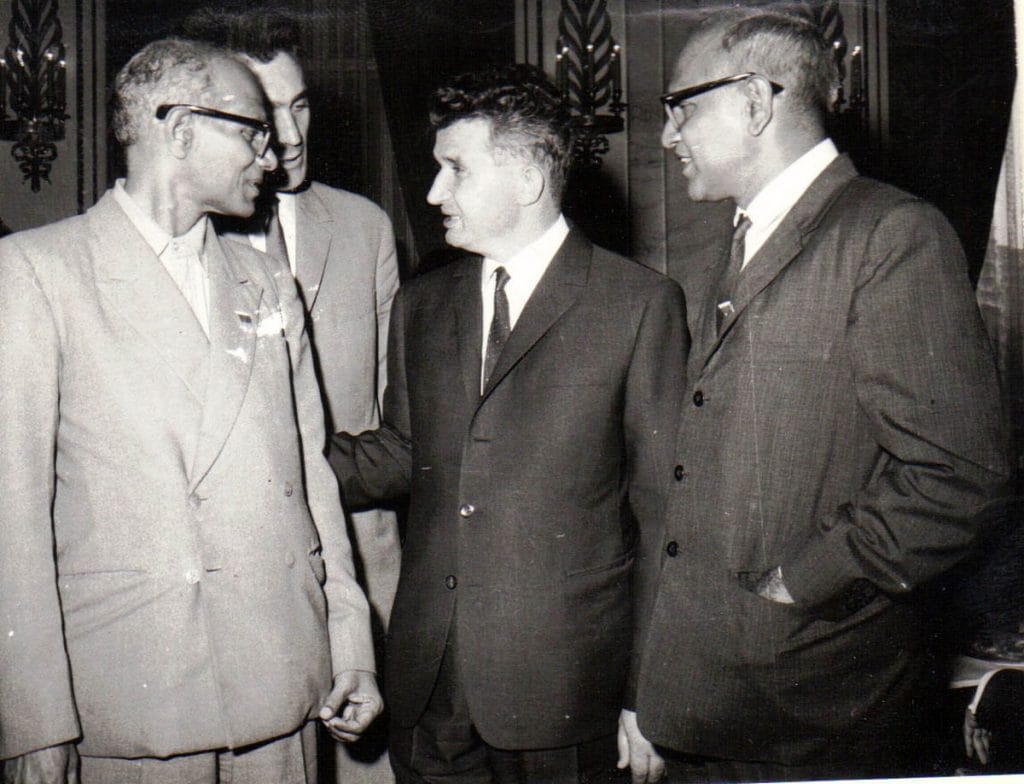
In the book Communism in Andhra Pradesh, Rao writes of how five leaders — Chandra Rajeshwar Rao, Baddam Yella Reddy, Raavi Narayan Reddy, SVK Prasad, and Sundarayya — rejected Gandhi’s ideology of civil disobedience and non-violence. Lal-Bal-Pal’s call for direct action found more traction than the moderate approach of persuasion through petitions.
The Left in Andhra was quick to sense dissatisfaction among students.
“The National Congress has attempted to eradicate the numerous embarrassing conditions that exist in society, but has been unable to do so successfully. Recognizing that, Communist Party leaders returned to villages and towns in Andhra and attempted to resolve the people’s problems,” writes Chittoor-based history lecturer K Savitri in a paper titled ‘Role of the Political Schools in the Propagation of Leftist Ideology in Andhra’ in the International Journal of Creative Research Thoughts.
The Thesis explicitly called out the distinction between Marxism and Maoism. The Andhra committee argued that the Indian bourgeoisie was not the enemy of the People’s Democratic Revolution; rather, the State, being the oppressor, was the enemy
— Purendra Prasad, professor, University of Hyderabad
To ensure that Russian-born ideologies took root in Andhra, intellectuals in the Krishna district looked to the writer Maxim Gorky, a five-time Nobel nominee and a proponent of socialist thought. Gorky’s work convinced them that schools and universities were the ultimate vehicles for spreading the Communist party’s ideals. And so, men from the Krishna district educated at Benares Hindu University and Kashi Vidya Peeth established their own educational institutions in Tunikipadu, Kottapatnam, and Mantenavaripalem to forge a new student vanguard.
From fields to classrooms
After farmworkers, small farmers, and marginalised caste groups, the ideologues turned their attention to catching them young.
Children’s classics by Korney Chukovsky, V Biyanki, and P Bazov were lapped up by young readers as translated versions were made available every month. Puripanda Appalaswamy’s 41 Russian Navala, a Telugu translation of 41 Russian novels in the 1950s, brought Soviet fiction into adult reading circles too.
Gorky’s novels and homegrown leftist literature also made their way into colleges and hostels through handbills and pamphlets, passed hand to hand. Monthly magazines such as Andhra Patrika took socialist ideas into middle-class households. Many families even subscribed to Russian magazines. To the extent that parents began naming their children with revolutionary undertones, like Krantirekha and Viplav.
“Unlike the Russian, Cuban, and Chinese revolutions, Indian (mainly Andhra’s) Marxism hasn’t been ‘Socialism from Above’. In seven decades, the Communist revolution in India has enveloped people from different strata of society,” said Satish Chennur, Assistant Professor of Sociology, Centre for Studies in Social Sciences.
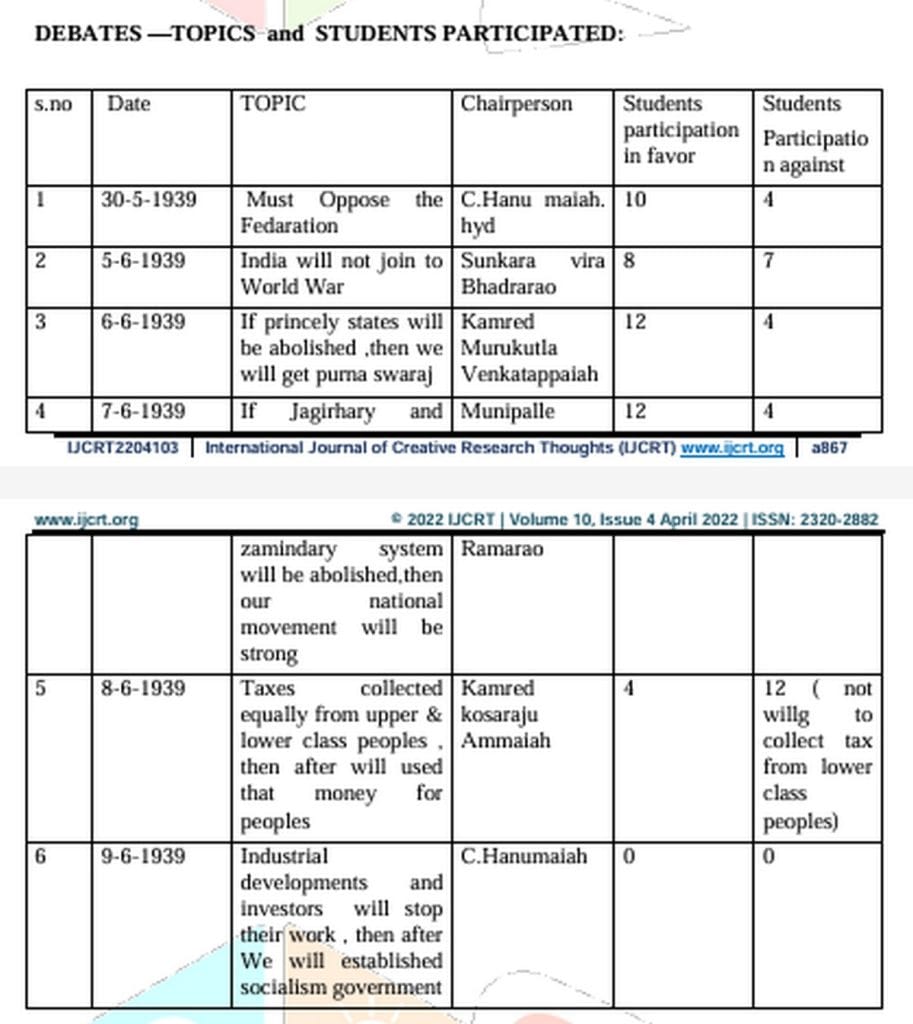
In the 1930s, only the British could establish formal universities. So the Communists built their own. Often funded by sympathisers in Russia, China, and Cuba, they set up a network of informal post-matriculation institutions — known as ‘political schools’ — that functioned as ideological training grounds outside the colonial academic system, Chennur explained.
While Andhra University was established in 1926 at Visakhapatnam by the British to serve the Telugu-speaking regions under the Madras Presidency, it soon became a nerve centre for communist thought. The Tunikipadu Economic Political School, the Gandi Gunta Economic and Political School, and the schools at Kottapatnam and Mantenavaripalem were established by communist leaders in the Krishna district. Though the British stiffly resisted these institutions, perceiving a threat, the Communists received letters of appreciation from leaders such as Jawaharlal Nehru, Subhash Chandra Bose, and Jayaprakash Narayana.
In some cases, the leaders wrote letters to students in these schools, urging them to join the nationalist movement. This recognition gave fresh energy to leaders such as Acharya NG Ranga and Sunkara Veerabhadra Rao, who helped students grasp global and local political and economic issues, Savitri writes in the International Journal of Creative Research Thoughts.
The syllabus of these schools shows how deeply communist ideology was ingrained in the teaching. At Tunikipadu School, for instance, lecturer Maddhukuri Chandrasekhara Rao taught the Russian Revolution, Pillalamarri Venkateswarlu took classes on the Labour Movement in India, and Gadde Rangaiah Naidu lectured on the Tragedies of Zamindars—with the odd concession made for courses such as veterinary medicine and national debt.
Over a period, some of these schools became affiliated with state universities in Andhra Pradesh, partly for want of funds, and partly because their twin objectives had been achieved: India’s independence, and the loosening of the Telangana landlords’ grip over land and labour.
Engineering with a side of ideology
When Jawaharlal Nehru set up the Regional Engineering College (REC) at Warangal in 1959, he almost certainly didn’t intend it to become the new headquarters of communism in Andhra Pradesh. But by the 1960s, that’s what it had become.
With some of the brightest students from the Telangana Agitation of the late 1940s now on the REC Warangal faculty, the city became the regional depot of left-wing radical politics.
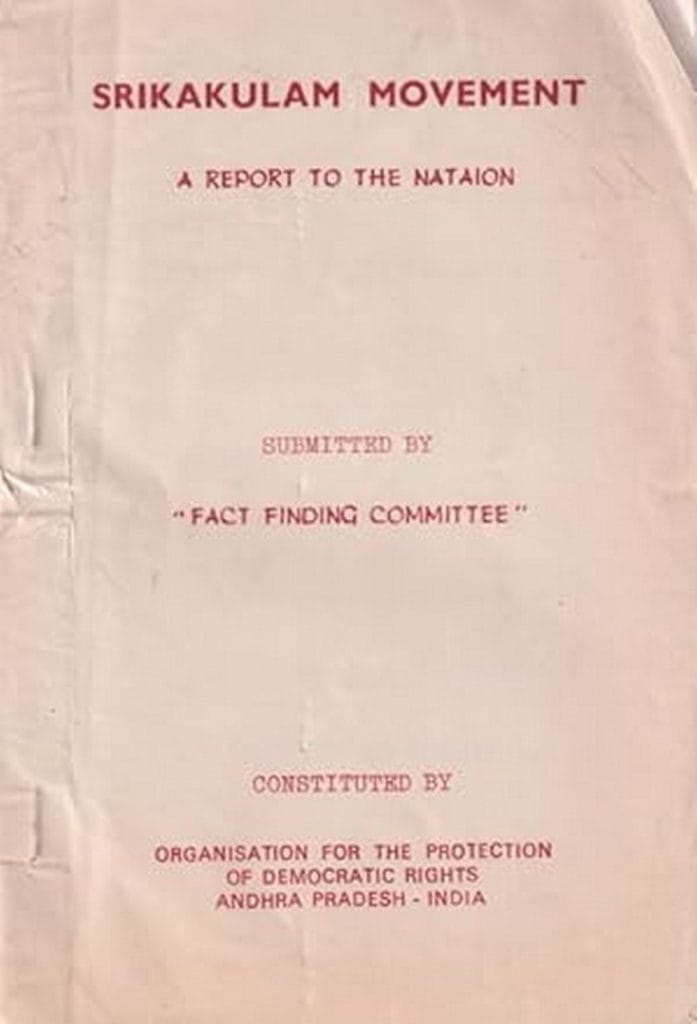
The revolution had quietened through the late 1950s, but by the late 1960s it peaked again. The Srikakulam Peasant Agitation of 1967-68, sparked by the killing of two Girijans, Koranna and Manganna, spiralled into one of India’s largest peasant guerrilla squad movements. The Centre deployed more than 12,000 CRPF personnel to tackle the uprising. Many students from the Warangal campus joined the newly formed All India Coordination Committee of Communist Revolutionaries, a splinter group of the Naxalbari movement that later transmuted itself into the Communist Party of India (Marxist-Leninist).
The Warangal REC had many infamous and ominous firsts, said a reformed Naxal, now a faculty member at Osmania University, who spoke to ThePrint on the condition of anonymity.
“It was the first of the RECs in India, the first to have created radical left wing student groups such as the Radical Students Union and the People’s Democratic Students’ Union (Warangal Branch) which metamorphosed the college into being the resourceful cradle of the People’s War Group,” he said, adding that over 75 per cent of the Central Committee Members, including Nambala Keshav Rao (Basavaraj), Sadanala Ramakrishna, and Cherukuri Rajkumar (Azad) of the now-banned Communist Party of India (Maoist) came from this college.
Sabha, Sangham, Sahityam
If universities incubated revolutionary cadres within classrooms, Andhra Pradesh’s literacy and cultural movements made distant ideals of equity and equality accessible and urgent in wider society.
The Communists rooted their ideology in a “Modern Telugu Renaissance” championing 19th-century reformers and litterateurs like Kandukuri Veeresalingam, Gurajada Apparao, and Gidugu Ramamurthy.
As the father of this renaissance, Veeresalingam’s novel Rajasekhara Charitramu—one of the first in the language—brimmed with radical ideas on gender and rationalism. Playwright Gurajada Apparao, meanwhile, wrote plays, such as his masterpiece Kanyasulkam, in the language of the people; his famous line “Desamante matti kaadoyi, Desamante manushuloyi” (a country is not just land, but its people) was quoted by Finance Minister Nirmala Sitharaman in her Budget speech last year. Linguist Gidugu Ramamurthy, too, was a leader in the fight to liberate Telugu from its classical, Sanskritised shackles.
The rich tradition of Telugu poetry, novels, and socio-political tracts became a cornerstone of socialist literature in the ‘Red Era’. Unnava Lakshminarayana’s 1922 novel Malapalli — set in a village of ‘untouchables’ in Guntur district — made an explicit case for Bolshevik-style revolution. Garimella Sathyanarayana’s Swarajya Geethalu (Songs of Freedom) were so powerful that the British banned them in 1921 and imprisoned the poet for nearly three years. His slogan — ‘Every teaspoon of exploitation and oppression is met with a tablespoon of struggle’ — echoed across Andhra Pradesh, scrawled as graffiti on the walls of homes and classrooms.
Below is an extract of Sathyanarayan’s poem opposing British rule, chronicled by the Tricontinental Institute for Social Research.
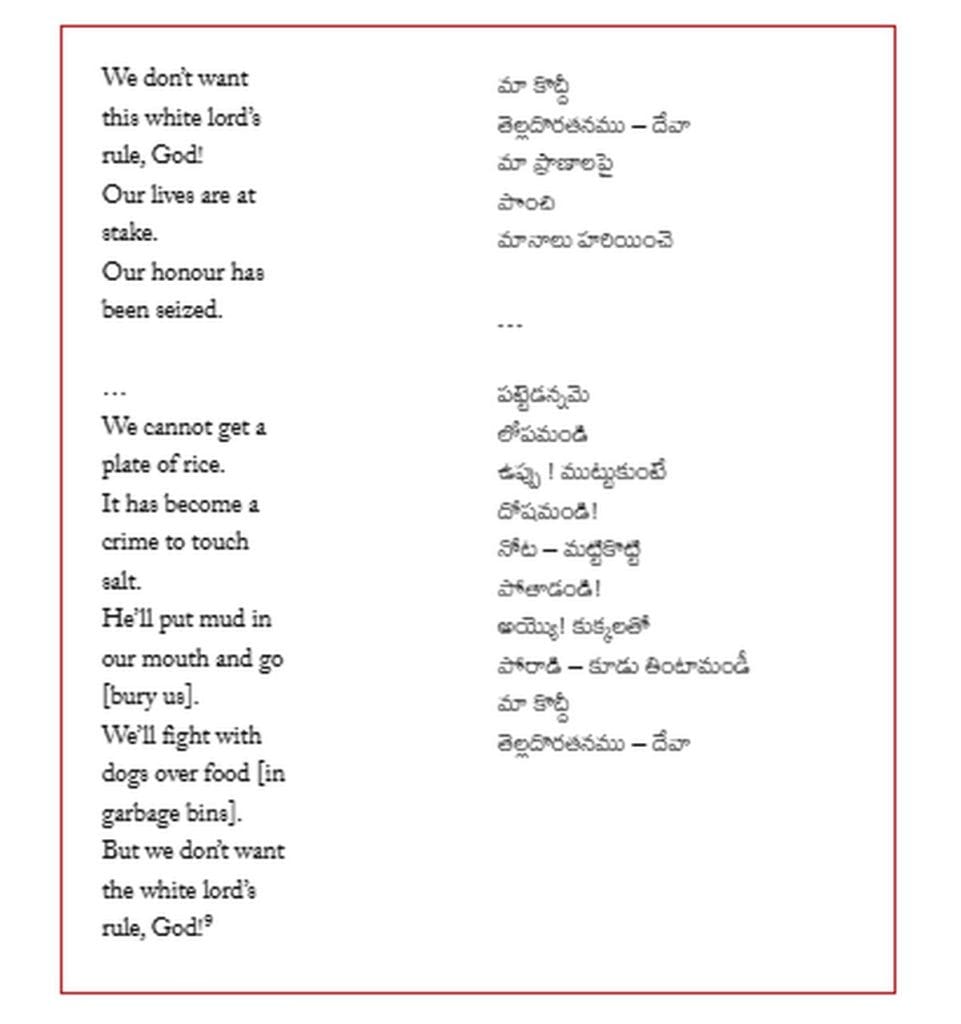
By the 1930s, this literary energy began to institutionalise through the Progressive Writers’ Association (Arasam), which rallied poets and essayists into an organised cultural front. Leaders like Sunkara Veerabhadra Rao also pioneered the Library Movement, recognising that illiteracy was the primary tool used by feudal lords to exploit the poor. CPI-affiliated publishing houses Prajasakti and Visalandhra widely disseminated low-priced and even free books—a tradition that carried on over the decades.
The Andhra Mahasabha, established in 1930 to impart Telugu education to Dalits and tribals, soon became a political platform for the Communists to launch the anti-Nizam Telangana agitation.
Women were at the forefront of the intellectual revolution as well. The Andhra Mahila Sabha was started by Durgabai Deshmukh (née Gummididala) in 1938 to promote women’s education and healthcare and to get women into the freedom struggle. Called the ‘Iron Lady’ in many of the Instagram posts that still circulate about her, she wrote two books and was a member of the Constituent Assembly. Later a CPI(M) MLA, Mallu Swarajyam was an Andhra Mahasabha member who began her revolutionary career as a teenager, inspired by Maxim Gorky’s Mother. A dalam commander during the Telangana peasants’ revolt with a bounty on her head, the title of her autobiography said it all: Naa Maate Tupaakee Tootaa (My Word Is a Bullet).
Then there were Kondapalli Koteswaramma, whose autobiography Nirjana Vaaradhi later painted a vivid picture of the Communist movement— including its shortcomings as far as inclusion of women and minorities went —and Chakali Ilamma, who joined the Andhra Mahasabha to fight the horrific practice of young brides being forced to bed zamindars before their own husbands on their wedding night.
In the ensuing decades, Sri Sri’s progressive Telugu poems in Maha Prasthanam (Forward March) and P Sundarayya’s Telangana People’s Struggles and Its Lessons became the defining scriptures of the movement.
This intellectual legacy is still fiercely guarded.
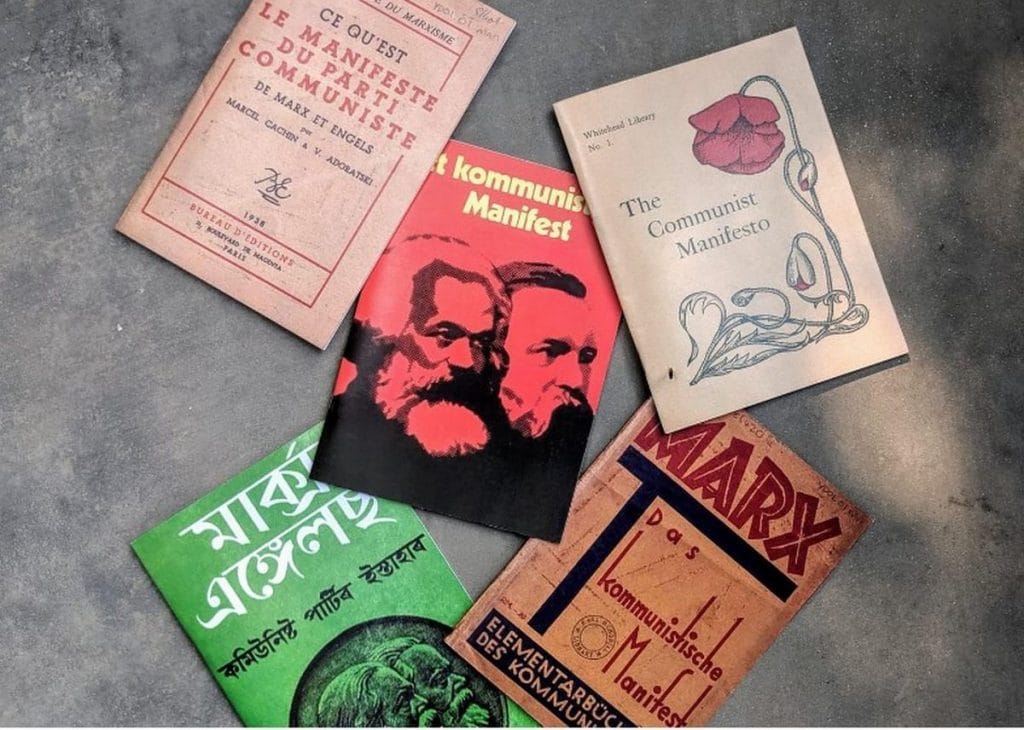
“The culture of preserving oral history is kept up only by Communist parties in Andhra Pradesh even to date, with Red Books Day being celebrated,” said Prof Purendra Prasad of the University of Hyderabad. Held annually on 21 February to mark the first publication of the Communist Manifesto in 1848, the day features public readings, book exhibitions, and discussions on Marxist literature. New books still make their way to the stores in Vijayawada at the Marx-Engels statue square.
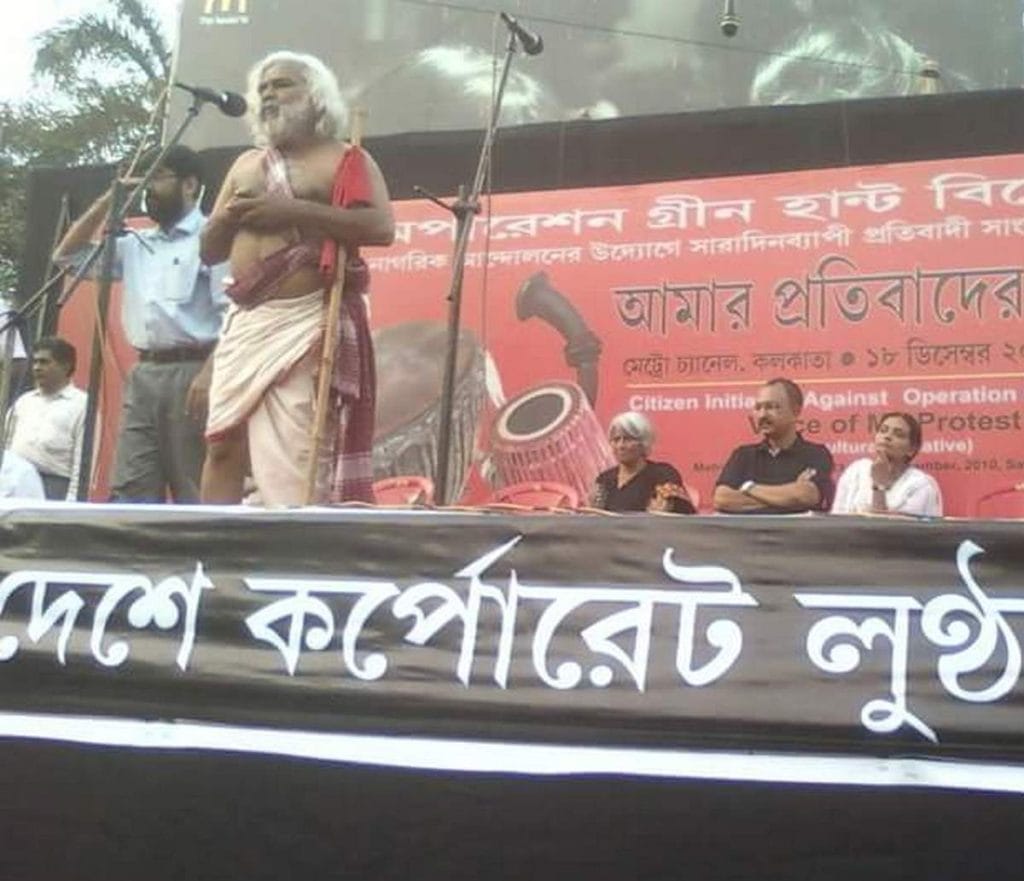
Another cultural strand that’s alive and well is performance, which the Communists used to mobilise the masses. Praja Natya Mandali, a people’s theatre collective, used folk forms like burrakathas — a narrative ballad tradition — to dramatise workers’ and peasants’ struggles. And then there was the Jana Natya Mandali (JNM) or People’s Theatre Troupe, founded by singer-activist Gaddar. Perhaps no one embodied the fusion of art and revolution more than him.
Born Gummadi Vittal Rao, he spent years underground as a committed communist before channelling his art into mass mobilisation. He called his cultural movement ‘Telangana Dhoom Dham’, bringing together artists, intellectuals, and students on a single platform to campaign for a separate Telangana state. His songs — Podustunna Poddumeeda (On the Rising Sun of Telangana) and Amma Telanganamma — became anthems of resistance so potent that mainstream political parties begrudgingly adopted them in their own speeches.
In 2010, four years before Telangana was carved out of Andhra Pradesh, Gaddar launched the Telangana Praja Front, a quasi-political outfit to lend political weight to his cultural work. So pervasive was his impact that the current ruling Congress government in Telangana prefixed the state’s film awards with Gaddar’s name.
Also Read: ‘Military dominance, immunity to change’: Ex-Maoist leader Venugopal on why the movement fell apart
‘We will live in one form or the other’
The stories and songs of the Communist revolution, passed down through generations, continued to awe and shock young men and women at their most impressionable ages. In the second half of the 1970s, two people gave these anthems a modern, militant meaning.
After years of critiquing the failures of egalitarianism, Kondapalli Seetharamaiah and KG Sathyamurthy, known simply as KS and KG, founded the People’s War Group (PWG) in 1980. Styled as a prominent Naxalite-Maoist insurgent organisation, it rejected parliamentary democracy in favour of creating “liberated zones” and parallel governance.
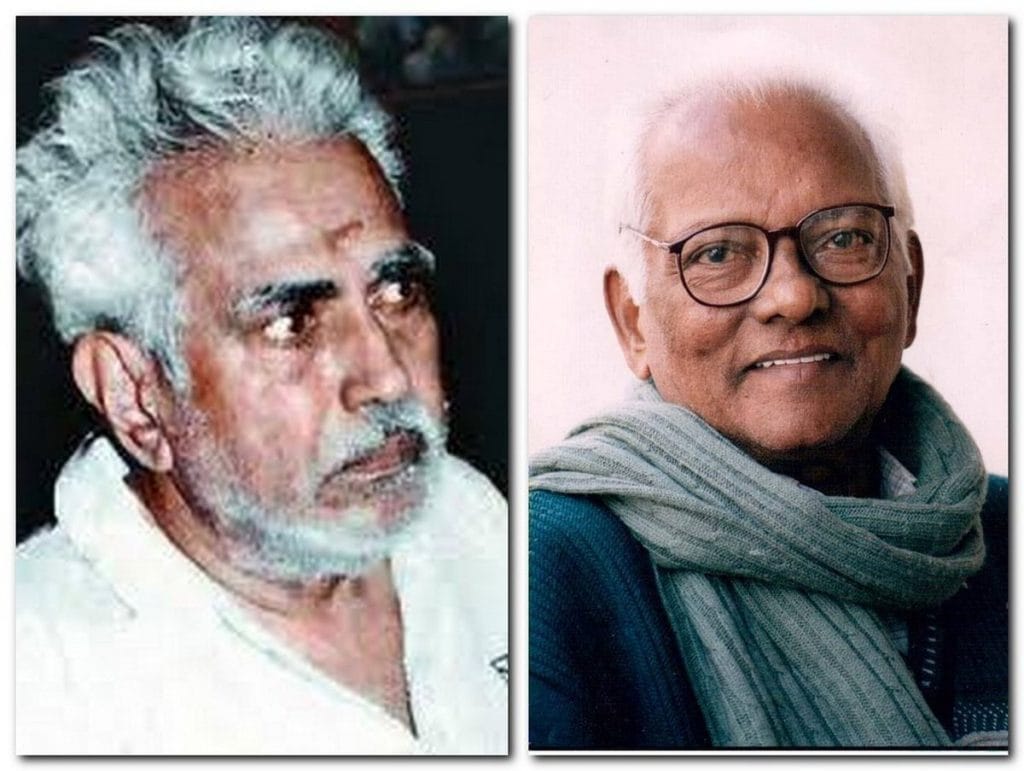
Unlike the movements of the 1940s and 1960s, the PWG spurred a new democratic revolution through protracted armed struggle. This time, said Chennur, it was directed against the feudal upper caste, police officials who targeted the poor in the name of law and order, and forest officials who sided with corporations to rob the forest of its produce. Slain Maoist leader Mallojula Koteswara Rao (Kishenji) and Muppala Lakshmana Rao (Ganapathy), now pushing 80, were founding members who functioned as the PWG’s politburo members.
From the early 1980s to the late 2000s, the PWG strengthened bases in at least 10 states, forming central, state, and zonal committees and spreading its tentacles into more than 300 districts. Attacking police stations, security personnel, political leaders, and civilians who opposed them, the Naxals and their dalams have thousands of cases against them for targeted killings, infrastructure destruction, extortion, and abductions.
The peak threat came between 2005 and 2010, after the PWG merged with the MCCI to form the CPI (Maoist). The year 2005 was the bloodiest, with the country recording the highest number of killings of CRPF, police, and Greyhounds personnel by Naxals. In April 2006, then Prime Minister Manmohan Singh declared Naxalism the “single biggest internal security challenge” and banned the CPI (Maoist), ranking it on par with the Kashmir insurgency and the Sri Lankan LTTE. Subsequently, the Union Home Ministry formed the Integrated Action Plan in 2009 to address all forms of Naxalism in the country.
Since then, the decline has been swift and systematic. A combination of ground operations by the Greyhounds—Andhra Pradesh’s elite combat force—and large-scale surrender packages broke the movement’s back.
A Union Home Ministry release on 30 March declared that Naxal-affected districts went down from 126 in 2014 to just two in 2026; the “most-affected” zones have been whittled down to zero. Massive infrastructure projects, including over 12,000 km of new roads and 8,500 mobile towers, physically reclaimed the core areas that were once the movement’s geographical and financial strongholds.
“Their Politburo and central structure have been almost completely dismantled. Our goal was a Naxal-free India by March 31. The country will be informed once the entire process is formally completed, but I can say that we have become Naxal-free,” Home Minister Amit Shah announced on the floor of the Lok Sabha this Monday.
In January 2025, the MHA said there were 36 central committee and politburo members still at large. That 30 of them came from Andhra Pradesh and Telangana underscores the Telugu domination in the militant movement to the very end. As of 31 March 2026, according to the ministry, all have been neutralised — arrested, killed, or surrendered.
But though the Red Corridor may be dead, the spirit of the banned CPI (Maoist) still lingers, according to Malla Reddy.
“Our men may be gone, we may have laid down our arms, and the old ways of oppression may not exist. But as long as the proletariat suffers at the hands of the bourgeoisie, we will live in one form or the other,” he said.
(Edited by Asavari Singh)