








Jansewa was the first cinema hall established in Kathmandu in 1949. Ranjana, Ashok, Biswajyoti and Jai Nepal were theatres that came up later. Before cinema halls existed in Nepal, cine enthusiasts travelled to the Indian states of Bihar and Uttar Pradesh to watch Hindi movies. Travelling, of course, was an ordeal, as there were no proper roads or means of transportation. However, this did not deter the Nepalese, mostly men, from undertaking the arduous journey. They imitated their favourite actors in the way they dressed, their hairstyles and mannerisms. The film industry influenced fashion in the urban areas. Hindi songs were popular then as well as now. Ask anyone in Nepal about his or her favourite heroes, heroines, singers, etc., and the list would include some Bollywood names.
The popularity of Hindi films cut across all social divides in Nepal. Even Nepal’s King Mahendra (1920-72), was a fan of actor Dev Anand and invited him to his coronation. He asked him to make a film in Nepal. In his memoirs, Romancing with Life, Dev Anand wrote that he was in Kathmandu as a royal guest attending Crown Prince Birendra’s wedding in February 1970. One day he met an Indian hippie girl at a bakery in Swayambhu where hippies generally congregated. The girl Jasbir, a.k.a. Janice, had run away from her home in Canada after her parents’ divorce. Zeenat Aman’s role in the film Haré Rama Haré Krishna in 1971 was loosely based on this girl. Dev Anand stayed in Nepal for six months to write the film’s script. King Mahendra arranged for his stay at his brother’s hotel in Pokhara and deputed a police inspector as his bodyguard. The film, shot in ten weeks, was nothing short of celebration in Kathmandu. Dev Anand co-opted local Nepali artists and the names of a few of the artists were given to characters in the film. This created an emotional bond between the Nepalese and Dev Anand, especially during live film shoots. ‘Tea shops and bhattis, chowks and galis, womenfolk in households, students in schools, everywhere, everybody had a story to tell about the events that happened in the shooting spots.’
The film became a hit and its songs are still popular. The iconic song ‘Dum Maro Dum’, depicting hippie culture, became hugely popular in both Nepal and India. It boosted Indian tourism to Nepal. Dev Anand remains a much-loved actor in Nepal. He was honoured for his contribution to the Nepal film industry at Nepal’s first film festival organized in July 2005.
Also Read: Horror film ‘Bokshi’ flips the wicked witch concept—gore, folklore, and feminine power
Beyond entertainment: Shaping social norms
Dance and music of Hindi cinema have become a part of everyday life in Nepal. Festivals like Teej or family celebrations are incomplete without Hindi songs. One popular song often heard in restaurants or at school and college functions is ‘Musu musu haasi’ (smiling gently) from the movie Pyar Mein Kabhi Kabhi. Another film that showcased Nepal’s magnificent mountains is Uunchai. A song with Nepali words, ‘Keti ko Keti ko’ (the girl, the girl), became a big hit in Nepal. Nepali words woven into Hindi songs have acquired a special place in the hearts of people.
Hindi films have also defined fashion in Nepal, both for men and women. Imitations of sarees worn by Hindi film actresses hit the market immediately. Kathmandu-based writer and documentary filmmaker, Shekhar Kharel, makes an interesting observation, when he says, ‘There are good films, bad films and Hindi films.’ The masala movies are entertaining and there is something for everyone, be it story, music, fashion or action. Hindi films cater to South Asian sensibilities and people relate to it.
The cultural influence of moving images is such that people start imitating them in real life. This is visible in religious festivals, music, dance and language. Basanta Thapa, Executive Head of Himal Association and Founding Chair of the Kathmandu International Mountain Film Festival, says Mehendi and Sangeet functions, once uncommon in Nepal, are now wedding staples, inspired by Hindi films and television serials. Dashain is a popular festival in Nepal where family members seek the blessings of their elders, but now Dussehra, as shown in television serials and films, has become popular. Other family-based festivals like Bhai Tikka, Holi and Rakhi have been influenced by the cinematic world.
One of Bollywood’s major influences is the spread of the language of Hindi. Ask a taxi driver how he learnt Hindi and his prompt reply will very likely be from Hindi films or television serials. Gradually, Hindi is emerging as the common link language of South Asians. A Nepali journalist shared with me his experience in Bangladesh. He was speaking in English with a cab driver in Dhaka and was told, ‘Sir, kya aap Hindi mein bol sakte hain?’ (Sir, can you speak in Hindi?) This is a standalone case, but points towards the ease of communication in Hindi and the extent of Bollywood’s reach.
Nepali publisher, editor and writer Kanak Mani Dixit says Hindi cinema should be called ‘Hindustani cinema’ due to its pan-South Asian appeal. Bollywood should be open to all. The people from the region own Hindi films and they make them popular in not only South Asia, but also globally, wherever the South Asian diaspora is present. Many artistes from South Asia aspire to be in the Hindi film industry. There are artists from Pakistan, Sri Lanka and Bangladesh who have worked, or are working, in the Indian film and music industry. Decorated trucks in Pakistan have images of Hindi film actors painted on them. In Nepal, there is a Shah Rukh Khan fan club. The club’s core members promote his films and even try to emulate their favourite star by giving something back to society. The group contributed to helping flood victims in Butwal, besides being engaged in other social work.
Hindi films have depicted the socio-economic conditions and changes in Indian society. They are brand ambassadors of societal change and reflect the country’s economic progress. If the 1950s saw films heavily influenced by socialism and welfare, the period from the 1960s to the 1980s depicted heroes and anti-heroes fighting against social ills and upholding cultural and family values. The 1990s and beyond represented a liberalized economy and a country of young aspirational people. They depict existing realities, norms and changing values, and help to break down western stereotypes and prejudices about India as a poor, exotic country.
Post-colonial, modern India is global in every sense. Music and dance have much more flexibility, at times taking inputs from western dance forms, be it salsa, waltz or flamenco. Background dancers are recruited from western countries and the fact that they seek jobs in Bollywood highlights India’s economic rise.
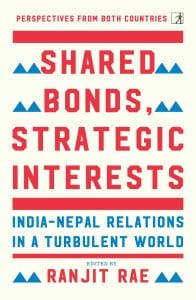 This excerpt from ‘Shared Bonds, Strategic Interests: India-Nepal Relations in a Strategic World’ by Ranjit Rae has been published with permission from Simon & Schuster.