





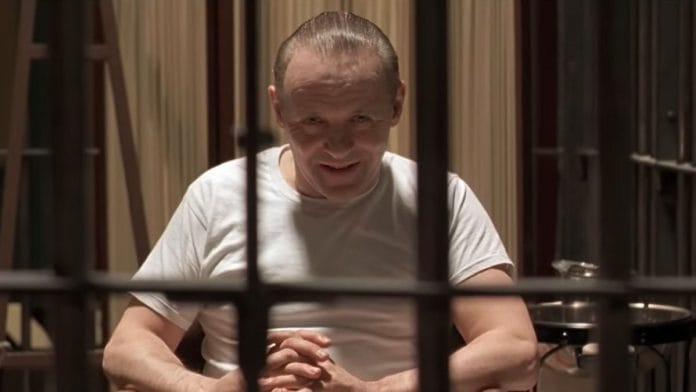



Nearing the end of an eight-month West End run of the play M. Butterfly in September 1989, I was out-of-my-skull bored. One morning before a matinee, I went to see Mississippi Burning, starring Gene Hackman, and walked out of the theatre thinking, I sure would love to do a big Hollywood movie. I wondered if it would ever happen. I thought it probably wouldn’t. I’d shot a little thing with Mickey Rourke and when he grabbed me too hard around the neck in a scene, I shoved him and said, “Touch me like that again and I’ll smash your face right into the back of your head!”
Bored and irritable – that’s the mood I was in as my contract with the play was ending. Then one Thursday afternoon, I got a call on the theatre phone.
“I have a film script here in the office,” said my London agent, Dick Blodgett. “It’s interesting. Do you want to read it?”
“Yes. I’m in the theatre right now.”
“I know. That’s why I phoned you there. Are you going to be there for the rest of the afternoon? I can send the script to you right now.”
“What’s the film about?” I asked.
“It’s called The Silence of the Lambs. An American is attached to direct, Jonathan Demme. He’s good.”
“Silence of the – what was it?” I asked.
“Silence of the Lambs.”
“Is it a children’s film?”
“No, it’s a kind of crime film. The part is called Lecter. It’s not a big role, but Demme seems keen on you playing him. He’s interested. I think Jodie Foster is the star.”
“She’s good. Didn’t she get an Oscar?”
“Yes. You want to read it?”
“Yes. Send it over.”
Also read: I cried during my research years because I struggled with my Sanskrit texts: Ananya Vajpeyi
The M. Butterfly reviews had been mostly indifferent, although some were savage. Audiences had been dwindling throughout the summer. I couldn’t wait for the end of the run. I’d figured out by then that the theatre really was not my cup of tea. Doing the same thing night in and night out had become boring. Why did I choose this game? I often asked myself.
But film? That’s a different game altogether. Very little repetition. Travel. Money’s good. And I enjoy it. You keep moving around a lot. You’re rootless. This Silence film might be interesting. Jodie Foster? Can’t be bad.
Within half an hour, the script arrived. On the front Dick had scribbled Lecter.
I made a cup of tea and sat down to read. I stopped at page 15. I called the agency. Dick said, “Hi. So? What do you think?”
“I don’t want to read any more,” I said. “Is there a firm offer?”
“What’s the problem? You don’t want to read but is there an offer? Sounds weird.”
“It’s the best part I’ve ever read. I don’t want to read any more in case there is no real offer.”
“OK. I’ll get back to you.”
That sounded promising, so I read the rest of the Ted Tally screenplay, which was based on the bestselling Thomas Harris novel. Then I took a walk outside and bought a sandwich and coffee.
The call came through: “Jonathan wants you to play Lecter. The offer is real. He’s flying to London tomorrow. I got him a ticket to see the play on Saturday, and he wants to take you out for a meal and talk after. OK with that?”
“Great. Fantastic.”
“Good role, this Lecter guy?”
“The best. A life-changer.”
“It’s a small role, but if you think it’s great, go ahead. Congratulations.”
Saturday came. There was a note for me at the stage door: See you after the show, Mr Hopkins. Jonathan Demme.
After the show, we met and went across the street to an Italian restaurant. He never stopped asking me questions: What did I think of the screenplay? Any ideas about Lecter? How did I plan to play him?
“Like HAL the computer in the Kubrick film 2001: A Space Odyssey,” I said. Quiet and intimate.
In the film’s opening scenes, FBI trainee Agent Clarice Starling has been given a dangerous mission by her superior, Jack Crawford: to interview a vicious criminal, a former psychiatrist now serving a life sentence for murder. The series of interviews by Starling are to be conducted in a prison for the criminally insane.
Crawford tells Clarice to stick to specific questions and avoid any closeness. In other words, take full charge of the interview. Do not let the interviewee make the rules.
“Who is the subject?” asks Clarice.
“The psychiatrist Hannibal Lecter.”
“Hannibal the Cannibal.”
Crawford warns Clarice not to tell Lecter anything personal. “Believe me, you don’t want Hannibal Lecter inside your head.”
When I read those lines, I knew the character instantly. The pattern of his personality clicked in my mind. Lecter is described as a monster. That was my clue. Do not play the monster. Play a quiet, friendly version. Create a “romance” with Starling. Seduce her. Take full charge of the interview. Cat-and-mouse game. Fun. Draw the audience into the game.
 This excerpt from ‘We Did Ok, Kid’ by Anthony Hopkins has been published with permission from Simon & Schuster.