





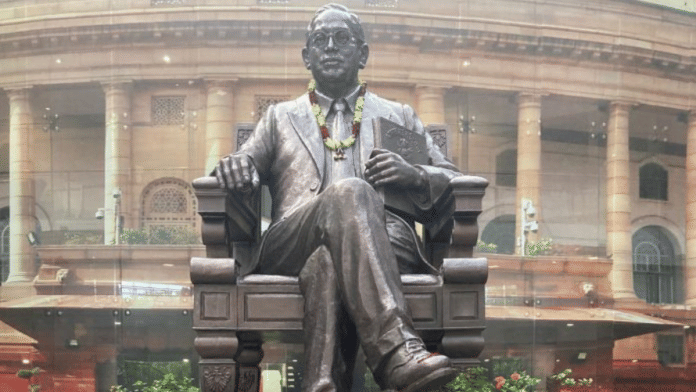



The flipside of the picture depicted by the left-liberals to describe the Ambedkar-RSS story is quite pronounced and in many places not just surprising but shocking. For example, Ambedkar himself attended an RSS programme in Pune in 1949 and was surprised to find that asking each other’s caste in the RSS was taboo.
Ambedkar was only expressing what Mahatma Gandhi had told RSS founder K.B. Hedgewar after his visit to an RSS shakha at Wardha in 1932. Gandhi too was struck by this unique culture of not asking each other’s caste in a Hindu organization.
As Union law minister, Ambedkar favoured a uniform civil code and was opposed to the imposition of Article 370 in Jammu and Kashmir just like the RSS. According to Bhartiya Jana Sangh leader Balraj Madhok, Ambedkar told Sheikh Abdullah: ‘You wish India should protect your borders, she should build roads in your area, she should supply you foodgrains, and Kashmir should get equal status as India, but government of India should have only limited powers and Indian people should have no rights in Kashmir. To give consent to this proposal would be a treacherous thing against the interests of India and I, as the law minister of India, will never do it.’
Moreover, there were many in India who at the time of Independence opposed elections at the gram panchayat level saying these will divide the society along caste and other lines forever though the elections were being introduced in the name of true democracy. One of these individuals was Ambedkar and the other RSS sarsanghchalak M.S. Golwalkar. But the left-liberals are silent on it.
Ambedkar’s View on Muslims in ‘Thoughts on Pakistan’ Partition of India
In Pakistan or Partition of India Ambedkar writes:
The methods adopted by the Muslim invaders have left behind them their aftermath. One aftermath is the bitterness between the Hindus and the Muslims which they have caused. This bitterness between the two is so deep-seated that a century of political life has neither succeeded in assuaging it, nor in making people forget it. As the invasions were accompanied with destruction of temples and forced conversions, with spoliation of property, with slaughter, enslavement and abasement of men, women and children, what wonder if the memory of these invasions has ever remained green, as a source of pride to the Muslims and as a source of shame to the Hindus?
But these things apart, this north-west corner of India has been a theatre in which a stern drama has been played. Muslim hordes, in wave after wave, have surged down into this area and from thence scattered themselves in spray over the rest of India. These reached the rest of India in thin currents. In time, they also receded from their farthest limits; while they lasted, they left a deep deposit of Islamic culture over the original Aryan culture in this north-west corner of India which has given it a totally different colour, both in religious and political outlook. The Muslim invaders, no doubt, came to India singing a hymn of hate against the Hindus.
In Thoughts on Pakistan, he writes:
The Islamic injunction to Muslims not to take the side of non-Muslims in any strife is the basis of pan-Islamism. It is this which leads Muslims in India to say that he is Muslim first and an Indian afterwards. It is this sentiment that explains why the Indian Muslim has taken so small a part in the advancement of India but has exhausted himself by taking up the cause of Muslim countries. And why Muslim countries occupy the first place and India the second place in their minds.
Savarkar’s principle of one man one vote would mean a democratic, Hindu majority state. It would not be a Muslim state and hence Islam prohibits the Muslims from living in it. Islam can never allow a true Muslim to adopt India as his motherland.That is probably the reason why Maulana Mohammed Ali (once the president of Congress and Khilafat movement leader in 1920s), a great Indian but a true Muslim, preferred to be buried in Jeruslem rather than India.
Clearly, the language used by Ambedkar on the subject is sharper than that of the RSS.
Also read: How jatra female impersonator Chapal Bhaduri brought Chand Bibi to life—his first lead role
Impact of Muslim Atrocities on Hindu Caste System: A Related Perspective
Describing a picture of a darbar of Sultan Mohammed Bin Tughlaq on the day of Eid, Moorish traveller and religious preacher, Ibn Battuta wrote:
As we were sitting in the darbar, Hindu girls of all hues, from daughters of kings and brahmins and from lower classes, were brought in groups in the darbar, made to dance and then distributed amongst the nobles in slavery and concubinage. I was presented with three such girls but I already had four. So I distributed some of of these amongst my slaves.
This episode is graphically described by the great historian R.C. Majumdar in one of his works. Another historian V.D. Mahajan too has given a chilling account of Muslim atrocities on Hindus during this period in his book The Delhi Sultanat.
So the Muslim invasions did the job of stopping the water of a healthy river called Hinduism from flowing further, thus leading to dirt and wild growth in it. Slowly the upper castes including the Rajputs, Banias and Kayasthas started adjusting with the Muslim rulers who needed them for administrative purposes and thus were spared the atrocities which were reserved for common Hindu population.
In a way their compromise with the invaders was largely a compromise of the oppressed with the oppressor. So when this upper-caste Hindu section aligned itself with the Muslim elite, it started treating the lower Hindu castes with hostility. And that’s how perversions crept into the Hindu caste system, which was originally a system of division of labour at the time of its inception. Noted writer V.S. Naipul too has described this negative impact of Muslim invasions on the Hindu community.
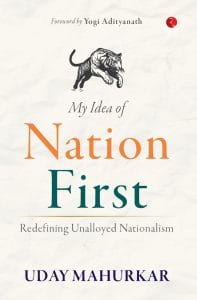 This excerpt from ‘My Idea of Nation First’ by Uday Mahurkar has been published with permission from Rupa Publications.