






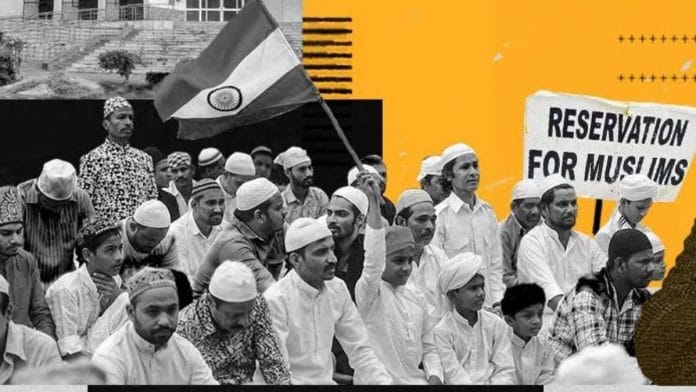



Reservation and social justice have always been deeply emotional issues in India. They are not just policy tools; they are tied to humiliation and the long struggle for dignity. The idea behind reservation was clear—to correct structural injustice, to create space for those systematically pushed to the margins. It was meant as a repair mechanism, not a permanent political currency.
Over time, however, what began as social correction slowly drifted into political negotiation. Quotas began to be announced, expanded, challenged, promised, withdrawn—often close to elections. What should have been a carefully designed tool for justice started looking like a bargaining chip to secure votes.
This week, headlines from Maharashtra brought the issue back into focus. The government scrapped a 5 per cent reservation for Muslims, triggering sharp reactions. The framing immediately turned religious.
If one reads beyond the headline, the scrapped quota was not meant for Muslims as a whole. It was for socially and educationally backward classes within Muslims, categories that mirror caste-based disadvantage. But once the policy is branded simply as “Muslim reservation,” nuance disappears, and polarisation begins.
And that is where my discomfort begins. Why should reservation be framed around religion at all?
Indian society’s inequalities are rooted primarily in caste hierarchies. And caste does not disappear with religious conversion. Hierarchies exist within Hindus, Muslims, Christians, Sikhs—every community. If reservation is meant to address structural backwardness, then it must be tied to measurable social and educational deprivation, not religious identity.
Also read: Indian Muslims need real leaders, not divisive ones. Pasmandas offer future-positive vision
Losing nuance
The Maharashtra Muslim reservation is not even a fresh development. It goes back to 2014, when the state government introduced quotas both for Marathas and for certain backward sections among Muslims in jobs and education. The move was challenged in court. Eventually, the judiciary struck down both reservations in employment, while allowing the 5 per cent Muslim quota to continue in education for socially and educationally backward groups.
And yet, whenever this issue resurfaces, it is the “Muslim reservation” that becomes the headline.
That itself is telling.
The opposition frames the scrapping as proof that the current government is anti-minority. The ruling side frames the original decision as nothing but appeasement politics. The real conversation about backwardness, data, deprivation, and constitutional limits gets buried under these predictable accusations.
When Maratha reservation was struck down, the debate remained largely about legal caps, constitutional limits, and the 50 per cent ceiling. However, when it comes to Muslims, the framing instantly shifts to identity, minority rights, and vote banks. It becomes emotionally charged, stripped of nuance.
The uncomfortable truth is that both sides benefit from this framing. One gets to say, “Look, minorities are under attack.” The other gets to say, “Look, appeasement has ended.” In this tug-of-war, social justice becomes secondary.
What rarely gets asked is a simpler question: Were the beneficiaries identified through credible socio-economic data? Were the categories aligned with constitutional principles? Was the policy sustainable within legal limits? Because if reservation is to remain a tool of justice, it must rest on solid ground, not on political messaging. Otherwise, it risks losing both legitimacy and purpose.
Also read: In Mohammed Siraj, the Pasmanda Muslims have a hero
Marker of deprivation
I believe that if reservation is to remain honest to its original purpose, it must follow the same logic across communities. Among Muslims, Christians, Sikhs—just as among Hindus—disadvantage is deeply shaped by caste-like hierarchies. Pasmanda Muslims carry historical and social marginalisation that mirrors caste-based exclusion. That reality cannot be wished away simply because the community identifies as a religious minority.
If reservation is about correcting structural injustice, then it should be extended within Muslim and other religious communities on the basis of caste hierarchy and measurable backwardness—not religious identity as a whole. Religion, by itself, is not the marker of deprivation. Social location is.
At the same time, there are individuals from so-called “upper” sections of any community who may be economically weak. For them, mechanisms like the 10 per cent Economically Weaker Section (EWS) quota, which was introduced in 2019, already exist. Poverty can and should be addressed. But poverty and historical social exclusion are not identical.
What worries me is how quickly these distinctions get blurred in public debate. When policies are framed as “Muslim reservation,” it feeds a narrative that an entire religious community is being given preferential treatment. That is not accurate, and it distorts the purpose of affirmative action.
If we truly want social justice, we need clarity. Caste-based marginalisation should be addressed wherever it exists, including within Muslim society. Economic hardship should be addressed through economic criteria. Mixing the two for political convenience only weakens both arguments.
Amana Begam Ansari is a columnist and writer. She runs a weekly YouTube show called ‘India This Week by Amana and Khalid’. She tweets @Amana_Ansari. Views are personal.
(Edited by Theres Sudeep)
Reservations in India were created for one specific reason — to correct that caste-based oppression that was rooted in Hindu social structure. It was never about economic poverty. A poor Brahmin never qualified, and that was by design. So let’s not pretend reservations were ever a general social welfare tool. They were surgical and specific.
Even within that specific purpose, reservations have been badly misused. People who have genuinely progressed and moved up in life still cling to them instead of stepping aside for others who are still genuinely struggling. That selfishness has created real social friction that nobody wants to honestly admit.
Now, extending this framework to Muslims is a categorical error. Islam’s entire selling point — especially to lower caste Hindu converts — was equality. No hierarchy, no discrimination, brotherhood of all believers. That was the promise. But what do we actually see? Ashraf Muslims looking down upon Pasmanda Muslims. A hierarchy based on lineage and origin that exists across the entire Muslim world, not just India. This is not a Hindu construct. Manusmriti has nothing to do with Ashraf or Pasmanda. These are entirely different social structures with different origins.
So the argument collapses on itself. You cannot claim Islam gave you equality and simultaneously demand reservations designed for Hindu caste oppression victims. And ironically, by making this demand, the author is actually admitting something her community rarely acknowledges openly — that Islam in practice is not the egalitarian religion it claims to be. The discrimination just comes from a different direction now.
Framing this as “Muslim reservation” to make it palatable is intellectually dishonest. There are genuinely poor and struggling people across all communities including upper caste Hindus who get nothing. If deprivation is the real concern, argue for universal economic criteria. But that is not what this is really about after all.
I totally support reservations on economic criteria. Be it any religion.
But all I want is temples be freed from govt control. They should have same freedom as chirches and mosques.