







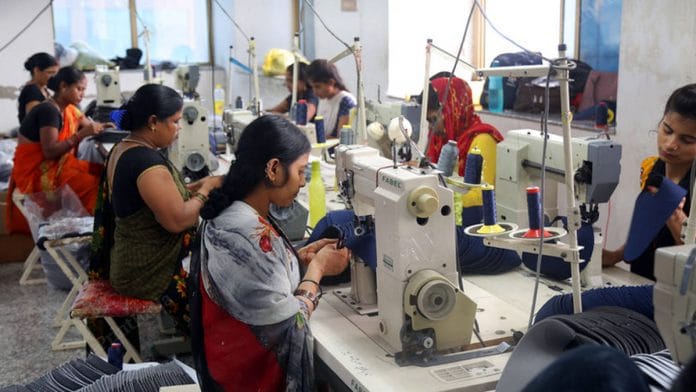



Cooking, caregiving, grooming, sewing, teaching. These are still seen as “women’s work” across societies. After all, women do these tasks routinely within households and communities, often without pay or recognition. Yet when the same activities become organised industries or profitable professions, it’s men who tend to dominate positions of authority, prestige and reward.
This paradox reflects a deeper pattern in labour markets. When work is informal, unpaid, or low-status, women are heavily represented. But when it becomes professionalised and profitable, men often occupy leadership roles. In most households, for instance, cooking remains primarily a woman’s responsibility. But in professional kitchens like restaurants or hotels, the most prestigious positions such as executive chefs are overwhelmingly held by men.
The activity remains the same, but its social and economic value changes once it becomes a profession. This pattern repeats itself across multiple sectors of the economy.
Also Read: Why don’t Indian women play sports? Safety concerns, lack of time
The hierarchy within ‘women’s work’
Even in occupations traditionally associated with women, a clear hierarchy emerges once income, authority and prestige enter the picture.
Consider the beauty and grooming industry, often viewed as a women-dominated sector. A 2024 study by Edge Empower, a diversity and inclusion firm, analysed 25 major public beauty companies and found that women comprised 69 per cent of the overall workforce and 63 per cent of junior management roles. But only 36 per cent of senior management positions were held by women. Women dominate the service labour, but men disproportionately run the business.
It’s a similar story in labour-intensive manufacturing. In Bangladesh’s garment sector, women account for around 80 per cent of production-line workers, making the industry one of the largest sources of wage employment for women. However, a World Bank working paper shows that women occupy only about 5 per cent of managerial roles such as line supervisors or factory managers.
Education provides another example. Teaching young children is widely seen as a feminised profession. Data from UDISE+ 2024-25 shows that women constitute about 54 per cent of school teachers overall in India. At the foundational stage, they account for nearly 96 per cent. However, as one moves up the educational hierarchy, the gender balance shifts. At the secondary level, women’s share drops to about 46 per cent.
The gap becomes even more pronounced in higher education. According to the All-India Survey of Higher Education (AISHE) 2021-22, women constitute around 43 per cent of faculty members, but only about 30 per cent of professors, the highest academic rank. Across sectors, from beauty services to manufacturing and education, the divide between who performs the work and who holds authority is difficult to miss.
Also Read: Companies don’t want mid-career women. That’s a missing middle in corporate India
Skilling alone will not close the gap
These patterns have important implications for policy, especially at a time when India is seeking to harness its demographic dividend.
In recent years, governments have placed strong emphasis on skill development and employability programmes. Initiatives under the national skill missions aim to train millions of young people and bring more women into the labour market. These efforts are necessary and welcome. But skilling alone will not solve the deeper structural problem. Women may receive training and enter the workforce in large numbers, but the evidence from multiple sectors cited earlier shows that participation does not automatically translate into leadership, ownership or economic power. The challenge is not merely about entry into the workforce, but about who is allowed to rise up.
Several structural barriers contribute to this gap. Women shoulder a disproportionate share of unpaid care work, limiting their time for career advancement. Access to credit, capital and business networks also remains unequal. Professional advancement often depends on mentorship, mobility, and institutional support — areas where women frequently face disadvantages.
If these structural constraints remain unaddressed, skill development programmes may unintentionally reproduce existing hierarchies. Women may enter industries at the lowest tiers, while leadership and ownership gradually become male-dominated as sectors expand and become more profitable. For India to truly benefit from its demographic dividend, policy must therefore go beyond increasing women’s participation in the workforce.
Skill development programmes must be accompanied by measures that enable women to move up the value chain. This includes expanding childcare infrastructure, improving women’s access to credit and entrepreneurship opportunities, ensuring that women have equal opportunities to be promoted to supervisory and leadership positions, and strengthening the representation of women in managerial and decision-making roles. Otherwise, the paradox will continue to repeat itself across sectors: women will perform much of the labour that sustains both households and industries, while authority, recognition and profits stay concentrated with men.
India’s demographic dividend will not be realised simply by training more women. It will depend on ensuring that when ‘women’s work’ becomes a profession, women are not pushed to its margins but remain at its centre.
Nijara Deka is a Fellow and Sameeha Jameel a Research Analyst at the National Council of Applied Economic Research (NCAER). Views are personal.
(Edited by Asavari Singh)