









The UK government has, for the first time, imposed what it calls an “emergency brake” on study visas for nationals from four countries—Afghanistan, Cameroon, Myanmar, and Sudan. The move has quietly raised many questions, not just about immigration policy but also about what happens when humanitarian concerns collide with political pressure over migration.
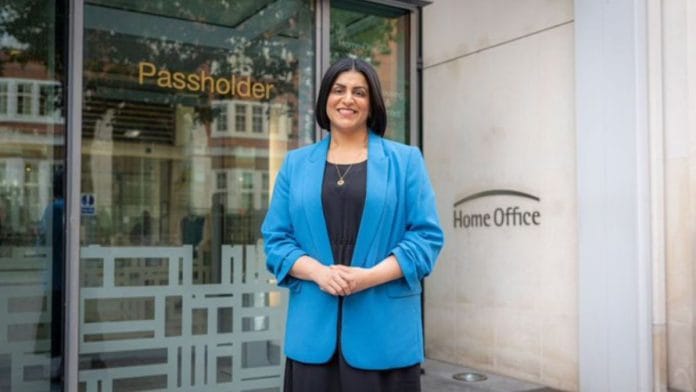
What caught my attention was the speech by Shabana Mahmood, the Secretary of State for the Home Department. She spoke about people “exploiting Britain’s generosity” to claim asylum. Politicians often give speeches that people forget right away, but words matter because they show a deeper problem in the system.
In principle, I understand and support the reasoning behind the decision. Student visas are being used as a mechanism to enter the country and later claim asylum. It undermines the very purpose of the visa system.
This doesn’t mean that one should ignore people who really need help. Those fleeing persecution or conflict should be able to seek asylum through an honest and transparent process. How countries can help such people on humanitarian grounds is a serious discussion in itself. But that conversation should remain separate from the misuse of student visas.
Also read: Labour was a beacon of inclusivity in UK. Its U-turn on immigration will hurt Indians
A shift in position
There is another side to this issue that is often ignored in the debate. People who can pay for tuition, visas, and travel abroad are already in a privileged position. If the student visa route were to become a backdoor to asylum, it risks pushing aside those who genuinely need protection and don’t have the resources to access such pathways in the first place. In that sense, this is not only about immigration control, but also about fairness and ensuring that opportunities belong to everyone.
But what stood out to me in Shabana Mahmood’s speech was the language she chose. The emphasis was on people “exploiting Britain’s generosity.” I would have expected the statement to focus more on law, process, and the need to protect the integrity of the visa system. Framing it as ‘generosity being abused’ makes it sound closer to rhetoric usually found in Right-wing political playbook.
What is especially interesting is that the argument is coming from the Labour Party, which projects itself as centre-Left, following ideas of social justice, equality, and a representative of the working class.
The tone indicates that Labour might be moving toward a more practical, “country first” view of immigration. It is trying to find a balance between its humanitarian values and the political pressure it is under.
Also read: Australia tightens student visa checks, moves India to highest-risk category. What it means
Why these countries?
Another question that naturally comes to mind is about the basis of choosing these four countries. According to available data, Pakistani nationals currently constitute one of the largest groups claiming asylum in the UK. A noticeable proportion of them initially enter through legal routes such as student visas before applying for protection.
While 70 per cent of claims were rejected last year, just about 4.1 per cent were sent back to Pakistan. Add to it, Pakistan has reportedly refused to take back some individuals involved in serious crimes in the UK. Yet, Pakistan is not among the countries facing an emergency visa brake.
That makes the selection of Afghanistan, Cameroon, Myanmar and Sudan curious. These are countries that are indeed facing severe humanitarian crises and political instability. And if the policy is meant to address the misuse of student visas as a pathway to asylum, then the logic behind choosing only these four countries becomes less clear.
Mahmood made it clear that this move is only the beginning. She indicated that more such measures could follow if the government finds continued misuse of visa routes. In that sense, the four countries named now may simply be the first step, not the final list.
Still, the announcement leaves a lot of questions unanswered. If the goal is to protect the integrity of the visa system, then the policy will ultimately have to show that it is being applied consistently and based on clear evidence, rather than appearing selective. Otherwise, what is presented as an administrative fix risks turning into another politically charged debate around immigration and asylum.
Immigration is one of the most difficult issues any modern democracy has to deal with. A country has the right to protect the integrity of its visa system and ensure that legal routes are not misused. At the same time, the world is witnessing more displacement, conflict, and instability than ever before, which means the demand for asylum will not disappear.
That is why the conversation must remain honest and balanced. Preventing the misuse of student visas is a legitimate concern, but it should not be framed in ways that blur the line between administrative policy and political rhetoric. The real challenge is to make a system that is both fair and open, protecting legal immigration routes while helping people.
Amana Begam Ansari is a columnist, writer, and TV news panellist. She runs a weekly YouTube show called ‘India This Week by Amana and Khalid’. She tweets @Amana_Ansari. Views are personal.
(Edited by Theres Sudeep)