






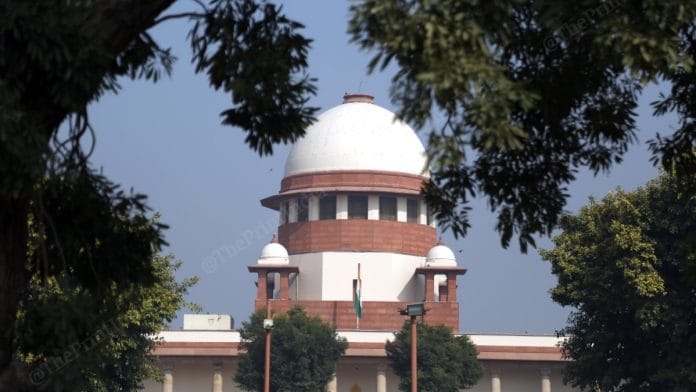



The two recent Supreme Court orders on 26 February and 11 March 2026, concerning a small section related to “corruption in the judiciary” in a school textbook, are unfortunate. The Solicitor General enthusiastically supported them. In other words, the executive, too, assisted the court in issuing a one-sided order instead of defending the scholars responsible for the text in its own institution.
Let us first see whether those orders were appropriate. Note that the material on two points in that book—“corruption in the judiciary” and “justice delayed is justice denied”—spread across two pages, which angered the Supreme Court judges. Yet not a single sentence from that material is quoted in the judges’ decision—that is, nothing they could demonstrate as wrong or improper. Thus, it appears that the content was correct, yet the judges had it removed.
A judgment without evidence
Therefore, the order becomes contrary to freedom of expression. The famous saying of the great writer George Orwell is: “If liberty means anything at all, it means the right to tell people what they do not want to hear.” At present, this very freedom has been struck by our Supreme Court judges, even though it is a fundamental right guaranteed by the Indian Constitution. They had a passage removed from a book in which they could show neither error, malice, nor impropriety—yet which they simply did not want to hear. They do not even wish to see statements made by their own former justices.
Thus, the situation now appears to be that in India, one may teach about corruption among MPs, MLAs, ministers, and officials—but not about corruption among judges. Even the detailed statements of former Supreme Court justices and Chief Justices on this matter cannot be cited. What kind of decision is this?
The passage in the textbook that the Supreme Court deemed inappropriate also included a remark made by the outgoing Chief Justice of the Supreme Court, BR Gavai, in June 2025, while he was still Chief Justice, made during a public event abroad. Speaking in England on the theme “Maintaining Judicial Legitimacy and Public Trust,” Chief Justice Gavai said: “There have been unfortunate instances of corruption and inappropriate conduct in the judiciary. Such incidents negatively affect public confidence and have the potential to weaken trust in the system.”
If saying this amounts to contempt of court, then a Chief Justice himself committed it while still in office just a few months earlier. Why did no judge object to that at the time? Nor can the issue be dismissed on grounds of discipline. Because eight years earlier (12 January 2018), four senior Supreme Court judges held a press conference publicly opposing the then Chief Justice. They openly alleged that important cases were being assigned arbitrarily to preferred benches. Yet that action and those statements were not considered contempt of court. Thus, it has already become a precedent. The present Chief Justice was also part of the higher judiciary at that time.
Also read: SC decision on menstrual leave is feminist. Rani of Jhansi didn’t use period as an excuse
Ironies of accountability
Several ironies are visible in this entire episode. When the Supreme Court judge took suo motu cognisance of the matter on 26 February, he reportedly remarked in the news: “Is there corruption only in the judiciary?” This statement itself acknowledges that corruption exists in the judiciary too, but suggests that one should not speak only about it. However, it seems awkward that corruption in the executive and legislature may be discussed, but not in the judiciary. That becomes another extreme.
Another irony is that orders were issued against Professor Michel Danino and two other scholars who had approved the text, without even hearing them. They were accused—unilaterally—of “not having adequate knowledge” and of presenting facts incorrectly. Paragraph 4 of the Supreme Court’s first order even alleges that the text was written in a “irresponsible, hateful, disrespectful, and deliberate manner.” Thus, very serious allegations were spread against those scholars unilaterally, since the complainant itself is the Supreme Court.
Ironically, the order does not quote a single sentence or word from the textbook passage that could serve as an example of something objectionable. Instead, it cites an article from an English newspaper described as “self-speaking” (paragraph 4), which formed the basis of the court’s displeasure. In other words, the order refers to a newspaper article as objectionable material rather than quoting any sentence from the textbook itself.
This appears rather strange. Because in paragraph 3 of the first order, regarding the textbook passage, it is written that “we are reluctant to reproduce the full contents,” which mentions hundreds of complaints against the judiciary. It also says that “picking a few words from the statement of a former Chief Justice of India, suggesting that the judiciary itself has acknowledged the lack of transparency, accountability and institutional corruption.”
This seems like a fourth irony: if a quotation used in discussing an issue is correct, authentic, and relevant, how can citing it be inappropriate? The Supreme Court order does not say those quotations are false, nor does it call their source—former Chief Justice Gavai—unreliable. In fact, not just one but many Chief Justices and senior judges of the Supreme Court have publicly said similar things in even stronger words.
For example, former Supreme Court judge Justice Ruma Pal, in a public lecture (10 November 2011), described the “Seven Sins of the Judiciary,” explaining them with examples. She said: “Judges are fierce in using the word [“independence”] as a sword to take action in contempt against critics. But the word is also used as a shield to cover a multitude of sins, some venial and others not so venial.”
Among those seven sins, Justice Ruma Pal listed: ‘brushing under the carpet’; ‘hypocrisy’; ‘secrecy’; ‘plagiarism and prolixity’; ‘judicial arrogance’, intellectual dishonesty, ‘nepotism’. The entire world heard this, and it remains widely published.
Thus, if merely mentioning such facts amounts to contempt and harms the judiciary’s “image,” then numerous Supreme Court judges themselves have been saying these things publicly over the past thirty-six years. In today’s extensive media age, every statement spreads everywhere. Although corruption is comparatively less in the judiciary than in the other two branches of government, former Chief Justice SP Bharucha once said that 80 per cent of judges are honest and upright. Yet since ordinary people are directly affected by court cases and the process of justice, the remaining percentage of irregularities creates bitterness. After all, 20 per cent is not a small number either.
Therefore, the fifth irony is that the portion removed from the textbook contained no false, intemperate, or disrespectful statement. Rather, it merely mentioned processes currently in place to deal with complaints against judges. Neither the presentation of facts nor the language or style reflected contempt or malice.
Finally, the greatest irony is that the portion of the book which might not have attracted any objection or even attention has now drawn widespread attention precisely because of the court’s harsh order. Since that passage has been removed everywhere with immediate effect following the court’s order, the subject of “corruption in the judiciary” is now being discussed everywhere.
In other words, the order has ironically given enormous publicity to a topic that was originally a minor description. Even if the title may have been somewhat mismatched, it is well known that many former Chief Justices themselves have said that the primary responsibility for maintaining the credibility of the judiciary lies with judges themselves. As former Chief Justice Bharucha said in a lecture on 22 December 2002: “To demonstrate that the judiciary does not tolerate corruption within its ranks, it is necessary that corrupt judges be investigated and removed from service.”
Therefore, it would have been more appropriate if our highest guardians of justice had fulfilled the expectations expressed by their own experienced and respected former judges and thereby strengthened public trust in the judiciary. Instead, punishing writers and scholars is like killing the innocent messenger.
Such action appears contrary even to basic human rights. The Supreme Court is the guardian of the right to freedom of expression—but at present it is the same institution that has struck at it. When the protectors of the Constitution themselves begin to take away constitutional rights, where will citizens take their grievances?
Shankar Sharan is a columnist and professor of political science. Views are personal.
(Edited by Saptak Datta)