









In his Ramnath Goenka Lecture delivered in November, Prime Minister Narendra Modi said that Indians should take a national pledge to finally “put the locks on” the Western mindset. He traced its roots to Thomas Macaulay’s 1835 project of reshaping Indian thought by demolishing indigenous knowledge systems and imposing colonial education.
Modi said that Macaulay broke India’s “self-confidence and instilled a sense of inferiority,” which has persisted for decades in the spheres of education, economy and social aspirations after independence. When a nation does not honour itself, the Prime Minister warned, “it ends up rejecting its indigenous ecosystem.”
Modi was spot on. The most enduring effects of colonisation are indeed psychological, and thus invisible. They manifest in spheres where they are least expected to, and that is why they continue to affect post-colonial societies much after formal colonial rule ends.
One such unexpected sphere is how Indians abandoned Indian dogs after being exposed to foreign breeds like Labradors, German Shepherds and Beagles brought by the British.
A random social survey would reveal that most Indians, especially educated ones, can effortlessly rattle out names of foreign breeds of dogs, but would struggle to name even one Indian dog breed.
Much like everything else—indigenous systems of education, dressing, language, professional aspirations—Indians abandoned indigenous dogs, relegated them to the status of “strays,” and embraced European dogs.
From the 1997 blockbuster Judaai, in which a newly monied, decadent Sridevi trots about her shiny bungalow with a white, fluffy poodle in her arms, to the more recent Dil Dhadakne Do (2015), in which the quiet and observant Pluto (a British breed, Bullmastiff), narrates the story of a wealthy, dysfunctional Punjabi business family—Bollywood films have captured well how foreign breeds have been markers of social status in India.
This piece is not a tirade against foreign-bred dogs. They suffer tremendously on account of painful, torturous breeding, abandonment, etc., themselves. But a critique of our enduring desire for the European at the cost of the indigenous.
After decades of abandoning and abusing our own breeds, we, Indians, have launched the final assault on our dogs—first, we drove them out of our homes, and now, we want to drive them out of the streets and eliminate them completely.
But let’s make no mistake. Our assault on Indian dogs is part of our enduring attack on ourselves—an attack driven by our deep sense of inferiority and self-hate.
PM Modi and indie dogs
Things did not seem so bleak for our Indian dogs until a few years ago.
In 2020, in his Mann ki Baat address, Modi urged Indians to pick Indian breeds when considering adopting animals. This was not an apolitical statement. Adopting Indian dogs was, according to him, a step in achieving “Atmanirbhar Bharat.”
“Next time, when you think of keeping a pet dog, then you must bring one of the Indian breed dogs home,” he said. “When self-reliant India is becoming the mantra of the masses, then no area should be left behind.”
Naming several Indian breeds—Mudhol Hound, Himachali Hound, Rajapalayam, Kanni, Chippiparai and Combai—Modi talked at length about how Indian dogs have been crucial in disaster management, rescue missions, anti-terrorist operations, etc.
“There are many such brave dogs with our armed forces who live for the country and also make the supreme sacrifice,” he said.
In October 2025, when the propaganda against Indian dogs was already playing out in a big way, the Prime Minister again used his Mann ki Baat platform to announce how Indian security agencies are increasingly deploying desi dogs to guard the nation.
In August, when the protests against the 11 August Supreme Court order to pick up all stray dogs and put them in shelters were at their peak, RSS Chief Mohan Bhagwat, a veterinary doctor by training, too, said that this was no solution to the problem at hand.
“While milking cows, Indians take some milk and leave the rest for the calf, which is an art of striking a balance between man and nature. Nature should be conserved by maintaining a balance between development and the environment,” he had said.
It is curious then that it is the BJP government in Delhi, and BJP leaders like Vijay Goel, who have been at the forefront of going against what the PM and the RSS chief have unequivocally stated.
Also read: The Supreme Court is losing its credibility. It should frighten us all—Maneka Gandhi
A mythical dichotomy
In the last few months, a strange, mythical divide has been created. According to it, those in support of dogs are rich, privileged, anglicised Indians who live in bungalows and gated societies, and those who suffer on account of dogs are the hapless poor, who walk, work, and in many cases, live on the streets.
Nothing could be farther from the truth.
It has been two years since I adopted an Indie dog and have always been met with a sense of relatability from guards, domestic workers and drivers, who tell me that back home in their village, they too have the same breed.
“They are the most loyal and the sturdiest,” they say gleefully when they see Doofey, my-two-year-old Indie.
As for my wealthier relatives and friends—Let’s just say they were not the most pleased with my decision to get an Indie over a foreign breed.
At my dog’s clinic, where most patients are overwhelmingly Indian breeds, I often see guards, paanwallahs and drivers bring injured or diseased stray dogs for treatment. Often, at their own expense.
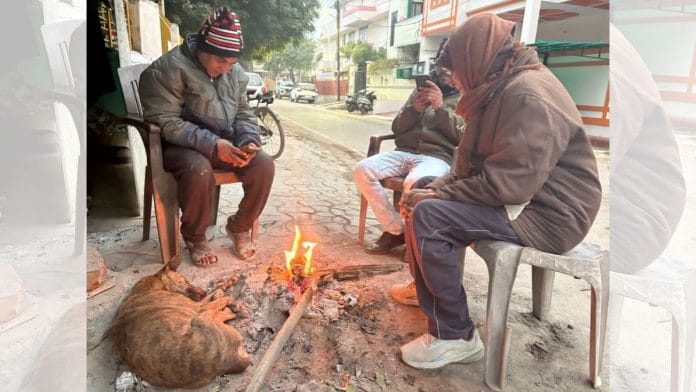
Across the streets of Delhi, where I live, and where this propaganda has been the shrillest, you see Indian dogs live peacefully with guards, street hawkers, and the homeless.
None of this is to deny that the dog population has increased, and there are indeed cases—although we do not have credible data—of dog bites and rabies that must not exist.
But Indian dogs are not to be blamed for this.
We drove them out of our homes because of our fetish for their European counterparts.
Subsequently, government agencies miserably failed to implement vaccination and sterilisation programmes. Money meant for such initiatives has either been siphoned off or is unutilised—the Supreme Court could do well by ordering an inquiry into this.
For many decades now, we have abused our own dogs. Now, it is time that we finally protect them from this final assault. This would be an important step in “putting the locks on” the Western mindset embedded in India for over 200 years.
Views are personal.
(Edited by Ratan Priya)
Thousands of senior citizens and toddlers get attacked and mauled by stray dogs. So many children have been mauled and bitten to death by stray dogs. It’s a regular occurence nowadays – everyday newspapers and TV channels cover such news. In this scenario, it is absolutely reprehensible that someone is trying to argue the case for stray dogs knowing fully well the serious danger they pose to the safety and security of the vulnerable sections of society. This is nothing but moral bankruptcy.
What better can be expected of ThePrint. Even Shekhar Gupta himself is a big champion of stray dogs – he celebrated when the SC rescinded it’s earlier order on relocation of stray dogs in Delhi/NCR.
Such heartless people who put the lives of others at risk because of their love for animals are unfortunately found in every society and complex. They are the bane of our society.
The Author is presenting a stange logic to preserve present dangerous situation affecting millions of vulnerable senior citizen and children from poor section of society ( because rich members society move around in cars and live in gated comm) who have to suffer because of packs of aggressive stray dogs create fear and many times attack viciously. If she want preserve local breed of dogs then the bestt thing will be to present the puppies of local breed to all NGOs and individuals like this Author to keep them as pets and take ” beautiful care “. By throwing local breeds on streets as stray dogs the Author is causing injustice to her own cause.
I agree.
Daily there are thousands of incidents where stray dogs have assisted citizens (security guards, women commuters, seniors, people who sleep on the roads, communities, and others) in prevention of crime, and contribute to the safety of citizens.
In the present the conversation is only about dog attacks and not about how they protect and assist citizens.
What happens when to these citizens when stray dogs are removed? Will crime rates not go up?
Who will take responsibility for the increase in crime due to their removal?
My pieces from May 2025
https://theprint.in/yourturn/subscriberwrites-viksit-bharat-without-those-who-walk-with-us/2640699/
It’s true we abandoned Indian dogs. Like even in my own mind I think they are “inferior” to other breeds. I said “inferior” not because I believe they are inferior but because i know when I am planning to buy a dog I don’t look at Indian breeds as my choice.
We are a country which is so colonized mentally that you can see that everywhere. We look down on people speaking Hindi or regional language (I have been guilty in the past and I am not ashamed to acknowledge it) and there are so many other things which I can point out.
Vivek agnihotri said in a podcast that how we have the mentality of calling “sahab” or “sir” to the elites of our society which is a part of the colonial mindset.
Even though the younger generation is being more aware about this, I still don’t think they have completely understood. They are so quick to appease westerners or foreigners when those same people won’t do the same for you.
Be respectful but don’t act like a slave. Stop taking photos with foreign tourists like they are some kind of a celebrity. Stop apologizing for every single little thing.