






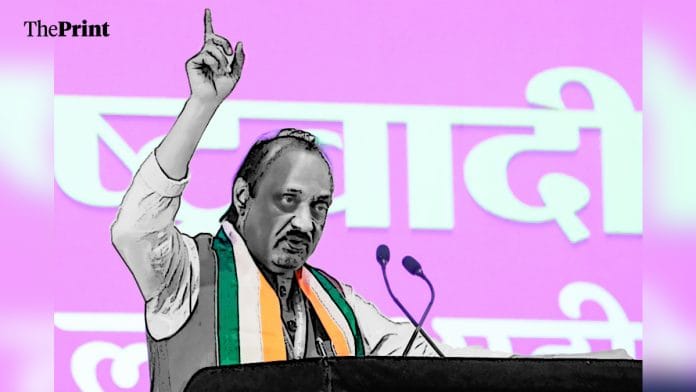



The crash landing that resulted in the tragic demise of Maharashtra’s Deputy Chief Minister Ajit Pawar and everyone else on board the Learjet to Baramati reminds us how fragile life is and how it only takes a few minutes for everything to change.
In terms of Maharashtra politics, Pawar’s passing overturns many widely held assumptions about the future. The Nationalist Congress Party (NCP) has played a crucial role in the state ever since Sharad Pawar broke away from the Congress over two decades ago. A NCP split, which saw his nephew Ajit Pawar join a BJP-led alliance, led to a realignment of political forces. Recent speculation about a family reunion had envisaged a situation where a reunited NCP could re-emerge and alter equations in Maharashtra.
All that must remain speculation now. No assessment of political possibilities had even factored in such a development. And decades from now, we will still wonder how things could have been in Maharashtra but for a twist of fate.
The greatest unpredictables
The ‘what if’ factor has long haunted Indian politics. What if Indira Gandhi had not been
assassinated in 1984? Would Congress have won the general election just a few months later? The party had lost assembly elections in the year before her assassination, so defeat seemed like a real possibility. Or let’s go further back. Suppose Lal Bahadur Shastri had not died of a sudden heart attack less than two years after becoming Prime Minister? Would Indira Gandhi ever have become Prime Minister? Would there ever have been a Gandhi dynasty?
So much of what happens in politics has little to do with calculations and much more to do with fate. This is especially true of the Prime Ministership. Narasimha Rao had retired because of failing health and was in the process of shifting back to Andhra Pradesh when Rajiv Gandhi was assassinated. The vacuum led to Rao’s ascension.
Even Atal Bihari Vajpayee’s rise to the top of the Jan Sangh (which later became the BJP) may not have occurred but for fate. The leader of the Jan Sangh was Deen Dayal Upadhyay, a politician who was much admired in his lifetime but is now largely forgotten except within the Sangh Parivar. Upadhyay formulated a policy called Integral Humanism, which became the Jan Sangh’s primary philosophy. In February 1968, he was allegedly murdered (apparently by robbers) on board a train from Lucknow to Patna at the age of 51. Vajpayee, who was two years younger than Upadhyay, succeeded him as head of the Jan Sangh. And everything changed.
Recent history has thrown up many such ‘what if’ moments. If Madhavrao Scindia had not died in a plane crash in 2001 at just 56, how different might Congress politics have been? When Sonia Gandhi took over the party in 1998, having joined politics only the year before, Scindia was one of her closest advisers. Sonia’s position was resented by many Congress leaders—Sharad Pawar, for instance, left to form the NCP—but Scindia, often talked about as a future Prime Minister, was unreservedly supportive.
At the time, the Congress was regarded as washed up and finished, and it was believed that even if by some miracle it ever came to power, Sonia Gandhi would be Prime Minister. Both assumptions were wrong. She led the party to victory in 2004 and turned down the Prime Ministership.
Sonia Gandhi chose Manmohan Singh for the job. But would she have done so if Scindia had still been alive? And what kind of Prime Minister might Scindia have made? The trouble with all ‘what if’ speculation is that we will never know. But some things seem likely. Scindia would probably have tried to rebuild the party’s base in North India and, as a charismatic politician who had never lost an election in his life, he might well have succeeded.
He would also have been a more assertive Prime Minister and might not have allowed the chaos of the later UPA years, when poor Manmohan Singh silently retreated into his shell, creating an impression of absent leadership that led, in part, to Narendra Modi’s emergence on the national stage. Scindia would have taken control of events.
And what of this BJP government? How different would things have been if Pramod Mahajan, Sushma Swaraj, and Arun Jaitley were still alive?
That leaves us with the greatest narrow miss and biggest ‘what if’ moment in recent history: the death of Sanjay Gandhi in an air crash in 1980.
In 1975, when Indira Gandhi was in trouble, neither of her sons had any political experience. Rajiv was a pilot with Indian Airlines, and Sanjay’s only competence, such as it was, lay in motor cars. Rajiv stayed out of politics, but Sanjay plunged headlong into it. Even if he did not advise his mother to impose the Emergency (accounts differ), there is no doubt that he became the face of that disgraceful phase of our history, emerging from political anonymity to be projected by censored media as a youth leader. He pushed ministers around, created a new power centre, and, for a time, became India’s most powerful man.
After a brief reverse (1977 to early 1980) Mrs Gandhi returned to power, and Sanjay became the sort of force India had never seen before, making his mother’s already authoritarian style seem kind and benevolent in comparison. His policies were not necessarily objectionable, but his crude, dictatorial manner was unprecedented. He was not only his mother’s designated successor but already seemed more powerful than her.
Then, one morning, an air crash took his life. The Sanjay era was over just the way it had begun: suddenly and dangerously.
Also read: Ajit Pawar: Brash, tireless, ambitious, the ‘Dada’ from Baramati
In the years that followed, Mrs Gandhi turned against Sanjay’s people, fought with his widow, and erased memories of his short but significant reign at the top. Her son Rajiv then continued this process.
Suppose Sanjay had lived. What if his plane had not crashed? What would India have been like?
It’s hard to be sure, but his life left us with little doubt of the ways in which he would have treated India’s liberal democracy and the freedoms it granted its citizens.
That’s the thing about ‘what if’ moments. You never know when they will come along. Or how history can be transformed almost on the toss of a coin.
Vir Sanghvi is a print and television journalist and talk show host. He tweets @virsanghvi. Views are personal.
(Edited by Ratan Priya)