








When I entered the civil services in 1984, programmes such as the Rural Landless Employment Guarantee Programme/Scheme sat within a familiar administrative mould: employment as welfare, mediated through local administration, with planning and payments often travelling through the same social hierarchies that produced rural distress in the first place.
The major paradigm shift came two decades later, in the UPA era, when Parliament enacted the National Rural Employment Guarantee Act, 2005—later known as MGNREGA—and recast “employment” from a discretionary benefit into a statutory, demand-led entitlement anchored in local self-government.
The current moment—the introduction of the Viksit Bharat: Guarantee for Rozgar and Ajeevika Mission (Gramin) Bill, 2025 (VB–GRAMG)—should therefore be read not as routine tinkering, but as a redesign that rebalances the original entitlement along constitutional and federal lines.
1) What MGNREGA changed, in constitutional terms
MGNREGA’s core moral and legal architecture was straightforward: if an adult member of a rural household seeks unskilled work, the government must provide it—and the administrative system must organise itself around that demand. Even where implementation faltered, the design was rights-based: the government was the duty-bearer; the worker the claimant. The guarantee was not merely a programme target; it was an entitlement that could be invoked by the citizen.
This architecture aligned with the post-73rd Amendment emphasis on Gram Panchayats and Gram Sabhas. Local bodies were meant to be central to identifying works, creating useful village assets, and enabling transparency through community-level oversight. MGNREGA, therefore, was not only an employment instrument; it was also a governance instrument—using wage work to deepen local democracy.
2) NDA decade: ‘technical reforms’ that narrowed local patronage
If the UPA era’s signature was the legal right, the NDA era’s signature was payment-system engineering and digitisation—framed as a strike against leakage, discretion, and “middlemen”. Three shifts mattered most for curbing the older Sarpanch/mate-centred patronage structure.
(a) Direct payments into accounts
Wages moved increasingly into bank and post-office accounts through electronic fund flows, shrinking the scope for cash handling and local gatekeeping.
(b) Aadhaar-linked payment architecture
Aadhaar was linked to wage payments to reduce misdirection, duplicate accounts, and frequent changes in the beneficiary’s “financial address”, and to ensure that wages reached the intended worker through a single, verifiable account.
(c) App-based monitoring and geo-tagging
Digital attendance and geo-tagged proof-of-work tightened the link between muster, measurement, and payment, reducing room for manipulation.
These reforms did, in a real sense, de-sarpanchify the money trail. But they also created new vulnerabilities: exclusion by authentication failure, seeding errors, connectivity gaps, or administrative deletions. The story, therefore, is mixed—reduced discretion in payments, alongside heightened techno-administrative control.
3) VB–GRAMG (2025): the structural shift beneath the headline
The new Bill is being presented as an upgrade: guaranteed days rise from 100 to 125. Yet the deeper changes suggest a movement away from a pure demand-driven guarantee towards a normed, allocation-shaped framework, with altered cost-sharing and a built-in pause during the agricultural season.
(i) From “right on demand” to “entitlement within a normed envelope”
Instead of an open-ended Central obligation responding to demand, the model relies on centrally determined normative allocations, shaping the operational ceiling through allocation rather than through the worker’s demand.
(ii) States as co-payers, not merely implementers
The proposed Centre-state funding design changes incentives. When states must “pay to provide”, they are nudged towards rationing—especially in regions where demand for work is structurally higher and finances tighter.
(iii) A mandatory seasonal “pause”
A built-in two-month pause runs against the original rights logic of MGNREGA. A legal guarantee is most meaningful when households need work now; a scheduled shut-off converts a fallback into a calendar-bound offering.
(iv) Rebranding and narrative control
The symbolic delinking from the earlier political identity of MK Gandhi may seem superficial, but names often signal ownership—and ownership frequently precedes design changes.
Taken together, these moves shift the programme’s character: from a demand-led right backed by open-ended central responsibility, to a managed entitlement bound by norms, calendars, and fiscal co-responsibility.
4) Deeper decentralisation—or a hollowing out?
This is where Gram Panchayat empowerment becomes decisive. MGNREGA’s promise was that local institutions would not merely execute; they would plan and prioritise works rooted in local need. VB–GRAMG moves the other way: towards nationally framed priorities, normed allocations, and tighter top-down performance logic—even while speaking the language of assets and outcomes. The risk is that accountability flips—from citizens demanding work, to targets and ceilings within a capped envelope.
5) What to concede, and what to contest
India did need payment and monitoring reforms. Direct electronic payments, improved audit trails, and attendance technologies narrowed older channels of petty corruption and patronage, reducing the scope for local discretion to decide who gets how many days, whose attendance is officially recorded as having worked, or whose payment is delayed.
But what should be contested is any redesign that weakens the constitutional bargain at the heart of the 2005 Act. If a “guarantee” becomes norm-limited, co-funded in ways that incentivise rationing, and partially suspended by design, then “125 days” can become optical—more a headline than a lived entitlement, especially in poorer, high-demand regions.
6) Centralisation dressed as decentralisation
This is the core contradiction. The rhetoric of panchayat empowerment is politically irresistible. Yet if the Centre sets normative envelopes, if states are turned into co-payers with incentives to limit demand, and if the employment guarantee is paused by design, then decisive levers of power move upward even as execution remains decentralised. Decentralisation becomes the language of implementation; centralisation becomes the reality of control.
Conclusion: the only test that finally matters
The essential test of any rural employment law is not branding, dashboards, or even the headline number of days. The test is whether the worker retains the ability to compel the government to provide work—promptly, predictably, and as a matter of right—or whether the government, armed with ceilings, pauses, and co-funded constraints, is structurally enabled to manage, ration, and defer. If VB–GRAMG travels the latter route, it wouldn’t be an expansion of the original employment guarantee, but a retreat from its constitutional spirit.
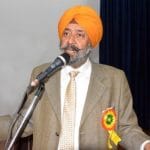
KBS Sidhu is a former IAS officer who retired as Special Chief Secretary, Punjab. He tweets @kbssidhu1961. Views are personal.
(Edited by Prashant Dixit)
This is a step in the right direction. It will curb the wastage of taxpayers’ money and focus on creating useful and priority assets for nation-building. Instead of frivolous welfare measures, we are moving towards greater accountability. Let’s embrace this change, even though it’s incremental and not a breakthrough.
The conclusion. That is what Maharashtra got right when it created the Employment Guarantee Scheme after the terrible drought of 1972.
There is a labour shortage in many states due to freebies. MNREGA is not needed.