






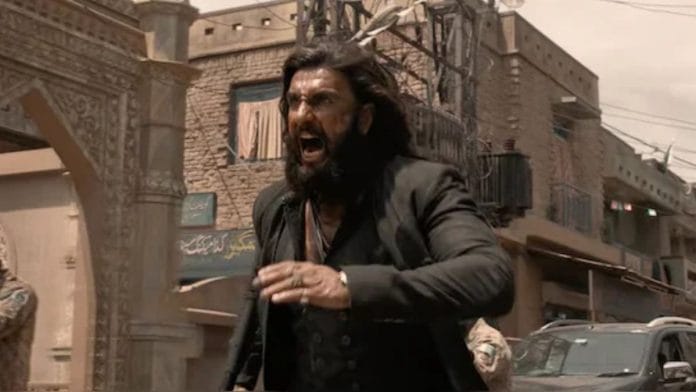



In these attention-deficit times, Aditya Dhar’s Dhurandhar breaks two mythologies. Don’t make long movies. And thriller action movies are supposed to move super fast.
The Dhurandhar franchise flips the script on both these.
The epic runtime is making a comeback in cinemas, but this time it is showing up in unexpected places. For decades, really long films belonged to mythological sagas, historical dramas, and sweeping period spectacles where kingdoms rise and fall, and messiah-like heroes stride across larger-than-life landscapes. But Dhurandhar and its sequel, releasing tomorrow, stretches across two parts with a combined runtime pushing nearly eight hours, but the audience is here for it.
This breaks one of the genre’s oldest rules. Thrillers are supposed to move fast. From the Mission Impossible franchise to the James Bond films, spy stories are built on speed, chases, ticking clocks, and last-minute betrayals. The storytelling is designed to sprint. But Dhurandhar seems determined to take its time.
There is no great mystery about its premise either. The trailers made it clear from the start that Ranveer Singh plays an Indian spy operating in the dangerous covert underworld of Pakistan. But the intrigue lies in the world-building, larger-than-life characters, and whether audiences are ready for a spy thriller that unfolds like a saga.
Judging by the buzz around the film, they might be. The first part already ran well over three and a half hours. But that did not dampen audience excitement. If anything, part 2’s runtime has triggered jokes and memes, but that too has become part of the film’s momentum, turning its release into a grand event.
In that sense, director Aditya Dhar is tapping into something older within Hindi cinema.
Older films never apologised for taking their time. In fact, they practically insisted on it. A typical movie outing meant surrendering an entire evening. Dhurandhar taps into that instinct: some stories are not meant to be rushed.
Return of the long-haul movie
Films like Sholay (1975), Hum Aapke Hain Kaun (1994) and even the Oscar-nominated Lagaan (2001) ran comfortably past the three-hour mark. Nobody walked out complaining about the runtime. The audience expected the full experience. Films used to be an event. There would be romance, revenge, family drama, six songs, three emotional breakdowns and at least one monologue about honour or betrayal or the crowd favourite: Maa.
The ritual was elaborate. There were samosas, cold drinks and the sacred intermission that allowed people to debate the plot, loudly predict what the villain might do next, and return to their seats slightly more invested in everyone’s fate. Cinema was trying to be immersive, not efficient.
Then came the multiplex era, which brought with it a different philosophy: speed. The more shows a theatre could run in a day, the better the business. That meant films had to be shorter. Songs were reduced, and subplots were trimmed.
At the same time, a new assumption took hold: audiences had lost their patience. Smartphones were everywhere, attention spans were shrinking, and viewers supposedly wanted quick entertainment before moving on to the next distraction. For a while, the industry believed it.
Also read: Badshah’s ‘Teteeree’ shows what’s wrong with Bollywood’s ‘brand of creativity’
OTT changed the rules—cinema is catching up
But the last few years have produced an interesting twist. Some of the biggest theatrical successes have been unapologetically long. SS Rajamouli’s RRR (2022) ran well over three hours and had audiences cheering through its action sequences. Sandeep Reddy Vanga’s Animal (2023) stretched even longer. Christopher Nolan’s Oppenheimer (2023) packed theatres worldwide with three hours of dense historical drama.
Those films belong to genres where scale naturally demands time. Movies like Baahubali (2015), also in two parts, unfold like mythological legends. A spectacle of that magnitude almost requires an epic canvas.
What makes Dhurandhar interesting is that it borrows the scale of an epic while operating in a genre built on urgency. It stretches a spy story across multiple chapters and treats espionage less like a sprint and more like a saga.
Part of the reason this gamble may work lies outside the cinema hall.
When OTT took over how we watch content, a new term came in: binge-watching. Six episodes in one sitting? Perfectly normal. Entire seasons over a weekend? Standard behaviour. So suddenly, a three-hour film looks totally doable.
Streaming has also changed what audiences expect from theatres. At home, viewers can watch shorter, simpler stories whenever they want. To convince people to leave the couch, cinemas now need to offer something bigger: something that feels worth the ticket price, the commute and the overpriced popcorn.
Dhurandhar is occupying that space with ease. With multiple characters, subplots and flashbacks, it positions itself less as a tight thriller and more as a theatrical event.
Of course, not every long film deserves its runtime. Some directors mistake ambition for indulgence, and editing remains an art form for a reason.
But audiences clearly are not automatically hostile to long films. What they really dislike is boredom. If the story and characters grip them, viewers are willing to stay.
Views are personal.
(Edited by Ratan Priya)