




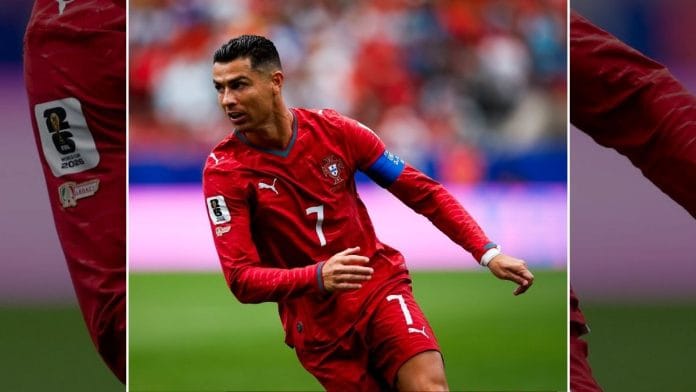

Portugal striker Cristiano Ronaldo has left the UEFA Nations League training camp in Copenhagen and returned home after head coach Jorge Jesus announced he would not be in the starting lineup to face Denmark. He has since vowed to never play for Portugal again, hinting that he would reveal the reasons for his departure “in due time”. Ronaldo’s sudden exit exposed growing tensions between him and Jesus over his role in the Portuguese team.
But Ronaldo’s latest tantrum is not a one-off. The striker has in the past butted heads with managers when they tried to transition him into a substitute role. His way of handling benchings or late-game substitutions has caused major rifts across his nearly three-decade-long career.
Ronaldo’s fall from grace began in 2022, during his second stint in the English Premier League with Manchester United. From Tottenham to Switzerland, he always threw tantrums when the coach made him an impact substitute, benched him, or even rested him. He subsequently moved to Al Nassr, a top-tier football club in Saudi Arabia, to get his full 90 minutes on the pitch.
But professional football is ruthless. The same saga caught Ronaldo in Saudi Arabia as well. In August this year, in a match against Al-Ettifaq, Al-Nassr were down 2-0 and reduced to 10 men. At half-time, coach Ange Postecoglou substituted Ronaldo. A similar reaction followed—unacceptance, fury, a sulking walk down the tunnel and skipping celebrations when the team managed a 3-2 comeback without him.
At 41, Ronaldo still refuses to accept the bench, making it a big problem in modern football. No matter how fit you are, eventually time and age will catch up with you. That’s the bitter truth. And Ronaldo, being no exception, should gracefully accept his fate.
Ronaldo’s legacy trap
Ronaldo has won five Ballon d’Or awards, five Champions League titles and the European Championship with Portugal. He is the leading scorer in men’s international football with 979 goals and has spent more than two decades building himself into one of the sport’s most recognisable figures.
He has had his share of football. More than most players ever will. However, rather than trying to protect the legacy he has built, Ronaldo seems increasingly consumed by it.
The vintage Ronaldo would dribble from the midfield, terrorise coaches, punish goalkeepers and rifle it into the net from 30 yards. Compare that to now— and he can barely receive a ball, nor can he complete a single dribble in entire tournaments, yet he somehow manages to score tap-ins and celebrates other teammates’ goals as if it’s his own.
At some point or another, the greatest athletes have to negotiate with time. Lionel Messi, Zlatan Ibrahimović and Luka Modrić, among other greats, have faced the music.
Meanwhile, Ronaldo still tries to race against time. This worked for him till he was 35, with a strict diet, training, fitness and an obsessive pursuit of goals. But now, the same obsession and attitude that allowed him to remain at the highest level long after most of his contemporaries disappeared is against him.
Time is not a defender that Ronaldo can dribble past. It changes what a player can offer. It changes how often he can play. And it changes how a manager sees him.
Also Read: Why do some fans prefer Ronaldo over Messi? The answer lies in their political ideology
‘Ronaldo situation didn’t influence us’
The day Ronaldo was benched in the Nations League tournament, Portugal won the match 2-1 against Norway. In the next match, Portugal thrashed Denmark 4-2.
After these performances, Portugal midfielder Vitinha said, “You can see the work that Jorge Jesus is doing. The performance was fantastic tonight.”
He also said that the team tries to stay out of the whole “Cristiano Ronaldo snub story.”
Meanwhile, winger Gonçalo Ramos said, “Ronaldo situation? That story did not influence us. We want to win every game. This is what we did.”
And other players also did not want to talk about the fallout during a UEFA tournament.
The very teammates who once looked up to him are now refusing to acknowledge his absence from the team. They are just “focused” on the current tournament, and don’t want to spoil it with negativity around the camp.
But if only that was all. Ronaldo’s famous number seven jersey for Portugal was handed over to Raphael Leão the very next day.
“It’s been special for me to wear the number seven shirt because Cristiano is my idol since I was a child. I tried my best to respect this number, this shirt,” the young Leão said.
This is the exact reality of modern football. Nothing is permanent.
Ronaldo’s legacy will not disappear because he was benched. His goals, trophies and records remain. But the legacy is also determined by when and how he leaves football, how he makes way for the younger generation, and how he receives a farewell from his club and country. Ronaldo was a legend at Manchester United, Real Madrid and eventually played for Juventus—top three leagues in Europe. Yet, when he left all these clubs, he never received a formal farewell.
Ronaldo should have ended his career as the footballer who remained obsessed with winning and scoring goals until the final whistle. Now, he risks being remembered as the superstar who could never accept that somebody else might decide when his time was up.
Views are personal.
(Edited by Insha Jalil Waziri)