






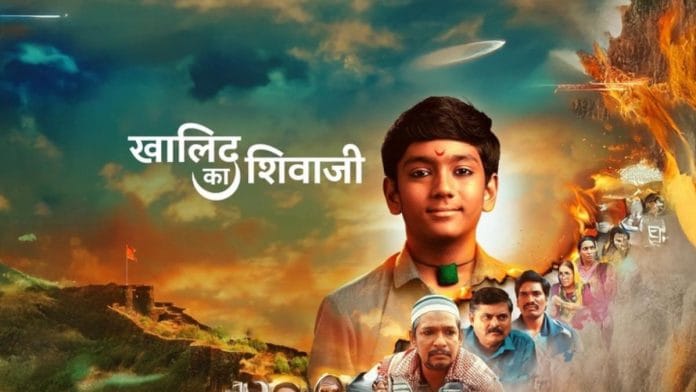


Raj Pritam More’s Marathi film Khalid Ke Shivaji is the kind of film people in power wouldn’t want you to watch, which is precisely why you should.
The film asks questions that sound almost absurd in Maharashtra, a state that has spent centuries claiming Chhatrapati Shivaji Maharaj as its defining symbol of pride: does Shivaji belong to one community alone? Can a Muslim boy love him just as fiercely as anyone else?
Khalid Ke Shivaji doesn’t answer this question for us so much as force us to sit with it after the film ends. And that discomfort is the whole point.
At the center of the film is Khalid, a boy—a ‘Muslim’ boy—whose selfless devotion to and admiration for Shivaji endures until the world around him decides it shouldn’t. His classmates start calling him Afzal Khan, the Bijapur commander Shivaji killed.
Many might just overlook it, saying, ‘kids are just teasing’. But it reveals a larger picture. Prejudice in Maharashtra today, or even in India, doesn’t arrive with hate speech or violence. It begins with a nickname, with the assumption that a Muslim name and a Maratha king’s legacy cannot belong in the same sentence.
Director More is able to showcase how ordinary the beginning of division looks, long before it hardens into anything anyone would call hatred.
Also read: Khalid Ke Shivaji director compares film’s censorship battle to Satluj. Movie is now on YouTube
Humanity over religion
For years, Indian schools introduced Shivaji as a ruler who built an administration staffed by people of multiple faiths, who fought political battles rather than religious ones, and who is remembered by historians for pragmatism as much as valour.
This account hasn’t disappeared, but it has been clouded by a louder and simpler narrative—one that labels Shivaji as an exclusively Hindu warrior-king. His story has been moulded into a single-community inheritance by Hindutva politics.
Khalid Ke Shivaji doesn’t invent this tension, More just refuses to look away from it. In the current climate this gets categorised as provocation or ‘hurting religious sentiments.’
However, the film’s radical figure isn’t Khalid but Salve, his schoolteacher, who tells his students that “the ones who don’t have history don’t have a present.”
Salve watches Khalid absorb the nickname, the mockery, and tries his best to prevent him from falling into the trap of overthinking. When Khalid asks him, “Was Afzal Khan a Muslim?” Salve replies: “Why does it matter?”
This is also More’s intention with the film: To convey that religion shouldn’t matter. It shows that children don’t arrive at communal thinking on their own. They are handed it.
The dialogues, written by Rajkumar Tangade, are powerful, and linger long after they are spoken. One of my favorites comes from Khalid’s father, who says, “A true king puts humanity over religion.” Khalid responds, “We should have been around at that time.”
You might just see it as a child’s wish, but to me, it sounds like an indictment of the present.
It suggests that the Maharashtra Shivaji actually built might have had more room for a boy like Khalid than modern-day Maharashtra does.
Also read: Shivaji has been promoted from Maratha pride to Hindutva hero. His legacy keeps evolving
Rubbed wrong feathers
None of this makes Khalid Ke Shivaji a film that villainises Hindus or glorifies Muslims. It actually calls out the machinery of division, which has fenced off a shared cultural icon and handed it to one community.
This was enough to alarm Hindutva groups, who wasted no time to block its theatrical release even though the Central Board of Film Certification cleared the film without a single cut.
If the mere possibility of a Muslim boy loving Shivaji is threatening enough for Hindutva groups, the film has already made its case.
Khalid Ke Shivaji is currently available to rent on BookMyShow Stream, YouTube and Apple TV, a smaller stage than it deserved. But a stage nonetheless. Watch it, and decide for yourself whether the question it asks is really as complicated as some people made it to be.
Views are personal.
(Edited by Theres Sudeep)