




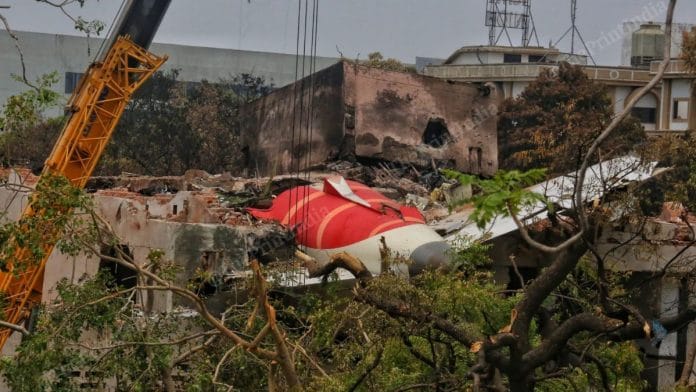

It is heartbreaking to see that the first anniversary of one of India’s deadliest aviation disasters was left unnoticed.
On 12 June 2025, Air India flight AI-171 took off from Ahmedabad for London and never made it to its destination. In a matter of moments, 260 people, 241 on board the aircraft and 19 on the ground, lost their lives. A year passed but, on the first anniversary of the disaster, there were no visible preparations at the crash site to remember them.
There were no memorial arrangements or a public ceremony. In fact the first dignitary to reach the site to pay tribute was not an Indian official, but British High Commissioner Lindy Cameron. And, this video should unsettle us.
Because this isn’t just about government protocol. It is about how quickly we move on and forget. How poorly we honour those who are no longer here.
For a civilisation that speaks endlessly about respecting ancestors, performing rituals for the departed, and treating death with sanctity, we often fail when it comes to public remembrance.
We know how to mourn loudly in the immediate aftermath of tragedy. But as soon as the news cycle changes, the dead quietly disappear from public consciousness.
The absence of visible preparations for any ceremony at the AI-171 crash site speaks volumes. It tells grieving families that their loss no longer commands attention. And, moreover, it reduces one of the country’s worst tragedies to an archived headline.
Also read: Don’t compare Sejal Pawar’s crass joke to the 370 biryani vasooli guy
Not just a number
Memorials are not empty symbolism. They acknowledge that lives mattered and force institutions to confront the human cost of failure. Sites of tragedy become spaces of reflection while annual commemorations reaffirm that victims are remembered not just by their families but by the whole nation too.
In India, however, this remembrance often depends on convenience. We build statues for leaders but struggle to create dignified memorials for ordinary citizens.
The least a society can do is pause and acknowledge that ‘260’ wasn’t just a number. They were people who lost their lives.
The sight of the British High Commissioner paying tribute to the crash victims should force us to ask uncomfortable questions.
The crash site should have been a place of remembrance. Instead, its silence was deafening. Perhaps the greatest tragedy after death is not grief. It is indifference.
The dead ask for very little from the living. They ask to be remembered with dignity, to have their lives acknowledged, and their absence recognised. Surely, in a country of more than a billion people, that is not too much to ask for.
Views are personal.
(Edited by Aamaan Alam Khan)