








Campaigning over cocktails is the new gig in town. If we must vote, let us lubricate ourselves to lessen the trauma of showing up at the booth in our best co-ords, hair coiffed, nails done, shades in place.
As Maharashtra goes to the polls mid-week on 15 January, pockets in Mumbai have witnessed a brand new phenomenon – Cocktails Pe Charcha. The upwardly ambitious social set is all excited at the idea of giving themselves a respectable boost. Hostesses are curating campaign menus for select politicos, who wear the right clothes and loafers. If they also speak fluent angrezi – wow! Bandra and SoBo types (the ones who play padel and call it “paddle”) are hastily brushing up on basic terms, like Legislative Assembly, Brihanmumbai Corporation, MLCs, party symbols, and other related stuff. If a local neta is going to show up for a martini or two, it’s best to memorise a few phrases to kick start the conversation.
Affluent residents of posh building societies have reached out to fellow citizens, urging them to vote because so much is at stake now. Nobody is ready to discuss what exactly is at stake that wasn’t at stake earlier. It has been more than eight long years since Maharashtra bothered to set a date for the Municipal elections. A lot has changed during this pause. Mumbai is unrecognisable – it is no longer Mumbai. Sadly, it resembles any other modern city in the world. The transformation is cosmetic.
SoBo politics by the bar
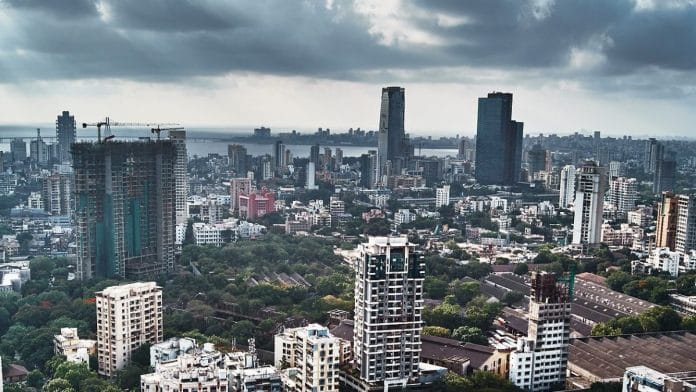
Today’s Mumbai is heavily botoxed, has undergone corrective surgery, injected with lip fillers. The skyline has changed. But the rot remains. More than the dramatic transformation of its skyline, it’s the Mumbaikars who have changed, ever since the city began creating monster luxury slums in the name of progress.
Staggeringly expensive apartments in these ugly skyscrapers sell at a number with more zeroes than I can count. Pricey vertical slums dominate the landscape, as dodgy residents slink in and out of their apartment complexes, past high-tech security systems that compete with the Kremlin’s.
It is into these very swanky penthouses that pushy businessmen and random hustlers invite influential power brokers, hoping to lasso a neta or two for an evening of hard sell and fake promises. This is a first. Bartenders hover around self-conscious invitees drinking Mojitos, their expressions suitably glazed, as eggless, meatless, fish-less, tasteless hors d’oeuvres get passed around.
The Neta, impeccably dressed by his favourite designer, accepts a glass of wine to show he’s cool, chilled, and part of the smart set. The old days of hiding whiskey in Cola are long over. Nobody wears khadi, and yes – wives can crash this club.
The last time SoBo saw a suave politico was when Rajya Sabha MP Milind Deora appeared on the scene in 2004. Soft spoken, good-looking, well-mannered, nattily dressed, and supremely well-connected, thanks to his lineage (son of Murli Deora, the dynamic Congress), Boston-educated Deora was very much a part of the “PLU” (People like us) snob lot.
At 27, he was one of the youngest MPs in Parliament, as much at ease in the corridors of power in Delhi as he was hanging around the elite Breach Candy Pool in Mumbai, partying with the glam squad. Deora did the vanishing act, quit the Congress, only to briefly reappear during the last general elections, standing on a Shiv Sena ticket. As anticipated, he lost to Aaditya Thackeray and has vanished since. Seen only on TV news panels.
The new voter has not heard of Milind Deora. That’s how it works in politics. Short-term memory is the only memory. Candidates who air drop into the overheated arena like guest artists on a film set, get hoofed out on counting day by the hungry rival who has walked the gullies of the filthy slums and knows each vegetable vendor of the area by name.
But even when Deora was the blue-eyed boy of SoBo politics, I can’t recall cocktail parties being hosted in his honour by enthusiastic entrepreneurs sucking up to the closed circle of old money types. The “neo-Milinds” are more obvious, more brash, more demanding. Breaking the ice with voters is easier when the bar is well stocked.
Not sure if Raj Thackeray has been invited to meet and greet Maharashtra Navnirman Sena (MNS) fans—assuming they exist—over cocktails, given his reputation as a connoisseur of spirits. That’s one party I’d like to attend, especially if Cousin Uddhav is going to be around to ensure Mumbai is not “swallowed by two Gujaratis” in one gulp.
Also read: Desi weddings are now fake, vapid, meaningless extravaganzas. Billionaires pop out of nowhere
From Chappal Chor to Chai Chor
Puhleeeeze Prada! Give us a break! It started with chappals, now they want our chai too.
The ridiculously overpriced version of the timeless Kolhapuri chappal may be flying off the shelves in Milan, but before we could forgive Prada for the chappal fiasco, along comes another one—a Chai perfume. Why would anyone want to walk around smelling like a Railway tea stall? Besides, as desis know only too well, not all chais smell or taste the same. Which chai has Prada stolen its inspiration from? Darjeeling? Assam? Or Mumbai’s cutting chai?
Kolkata in winter is intensely seductive. The monkey caps are out. So are the political monkeys. Seeing a street lined with BJP buntings, my taxi driver was alarmed. “We will not allow BJP to enter West Bengal,” he thundered, channeling his inner Didi, as we left the Alipore jail Museum. British-era jails are the favoured venues for lit fests this season. This is great for authors—we get a captive audience!
The Apeejay Kolkata Literary Festival concluded on a high note with Shashi Tharoor launching his new book in a hall packed with swooning ladies. He flicked back his hair, crinkled his eyes, and the aunties fainted. Bollywood heroes and Tharoor exhibit similar traits. India’s literary Dhurandhar is on a roll.
Shobhaa De is an author, columnist, social commentator, and opinion-shaper. She has written 20 books. She tweets @DeShobhaa. Views are personal.
(Edited by Ratan Priya)