






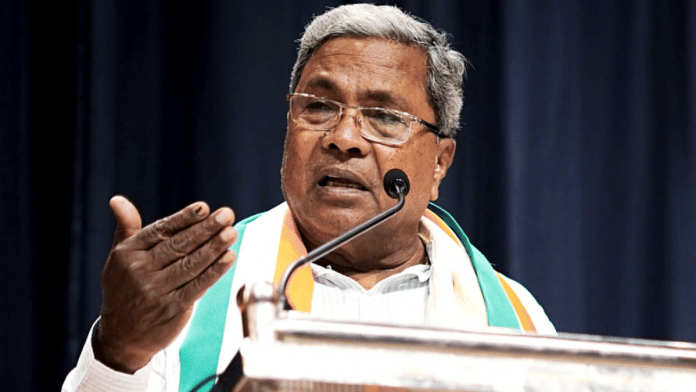



Agriculture is not just an economic activity in Karnataka; it is the foundation of our society, the backbone of our rural economy. Acknowledging this basic truth, the Karnataka government, under the leadership of Chief Minister Siddaramaiah, has presented a budget that goes beyond mere numbers and statistics. It is a budget that seeks to restore hope, strengthen lives, and build long-term strength for our annadatas.
For us, the safety of our farmers is a moral responsibility and a policy commitment. We envision an agriculture that is profitable and dignified, an occupation capable of sustaining generations to come while preserving the ecological balance of our state.
In this direction, we are working to bring in a new era of agricultural transformation in Karnataka. Rather than providing mere temporary solutions, we are working to provide a complete support system that helps the farmer at each step from the field to the market. By ensuring that the farmer receives the best support at the smallest level, we are working to bring in a new agricultural revolution that puts the farmer at the core of development.
Also read: Indian welfarists destroyed right to property by guaranteeing rights to life, liberty
Transformation of agriculture sector
With the firm belief that “when farmers prosper, Karnataka prospers,” the government has developed a robust agricultural policy that is based on institutional support, sustainability, and technology.
The government is also implementing the Chief Minister’s Agricultural Expansion Scheme, wherein an investment of Rs 100 crore will be made over the next three years. This will help the farmers in the recycling, processing, and marketing of agricultural waste, helping them earn additional income through efficient usage of resources.
The other important initiative is the Krishi Vistara programme, which aims at building good-quality soils by increasing the level of soil organic carbon and improving the quality of the soils. By encouraging environmentally sustainable farming practices, this initiative will ensure the sustainability of agricultural production while conserving natural resources on which agriculture depends.
Crop protection is also an important area of intervention for farmers, and under the Sasya Sanjeevini initiative, pests and diseases of the crops will be identified at an early stage, and the farmers will be advised to take necessary actions using recommended biological pest control techniques and safe crop management techniques.
To facilitate easy availability of essential agricultural inputs, Raita Malls will be opened on a pilot basis in all taluks of Kolar district through MSIL, and the farmers will be provided with quality seeds, fertilisers, and agricultural machinery under one roof.
One of the key areas that technology is expected to transform is the agriculture sector. For instance, the Agriculture Department’s Farmer Call Centre will be upgraded with Artificial Intelligence technology, which will help farmers obtain timely information on weather, market rates, and expert advice through the call centre.
Karnataka is at the forefront in popularising millets and other sustainable crops. To take this initiative to the next level, the Millet Hub is to be developed into an autonomous body that extends technical support, market support, and also serves as a single-window platform for millet and organic farmers.
In Mandya district, Pandavapura Taluk will be developed into a fully organic taluk through an official certification process. This initiative will promote environmentally sustainable farming while creating new market opportunities for farmers. Karnataka has already seen the potential of such efforts through initiatives like Joida, a biodiversity-rich taluk where traditional low-chemical farming practices have supported the transition toward certified organic agriculture.
Building on this experience, the government envisions a phased roadmap to promote organic farming across the state by gradually identifying and developing one taluk in each district as a certified organic taluk in the coming years. Through supportive policies, farmer incentives, promotion of bio-inputs, and strong market linkages, these organic clusters will strengthen sustainable agriculture, improve soil health, and enhance farmer incomes.
Scientific support systems will also be strengthened. All departmental laboratories will be upgraded to obtain the National Accreditation Board for Testing and Calibration Laboratories (NABL) accreditation, which will ensure that farmers obtain accurate soil testing and seed testing services, which will help them make informed decisions on the type of crops to be grown.
In order to resolve the issue of labour shortages and increase efficiency, modern technology will be introduced in the form of the High-Tech Harvester Hub initiative, which will help farmers to use high-tech precision sowing/transplanting equipment.
Education is the key to the success of the agricultural sector in the long run. An Agricultural College will be established in Belagavi District, while the state-level Agricultural Entrepreneurship Training Centre located in Babbur, Chitradurga, will be upgraded to encourage the next generation of agricultural innovators and agricultural entrepreneurs.
Another aspect that is equally important is the need to safeguard the interests of the farmer against inferior quality agricultural products. In order to curb the sale of inferior quality seeds and pesticides, the state will establish a State-Level Advisory Committee to suggest measures to safeguard the interests of the farmer.
Our efforts are part of a larger vision to build an agricultural ecosystem that is resilient, innovative, and firmly centred on the needs of farmers. Our goal is not merely to increase production, but to create conditions in which farming families feel secure in their livelihoods, respected for their contribution, and confident about their future.
The path to a prosperous Karnataka runs through the fields of our farmers. When farmers thrive, rural communities flourish, food security is strengthened, and the state moves forward with stability and growth. Our government remains firmly committed to ensuring that every farmer in Karnataka has the opportunity, support, and resources needed to succeed.
A truly prosperous Karnataka can only be built on the well-being of its farmers. Their happiness and prosperity are not just an aspiration; they are the foundation of our state’s future.
N. Chaluvarayaswamy is the Hon’ble Minister for Agriculture in the Government of Karnataka and a senior political leader known for his deep connect with farmers and rural communities. Views are personal.
(Edited by Ratan Priya)
What about manufacturing? Only agriculture and IT are given attention.
Majority jobs are in manufacturing.
Farm subsidies are funded by higher cost of petrol/electricity to industry. MSMEs shutting down. Jobs getting lost, and you are forcing people into agriculture.
No. I understand the bias but this is pathetic. This love affair with agriculture needs to go. As much as I appreciate any reform in the agriculture, this is not going to do much.
Secondly your states prosper and this country prospers when you have a holistic growth which includes manufacturing. Please focus on manufacturing.