






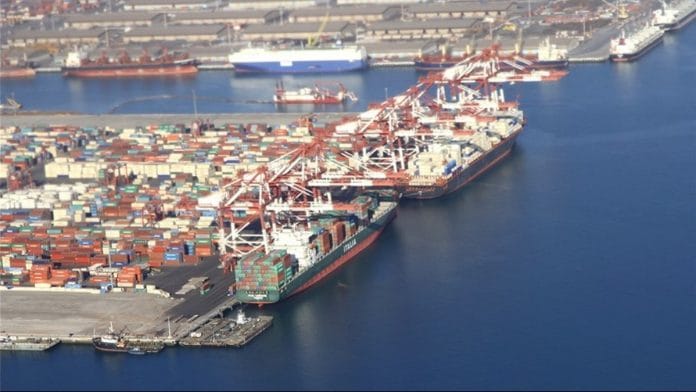



The Chabahar port would “alter the course of history”, Prime Minister Narendra Modi declared once upon a time, describing the agreement on a trilateral transport corridor with Iran and Afghanistan as “a new foundation of convergence between our three nations”. He painted an expansive picture of Indian investments in “gas-based fertiliser plants, petrochemicals, pharmaceuticals, and IT”. Later, during the 2024 elections, he called it a “very big achievement”, emphasising that India would make its own decisions, and not based on any third party’s interests, i.e. the US.
Now, in less than two years, India is on the verge of exiting the project, having effectively shut down the Indian firm overseeing it, and transferring its promised $120 million (Rs 1,100 crore) contribution to Iran before a US sanctions waiver expires on 26 April 2026.
What gives?
Also Read: Why electoral ‘reform’ is cause for worry—the Modi govt uses it to cement political hold
Yet another reality check
This episode is proving to be a costly lesson for India in great power politics. It reveals India’s actual standing, as opposed to Modi’s grandstanding.
The truth is that India’s outreach to its “civilisational” partner, Iran, is at the mercy of the larger US-Israel-Iran relationship. When the US deemed that an alternative to China’s CPEC was, on balance, desirable, it carved out space for India. Now that it is tightening the screws on Iran, India is being forced to abandon a critical national project.
There is a larger, more disturbing dynamic here. Even as Trump asserts his version of the Monroe Doctrine — the so-called “Donroe” doctrine — we are seeing a “Gonroe” doctrine, in which India’s influence in its immediate neighbourhood is practically gone. Under Modi’s watch, “colour” revolutions with suspected links to the US have overthrown incumbent governments in Bangladesh, Nepal, and Sri Lanka, including India’s close ally Prime Minister Sheikh Hasina. Governments sympathetic to China are now ensconced in Myanmar and the Maldives. India is being boxed in by the US-China rivalry, and external powers are now driving outcomes in our neighbourhood.
Gone are the days when India would intervene in Sri Lanka to prevent the US from building a naval base in Trincomalee, or launch a military operation to stop a coup by mercenaries in the Maldives, or facilitate negotiations in Nepal to end a brutal civil war.
And this weakening of Indian influence during a supposed period of Indian ascendance is evident in the Chabahar saga.
Also Read: Bofors to National Herald—Indian ‘scams’ collapsed in court. BJP always benefits
Third-party interests first?
Conceived in 2003, the Chabahar project became politically feasible only after the international community signed the Joint Comprehensive Plan of Action (JCPOA) with Iran in July 2015, lifting sanctions in return for the country agreeing to constrain its nuclear programme. This facilitated the agreement during Modi’s May 2016 Iran visit to develop two cargo terminals at Chabahar. Two years later, Iran leased the port terminals to the India Ports Global Limited and bulk and container traffic began to flow from Indian ports.
India’s space for manoeuvre began to shrink after President Donald Trump withdrew from the JCPOA in May 2018 and reimposed major sanctions on Iran. India managed to secure a sanctions waiver for Chabahar, having convinced the US that an alternative to the China-Pakistan Economic Corridor (CPEC) was in its interests, but any further expansion became risky. For instance, India exited a venture to build a 628 km railway line from Chabahar to Zahedan, near the Afghan border. The continuation of the waiver under the Biden administration created the space for India to receive a longer-term, 10-year contract in May 2024 for Chabahar.
But the US preference for an alternative to the Russia-focused International North-South Transport Corridor was clear. Thus came a new carrot, even as the stick remained sheathed, in the form of US support for the India-Middle East-Europe Economic Corridor (IMEC). Skip Iran, go through Saudi Arabia and Israel instead, they told us. And so, IMEC is a rail and shipping corridor network connecting India and Europe via Israel, Saudi Arabia, and the UAE. A preliminary agreement was signed in September 2023. Ahead of this, coincidentally, Modi’s close friend Gautam Adani was awarded a lucrative 70 per cent stake in Israel’s Haifa Port. However, the Gaza war has put a halt to IMEC for now.
Of course, we don’t know what happens after 26 April. The Trump administration could still grant India a waiver, perhaps as part of a larger trade deal. That would make sense for the US, considering that China’s Belt and Road Initiative (BRI) is generating huge investments in oil fields, high-speed rail, and other connectivity projects in Central Asia. A trade corridor from India to Central Asia is the bare minimum, given the imperative to counter BRI.
But there’s no getting away from the harsh truth: India is making its decisions on the basis of a third party’s interests, for all the election-time braggadocio of the Prime Minister. ‘Desh nahi jhukne doonga’, anyone remember?
Amitabh Dubey is a Congress member. He tweets @dubeyamitabh. Views are personal.
(Edited by Asavari Singh)