









The global labour market is witnessing a clash of economic philosophies. On one side, the United Kingdom is rolling out the Employment Rights Act (ERA 2025), a sweeping expansion of worker protections that critics warn could choke hiring.
On the other hand, India is advancing four unified Labour Codes (2025) designed to cut red tape and unlock scaling of businesses. The contrast is stark. Early signals suggest the UK risks dampening job creation, while India is positioning itself to expand it.
The “rights” trap
The ERA 2025 represents one of Britain’s most significant expansions of employment protections in decades. The qualifying period for unfair dismissal claims has been reduced from two years to six months, with compensation caps set to be removed. Sick pay becomes a day-one entitlement. Parental leave provisions are strengthened. Protections around dismissal practices, agency workers, and scheduling are tightened.
Individually, these reforms may seem reasonable. Collectively, they raise the cumulative cost and legal risk of hiring. Employers consider not just wages but also potential legal exposure. When unfair dismissal claims apply after six months, businesses face greater risk while they are still evaluating performance. Separation costs become unpredictable when compensation caps disappear. In that environment, hesitation in hiring is a rational response.
Large corporations may absorb the added complexity. Small and medium enterprises, which generate a substantial share of employment, face sharper trade-offs. Expanded documentation duties, consultation requirements, and tribunal risks increase fixed compliance costs. The likely outcome may not be dramatic layoffs but slower hiring, contract jobs, and greater reliance on automation or outsourcing.
The UK labour market data already show strain. The Office for National Statistics (ONS) highlights that unemployment has risen to 5.2 per cent in the three months to December 2025. Youth unemployment stands at 14 per cent, the highest in five years. In a weak growth environment with high labour costs, even modest increases in labour rigidity can suppress employment momentum. For labour-intensive sectors operating on thin margins, provisions such as day-one sick pay and enhanced leave function as a de facto payroll tax.
While the ERA 2025 seeks to improve job quality, the question is whether the cumulative “cost of rights” may inadvertently reduce the number of jobs available.
India’s flex model
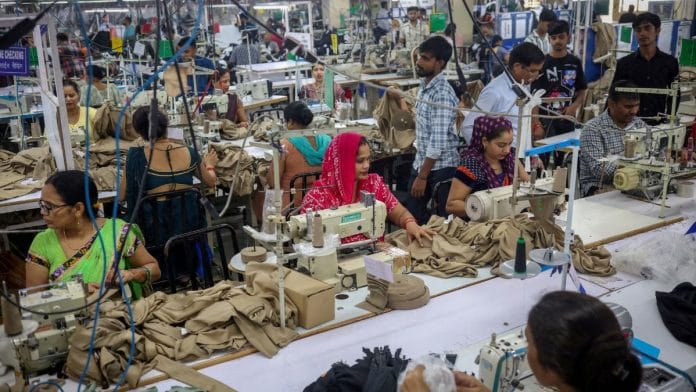
India has chosen the opposite direction. Its labour reforms are anchored in “Ease of Doing Business” and structural simplification. For decades, the country operated under 29 central labour laws and hundreds of state-level regulations, a fragmented system that incentivised firms to remain small to avoid regulatory triggers often associated with “Inspector Raj”.
The new Labour Codes (2025) covering wages, industrial relations, social security, and occupational safety, consolidate this maze into a coherent framework. The objective is not expansive new entitlements but rationalisation and predictability.
A pivotal reform lies in the Industrial Relations Code, which raises the threshold for requiring government approval for layoffs and retrenchment from 100 to 300 workers. Under the previous regime, firms approaching the 100-employee mark often froze expansion to avoid crossing a regulatory cliff. By lifting the threshold to 300, India removes a structural disincentive to scale, critical for a country seeking to expand manufacturing capacity and generate formal employment at scale.
The codes also permit fixed-term employment across sectors, digitise compliance, standardise definitions and reduce discretionary inspections. Predictability replaces opacity. For domestic and global investors alike, regulatory certainty lowers expansion risk and encourages hiring.
Importantly, the reforms retain baseline protections. A national floor wage is established. Gig and platform workers are formally recognised within a social security framework. Occupational safety standards are consolidated. This showcases calibrated flexibility and strengthening basic protections while reducing regulatory friction and expansion risk.
Also read: To trade coders for Legos, India needs a better deal
The paradox
Worker protections are not inherently anti-employment. Over time, better job quality can enhance productivity. But sequencing matters. Expanding employer liabilities amid fiscal pressure and weak growth raises the marginal cost of the next hire, while reducing regulatory cliffs during an industrial push lowers it.
Britain is prioritising security within a mature, service-driven economy. India is prioritising flexibility to attract investment, deepen supply chains, and accelerate formalisation. One model increases the expected cost of hiring, the other lowers the cost of expansion.
Labour law is not merely about fairness in theory. It is about incentives in practice. Two democracies, two reform logics, and ultimately, two very different bets on how the next job will be created. In labour markets, intentions do not create jobs. Incentives do.
Anuj Gupta is the India MD of BowerGroupAsia. Views are personal.
(Edited by Ratan Priya)