






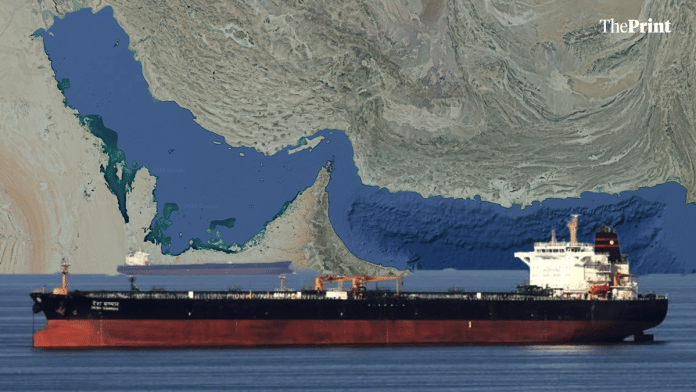



The Strait of Hormuz, named after the Zoroastrian God Ahura Mazda, or Hormizd, has been a choke point in the current war against Iran. It has been a crucial link between India and Iran ever since a few thousand Parsis left Iran some 1,200 years ago with sacred ash from the Fire Temple. This was probably India’s first diplomatic outreach centuries ago. And now, in the middle of an impasse, the Strait of Hormuz was once again opened for Indian oil tankers to pass through.
The greatest victory is that which is won without fighting a war, it is said. India probably did just that, managing a significant diplomatic tightrope. The West Asia conflict is a complex one. Though not a party to it directly, taking sides would have not only been rash but also detrimental to a policy structure that was built and nurtured through years of hard work and diplomatic finesse.
In spite of changes in governments, New Delhi’s core foreign policy formulations on West Asia have not witnessed any major shift. While India supported the Palestinian cause and favoured a negotiated settlement, it also kept upgrading its security ties with Israel. Israel is one of India’s major defence partners, but the oil-rich Arab states continue to be a major source of energy and employment for the Indian diaspora. Without getting into the minefield of Shia-Sunni conflict, India engaged with Iran on port and connectivity projects by getting the Chabahar project and a window to Afghanistan and Central Asia.
The US-Israel war on Iran and the counterattacks by Tehran have upset the delicate diplomatic matrix. It is this delicate balance that India has reconstructed through deft diplomatic manoeuvres and back channel talks.
Besides diplomatic parleys, two more factors could have played a significant role in turning the situation in India’s favour, albeit temporarily.
Also read: US-Israel must not light a Jauhar pyre in Iran—Rajput warriors had nothing to lose
Tehran needs India
New Delhi has taken into consideration certain changes that have occurred in the region after the war began.
One is that the prospects of regime change appear to be bleak, even assuming that it was the primary objective of America and Israel. The elimination of the supreme leader, Ayatollah Ali Khamenei, has not resulted in a power vacuum, leading to the sudden and total collapse of the regime in Tehran. Mojtaba Khamenei’s appointment as Iran’s new Supreme Leader, an unprecedented move considering that this is the first time in the Islamic Republic of Iran since the 1979 revolution that the power has passed on from father to son, has stabilised the regime. No questions about Mojtaba’s rank in the religious order, his knowledge of the scriptures, or his lack of political and administrative experience have been raised.
The regime in Tehran is fighting an existential battle. To its relief, the street protests are off, or probably too few to be reported. The old regime under a new leader has to fight a war and also stabilise the economy. Economic woes can directly trigger social unrest and allow dissidents to muster people for a road show against the regime. Any business, trade in oil and revenue at this time will boost its morale and give it breathing space.
Tehran needs India just as much, or probably more than, India needs the gas refill.
In such circumstances, New Delhi making a quick and decisive move toward securing passage for its supplies was definitely a winning move.
Also read: Strait of Hormuz crisis shows limits of US, say Chinese. ‘India most vulnerable’
Next phase of engagement
Another aspect that merits attention here is the unending nature of the current conflict. There is certainly a realisation among all the involved parties that a war without an immediate, short-term and definite objective is likely to drag on for months, if not years, like the one between Russia and Ukraine. There will be no winners, only losers. The Gulf states have realised this, and so has White House and Tel Aviv.
The best bet for India was to maintain ambiguity, not take sides and remain neutral even at the cost of being ridiculed as ‘fence sitters’. It insulated its strategic autonomy from being compromised.
More than taking sides in a complex situation like this, it was important for the Narendra Modi government to keep the flow of supplies steady, ration domestic supplies, if necessary, not allow consumer panic to set in and ‘keep the wagons moving’ as they say. Ensuring Russian oil supplies to Indian refineries was truly a feather in the cap of the present government.
The Narendra Modi government skilfully avoided taking sides but made sufficient strategic statements expressing its concerns about the loss of innocent lives. The government also avoided diplomatic adventurism and bravado but engaged sincerely with all the stakeholders in the conflict upfront.
Meanwhile, Iran has reportedly carried out several attacks on oil fields in the Gulf region after its South Pars gas field was attacked by Israel. This will lead to the next level of disruption in energy supplies and complicate the situation further.
New Delhi should prepare for yet another phase of diplomatic engagement with the states in conflict and also prevail upon the White House to disengage itself from the conflict and bring all the parties to the negotiating table.
Alternatively, India can take a proactive stand by formally requesting the UN Security Council (UNSC) to intervene in the West Asia crisis to de-escalate the war.
Seshadri Chari is the former editor of ‘Organiser’. He tweets @seshadrichari. Views are personal.
(Edited by Theres Sudeep)