





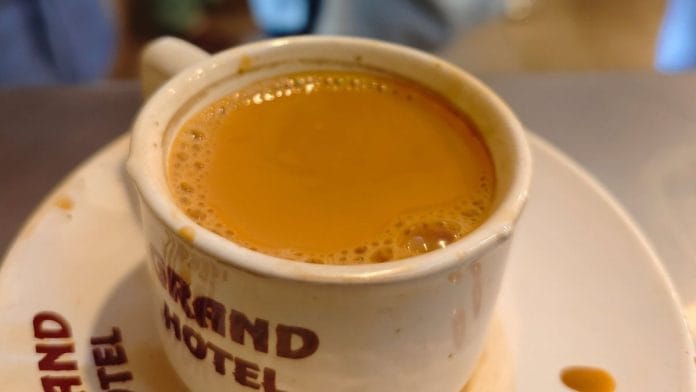



If there is anything quintessentially Hyderabadi, it is Irani chai. As early as 4 am, scores of people can be found at traditional cafes, which are institutions in their own right in terms of how the city has built its chai culture.
Hyderabadis yearn for Irani chai whenever they travel outside their city. The diametric opposite to this is Suleimani chai or black tea, which is found in Kerala everywhere (alongside milk tea, of course). The first time I had it was in Kochi a decade ago.
I was definitely not a fan of black tea back then, and it was uncommon to find it in traditional Hyderabadi cafes. In fact, only roadside stalls would sell it. That seems to be changing now.
Over the past six months, I’ve noticed that some of the older cafes have begun selling Suleimani chai, and the idea seems to be catching on slowly. In fact, one of the oldest Irani restaurants near the Charminar, Madina Hotel (1947), is seeing its black tea become quite popular of late.
I’m sure Suleimani chai isn’t a threat to Irani chai. Nonetheless, it’s interesting to see black tea becoming more popular, given that Irani chai is like the biryani of beverages for Hyderabadis. I am not saying it is a fancy drink; in fact, it’s the opposite. But Irani chai is what people have conversations over, with sides of Osmania biscuits. It’s similar to how we have biryani for all occasions.
Also read: 10-minute delivery not worth the risk. India’s quick-commerce sector must look at global models
A matter of health
Restaurant owners tell me that the decision to choose black tea over Irani chai has more to do with health than taste. These days, customers have begun to see anything with excess milk as something to avoid. It is a fact that Irani chai is very sweet. In some places, it is so sweet that it barely qualifies as chai.
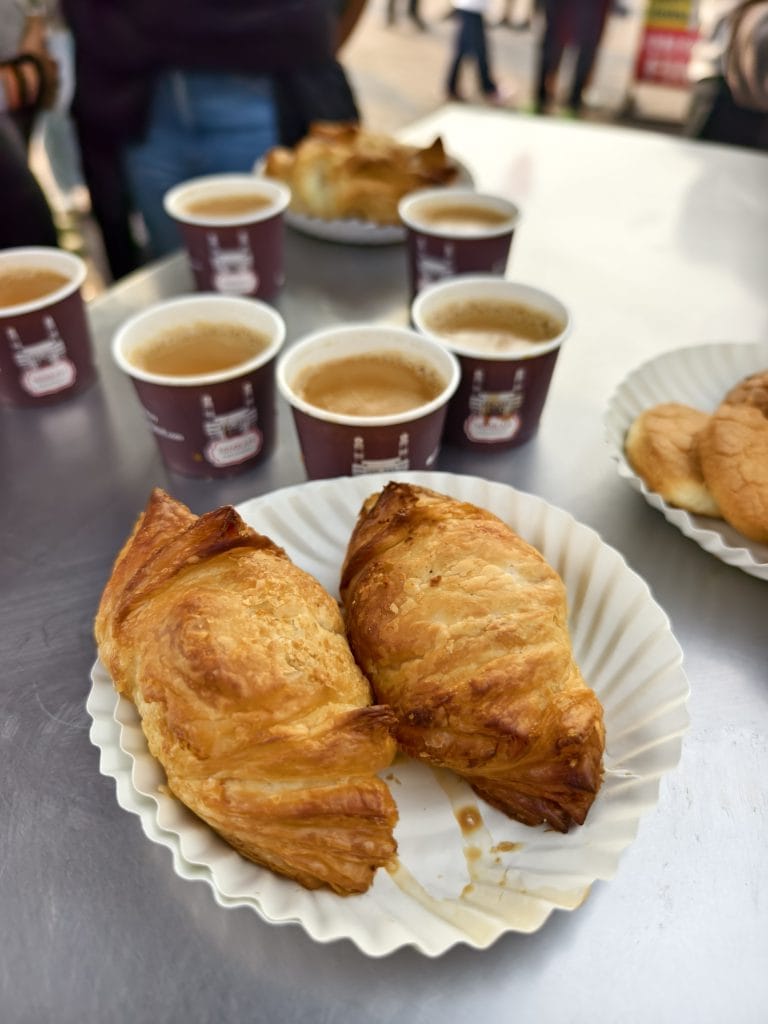
This slight cultural resetting is interesting for one more reason: what we call Irani chai is actually not from there. In Iran, people actually drink black tea.
What we call Irani chai in Hyderabad is merely an adaptation of Indian chai. Scores of Iranians who migrated to Hyderabad in the early 1900s began boiling black tea and milk separately to make chai. The name ‘Irani chai’ comes from Iranian cafe owners and has nothing to do with the tea itself.
Ironically, the black tea we’re drinking is the actual Irani chai. More interesting is the fact that this has slowly seeped into the Old City as well.
Irani chai already had some competition from coffee: more expensive, but seen as cooler by the younger generation. Not everyone wants to sit in dingy cafes or crowded spaces, and Irani cafes tend to be both. Perhaps it’s time for owners of traditional cafes to reset and upgrade.
It’s no secret that Irani chai is very sweet in some places because they add condensed milk, which is not healthy at all, especially if one consumes chai every day. Many of my friends don’t drink the tea because it is too sweet and thick.
To make Irani chai tastier, we’ve turned a refreshing warm beverage into a dessert. Sooner or later, the Suleilmani chai boom was bound to happen. In the next five years, it will likely become the preferred option for the newer generations of Hyderabadis.
Yunus Lasania is a Hyderabad-based journalist whose work primarily focuses on politics, history and culture. He posts on X @YunusLasania. Views are personal.
(Edited by Prasanna Bachchhav)