






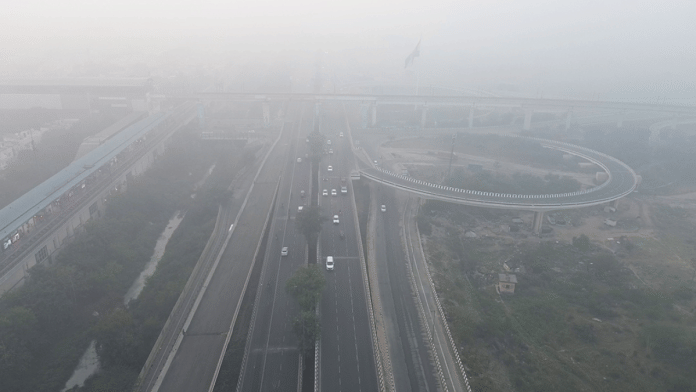



Delhi’s air pollution crisis is not just about emissions; it is about institutions. Delhi’s “airpocalypse” is no longer breaking news; it is a recurring governance failure. Each winter, the city cycles through familiar rituals, GRAP alerts, odd–even schemes, construction bans, shut schools, and packed respiratory wards, yet the structural drivers of pollution remain largely intact. In contrast, Beijing, once a global symbol of toxic smog, has cut its PM2.5 levels by over 50 per cent since 2013 and now enjoys more than 300 “good air quality days” a year. Beijing’s institutions and investments were redesigned to match the scale of the problem, while Delhi’s remains fragmented, under-powered, and crisis-driven.
One vision, one framework, many instruments
Beijing’s turnaround began when air quality was elevated from a sectoral concern to a core developmental objective. President Xi Jinping’s call to build a “beautiful garden city” was translated into successive Clean Air Action Plans (2013–2017, 2018–2022) and, more recently, the Beijing Garden City Plan (2023–2035), which explicitly links livability, health, and ecological resilience. These plans set clear PM2.5 reduction targets and milestones for pollutants such as sulfur dioxide, nitric oxide and nitrogen dioxide, with annual reporting and accountability mechanisms for municipal and provincial leaders.
The policy mix was broad and coordinated:
- Industrial regulation and relocation: Thousands of coal-fired boilers and highly polluting factories were shut down or moved out of the urban core; remaining facilities had to adopt cleaner technologies under tighter emission standards.
- Energy transition: More than $20 billion was invested in coal-to-gas conversion for residential heating and power generation, complemented by greater reliance on wind and solar from neighbouring provinces.
- Transport reform: Beijing introduced China VI (Euro VI-equivalent) vehicle emission norms, aggressively promoted electric vehicles (over 5,00,000 EVs on the road with extensive charging networks), and added roughly 200 km of metro lines plus 183 km of suburban rail within a decade.
- Urban greening and dust control: Afforestation exceeding one million mu (around 66,700 hectares) helped raise forest cover to 44.8 per cent, while strict construction-site dust controls and upgraded non-motorised infrastructure reduced fugitive emissions.
The estimated cost of this multi-pronged programme exceeds $120 billion, including industrial upgrades, energy conversion, transport investments, and green infrastructure. But the returns have been substantial: Average PM2.5 in Beijing fell from well over 70 µg/m³ in 2013 to about 30 µg/m³ by 2021–2023, and the city has met China’s national air quality standards for multiple consecutive years. Crucially, enforcement was backed by national laws, the Environmental Protection Law and the Air Pollution Prevention and Control Law, which empowered local governments to impose heavy penalties, monitor emissions in real time, and act decisively against violators.
Also read: The politics of air pollution—how they are fooling the citizens
Too many actors, too little authority
Delhi’s architecture looks very different. The Central Pollution Control Board sets national norms, the Delhi Pollution Control Committee handles state enforcement, and the Commission for Air Quality Management (CAQM) is supposed to coordinate Delhi, Punjab, Haryana, and Uttar Pradesh. On paper, this appears robust. In practice, responsibilities are diffuse and authority is weak.
The Graded Response Action Plan (GRAP) remains the flagship instrument, but it is largely reactive. Odd–even schemes, short construction bans, and school closures are triggered only after AQI crosses “very poor” or “severe” thresholds, effectively treating air pollution as an episodic emergency rather than a chronic hazard requiring continuous emission reduction. The 2022 revision promised more “pre-emptive” activation at lower AQI bands, yet limited forecasting accuracy, bureaucratic delays, and inconsistent implementation meant that GRAP-III in November 2025 was invoked after AQI had already breached 350 at multiple stations.
Enforcement gaps are pervasive. CAQM and independent assessments repeatedly flag high non-compliance rates for construction dust controls and waste-burning bans, with inspection teams covering only a fraction of known hotspots. BS-III and BS-IV vehicle restrictions are frequently announced but only partially enforced, eroding credibility. Meanwhile, structural drivers such as stubble burning, rooted in tight harvest-to-sowing windows, limited access to machinery, and under-funded alternative schemes, continue largely unchanged despite thousands of crores spent since 2018.
Delhi’s own transition to cleaner technologies is slow. Electric vehicles remain a small share of new registrations, fuel-switching in industry lags targets, and mechanical road-sweeping coverage is limited by budget constraints and operational capacity. Unlike Beijing, where air-quality goals were integrated into energy, industry, and transport policies with clear timelines, Delhi tends to treat these as separate sectoral agendas without a binding cross-sectoral mandate.
Also read: Toxic air is driving people out of India’s cities, threatening urban growth
The governance gap
The contrast is not about “strong” versus “weak” states but about clarity of mandate and alignment of incentives. Beijing’s Clean Air Action Plans created a single, overarching framework under which sectoral policies were coordinated, resources were mobilised, and officials were assessed. Air quality became a performance metric for local leaders, backed by national law and substantial public investment. This did not eliminate all problems, concerns about transparency and participation remain, but it ensured that emission reduction was treated as a system goal rather than an afterthought.
Delhi and NCR lack an equivalent. CAQM has a broad remit but insufficient tools to compel sectoral departments and neighbouring states to meet shared targets. Court orders and tribunal directives are powerful in form but often weak in follow-through. Without binding, time-bound PM2.5 targets for the region, and without budgetary and career consequences for persistent failure, the system defaults to short-term fixes that look impressive in headlines but barely dent annual average concentrations.
Lessons for an Indian context
India cannot simply copy Beijing’s political model, but it can adapt key governance principles.
- Statutory regional targets: Translate national air quality standards into legally backed PM2.5 and PM10 reduction targets for Delhi-NCR over five- and ten-year horizons, with annual public progress reports.
- Strengthened CAQM mandate: Give CAQM clearer authority to align sectoral plans in transport, power, agriculture, and industry with these targets, and link compliance to budget allocations and performance evaluations.
- Shift from pilots to programmes: Move beyond short-term measures, such as limited cloud-seeding trials or episodic bans, toward multi-year programmes on industrial siting, clean energy, public transport, and crop-residue management, with transparent costing similar to Beijing’s $120 billion package.
- Embed health in decision-making: As Beijing’s “garden city” narrative shows, linking air quality to health, livability, and long-term development helps sustain political will. In Delhi, systematic use of health-impact assessments and hospital data in policy evaluation could play a similar role.
These are not technical luxuries; they are preconditions for any health sector gains. As long as air-quality management remains fragmented, Delhi’s hospitals will continue to absorb the costs of a governance problem.
Clean air in Delhi will ultimately depend less on the ingenuity of emergency schemes and more on whether India can build a coordinated, accountable governance system that treats air quality as a core public good, much as Beijing was forced to do. That is the real gap between the two cities and the real opportunity.
Vani Archana is a Senior Fellow at Pahle India Foundation. Views are personal.
(Edited by Theres Sudeep)