









About a decade ago, I visited the then Ford’s headquarters in Dearborn, Michigan—a suburb directly outside Detroit. We got to drive several vehicles around a test track, including an F-150 pick-up truck. Now, the F-150 has been and remains the best-selling vehicle in the US, and this version was particularly interesting because it had a ten-speed automatic gearbox.
I had certainly come a long way from when I learned to drive—a Maruti with a four-speed manual gearbox, or as the Americans call it, a ‘stick shift’. I remember when Maruti and Daewoo brought in vehicles in the late 90s with a five-speed gearbox. My mother’s driver at the time was extremely suspicious of the fifth gear and refused to use it. Today, many manual vehicles come with six-speed gearboxes.
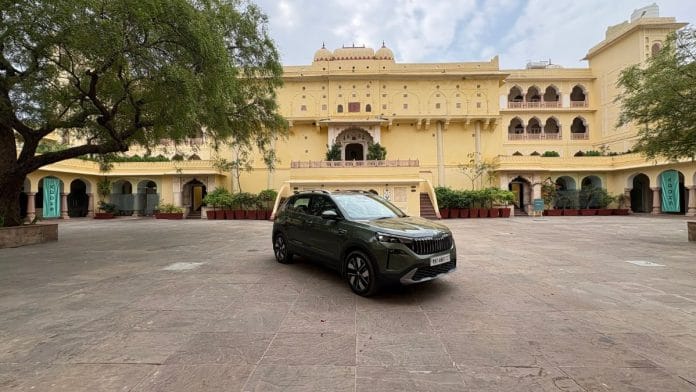
Automatics, on the other hand, well, that ten-speed gearbox from Ford made it into the last couple of years of production on the Endeavour, but that was still expensive and had limited appeal. But now, Skoda Auto has given the Kushaq SUV a makeover, and part of that makeover is a new eight-speed automatic gearbox mated to the one-litre TSI motor.
And given that the Kushaq is in the popular CSUV market and shares its mechanical underpinnings with several other vehicles from the Skoda-Volkswagen family, it is only a matter of time before this gearbox comes onto other vehicles as well. In fact, this gearbox is sourced from Japanese manufacturer Aisin, which also supplied the earlier six-speed automatic.
Automatics have higher efficiency
Aisin, a Toyota-affiliated company, also supplies the same six-speed automatic gearbox to Maruti-Suzuki. It might be a matter of time before this eight-speed automatic gearbox becomes standard across India.
But this leads to the obvious questions: why are there so many gears on cars nowadays, especially on automatics? I remember driving a WagonR automatic back in the early 2000’s with a three-speed gearbox. The very first Hyundai Santro automatic I drove around the same time also had a three-speed gearbox with a button to select ‘overdrive’. And automatics were expensive, significantly more expensive than manuals back then, with prices over a lakh of rupees more when a standard top-end WagonR cost less than four lakh. Thus, automatics were a rarity.
Now, there is a simple fact: while more gears add much more mechanical complexity to a vehicle, they also allow for higher efficiency. For many years, one reason many folks did not buy automatics in India was simply due to the fact that automatics were less fuel-efficient than manuals.
Today, in an era of highly complex automatic gearboxes, the opposite is true. Renault just released the fuel efficiency numbers for the newly-launched Duster from the Automotive Research Association of India (ARAI), and the six-speed dual-clutch automatic has an efficiency of 18.45 kilometres per litre (kmpl) compared to the 17.75 kmpl of the six-speed manual. Marginal, yes, but significant enough.
Also read: Duster is back and brilliant on the road, but Renault has ground to make up in India
Improved ECU in automatics
In the real world, I am currently driving a Maruti-Suzuki Victoris with a six-speed automatic gearbox and am getting 14.4 kilometres per litre after having driven more than 2,500 kilometres inside the NCR in the past three months. And one major reason for higher automatic gearbox efficiency today is the far more complex logic onboard a vehicle’s Electronic Control Unit (ECU).
That explains automatics, but why more gears? Well, as Ford proves, this was not a new phenomenon; BMW has been using an eight-speed automatic transmission from German manufacturer ZF on most of the vehicles they sell in India for quite a few years. But what is unique about the Skoda Kushaq is that it has a small one-litre engine and is not a luxury vehicle.
And more gear ratios actually make a little bit of sense. These small one-litre turbocharged petrol engines are becoming fairly popular in India. Along with Skoda-Volkswagen, Hyundai-Kia, Renault, Stellantis and even Maruti-Suzuki. Simply put, such engines give a 100 to 120 horsepower output while being a compact size in order to get some taxation benefits.
And while vehicles with these small turbocharged engines can be fun to drive, they tend to have a relatively small sweet spot where power and efficiency meet. The more gears there are, the easier it is to keep a vehicle in that sweet spot. And right now, we happen to live in a time where machining and metallurgy have improved significantly, which means that manufacturing an eight-speed gearbox is easier, and it is also more compact, so that it can fit in the same space a six-speed box would have taken up, which is important on these relatively smaller vehicles.
In addition, the control logic onboard an ECU has improved, and both the hardware and the software have become more capable. If you have driven the older Ford 2.2-litre diesel engine with the 10-speed gearbox on the Endeavour, you might have felt the need for more power.
Also read: Why Hyundai Creta is still the king of Indian roads after 11 years—brand value to looks
Automatics in India
That is not the case on this new Kushaq, which is especially pertinent given that it is a smaller engine. On the high-speed Jaipur bypass Expressway, where I drove this car as well as the route to Mandota Palace through some narrow and bumpy rural sections, this gearbox was never found wanting.
While the top-end Prestige variants of the Kushaq have flappy paddles on the steering column to manipulate gears, other than trying them out under extreme acceleration, I never felt the need to use them. This is a compliment to Skoda engineers who have made the new eight-speed Kushaq easy to drive.
And here is another fact for carmakers, and why you’ll probably see more vehicles with such eight-speed gearboxes soon. They are also more economical; this new variant is four per cent more efficient than the six-speed variant. Again, marginal changes, but with strict fuel efficiency norms under CAFE3 on the way, any improvement is a good thing.
This, of course, continues the shift of the Indian automotive market towards automatics. And well, that is both a good thing and a pity. The latter because driving with a manual clutch and shifting with your hands is a life skill in my opinion, but in awful traffic, buying an automatic is a no-brainer.
Maybe as more automatic transmissions are made in India, we could start manufacturing them in the country as well, which, in fact, is my biggest grouse with automatic transmissions. We import all of them, despite selling over a million automatic transmission cars every year.
Kushan Mitra is an automotive journalist based in New Delhi. He tweets @kushanmitra. Views are personal.
(Edited by Saptak Datta)