






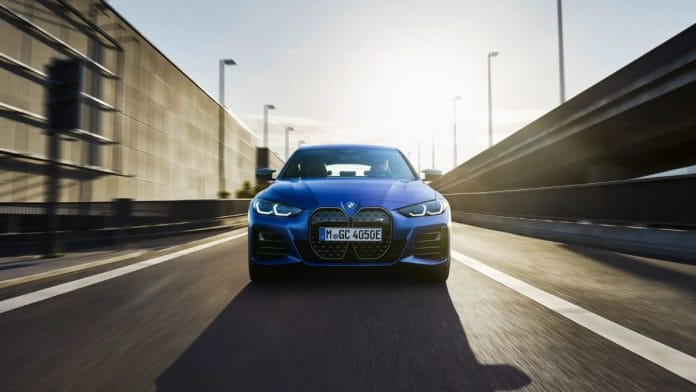



BMW India has set a calendar-year 2025 sales record, selling 18,001 units in total—17,271 BMWs and 730 MINI vehicles—marking a 14 percent growth over 2024.
“We have managed to attract many new customers to our brands this year. Products such as the 2-series Grand Coupe and iX1 electric SUV have done very well for us with buyers wanting to move into the luxury space,” said Hardeep Singh Brar, President and CEO of BMW Group India.
About a thousand kilometres south, Mercedes-Benz India also announced their annual sales for 2025 at its Chakan headquarters, reporting total sales of 19,007 units. While the brand retained its lead among luxury brands in India, its overall sales actually declined by a couple of percentage points compared to 2024.
However, Santosh Iyer, Managing Director of Mercedes-Benz India, was quick to point out that thanks to sales of ‘Top-End Vehicles’ (TEVs), 2025 was the company’s ‘best ever’ year in terms of revenue. Iyer was referring to sales of vehicles that cost over Rs 1.3 crore, such as the newly launched ‘celebration’ edition of the EQS electric SUV and, of course, the G-Class, whose popularity among India’s rich and famous continues unabated. India has also become of the five largest markets globally for Mercedes’ ultra-luxury Maybach brand, vehicles used by the likes of the President, Prime Minister and top industrialists such as Mukesh Ambani.
India, China and luxury cars
It is quite clear that both companies are following different strategies. BMW is looking to build the brand among younger professionals and Mercedes-Benz is doubling down on the point-one percenters. Yet, there were some surprising takeaways from conversations with both Brar and Iyer.
One of those being the popularity of electric vehicles among buyers of luxury brands. The BMW iX1 was one of the best-selling electric vehicles in India. “The fact that it is available with a long-wheelbase as well as major improvements in the charging infrastructure across India helped BMW sell over 3753 electric vehicles last year,” Brar told ThePrint.
At Mercedes-Benz, electric models accounted for 20 per cent of TEV sales, including the recently launched electric G-Class.
A major reason for the popularity of electric vehicles is the five per cent GST they attract. This, ironically or not, makes EVs cheaper than their internal combustion engine counterparts. As wholesale battery prices have come down, some of these savings have been reflected in ex-showroom prices.
For example, the BMW iX1 has a lower on-road price than the X1, coupled with the fact that the iX1 has a longer wheelbase, which gives better rear legroom, customers gravitate toward the electric.
However, the rationalisation of GST slabs on the auto industry in the final quarter not only led to growth but also an increase in demand for diesel cars. “Diesel vehicle demand increased dramatically as the cess on large diesel cars was reduced; from 29 percent to 43 percent. This was surprising but with buyers looking at fuel economy, not totally unexpected”, Iyer said. With a significant price differential between diesel and petrol, particularly in the southern states, Iyer’s point made sense.
But Mercedes-Benz is not surrendering what could be described as the entry point to the luxury segment. At a time when sales of European luxury brands are plummeting in China, the new CLA electric vehicle, which is expected to be launched later this year in India, will play an important role.
“The number of young professionals who can afford luxury cars and want to display their success has grown by twenty percent in the past year,” Iyer said. Even for BMW, new buyers to the brand accounted for 49 per cent of sales in the past year.
Also read: I’ve been driving an EV for 2 years—Indian roads are ready to switch to electric
The China question is one that impacts both these brands as well as other luxury carmakers. With Chinese brands such as one-time smartphone maker Xiaomi as well as newcomers like XPENG not just gnawing away at market share but taking massive gulps like Great White Sharks, India will play a major role in the growth strategy of these brands.
Yet, the reality is that luxury car sales in India remain very limited. Even after carmakers like Audi, Jaguar-Land Rover and Lexus are added, the overall market stands at a shade over 50,000 units. By contrast, even with a shocking 19 per cent decline, Mercedes-Benz alone sold 1,33,600 vehicles in the fourth quarter of 2025 in China.
And while luxury brands still have appeal among Indians, Indian carmakers like Mahindra’s electric SUVs, and soon Tata Motors with its upcoming ‘Avinya’ brand, are offering features and technologies that were once a preserve of luxury vehicles at far more accessible price points. They’re pulling customers away. When combined with a rising strain of consumer nationalism—as seen in China—this shift poses a long-term existential challenge for global luxury brands.
As a result, more and more of these vehicles are being assembled in Indian factories. Brar said that over 97 per cent of the vehicles sold by the brand in India were assembled by the manufacturer at their plant in Chennai and localisation of parts is only increasing. Mercedes-Benz also launched its first ‘assembled in India’ Maybach GLS for Rs 2.75 crore. While it is still expensive, local assembly shaved a huge sum of Rs 41 lakh off the sticker price and made India one of the few markets where Maybach cars are assembled.
But can India be a savior for these brands? Even with a fast-growing economy, there are clearly some major challenges, well beyond the infrastructure challenges that you and I experience every day.
Kushan Mitra is an automotive journalist based in New Delhi. He tweets @kushanmitra. Views are personal.
(Edited by Ratan Priya)