









India has long borne the brunt of state-sponsored terrorism emanating from Pakistan. China, too, has become a target, though it has mostly underplayed the human, strategic, and economic costs.
In recent years, attacks on the so-called China-Pakistan Economic Corridor (CPEC) and Chinese citizens have repeatedly made headlines: “Chinese convoy suffers terrorist attack in Pakistan”; “Explosion in Pakistani capital kills Chinese people.” Beijing treats these incidents as part of a broader, troubling pattern, a price it is already paying for CPEC and its long-standing support of Pakistan.
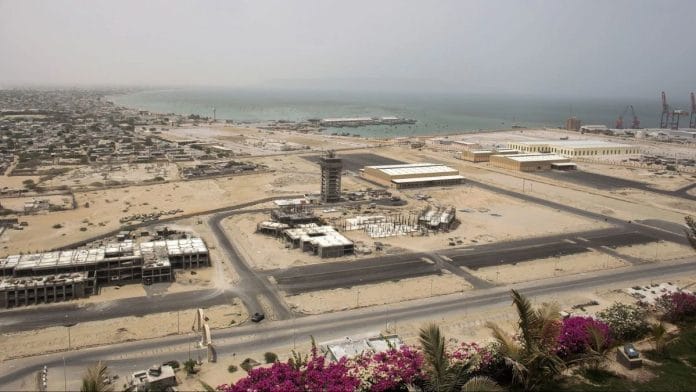
Earlier this year, coordinated bombings and shootings by the Baloch Liberation Army (BLA), codenamed Operation Herof 2.0, killed soldiers and civilians in Quetta and Gwadar, the crown jewel of the CPEC. A Chinese commentator argued that the violence laid bare the vulnerability of China’s flagship overseas venture and cast fresh doubt on Pakistan’s capacity to protect it.
Over the past five years, at least 20 Chinese nationals have been killed, and dozens more injured, including in a suicide bombing near Karachi’s Jinnah International Airport in October 2025. In January 2026 alone, BLA attacks claimed 31 civilian lives. Islamabad’s promise of a Special Protection Unit, announced by Interior Minister Mohsin Naqvi, is seen in Chinese assessments as a temporary fix. One commentator noted that Pakistan’s security measures have often been reactive, fragmented, and under-resourced, leaving Chinese interests exposed.
No military interventions
“Will China take action?” a Chinese commentator asked. He emphasised restraint: Beijing will not send troops across the border or interfere in Pakistan’s internal affairs. Yet, he stressed, the safety of Chinese citizens and projects must be protected. These steps should not be interpreted as military interventions, but legal and legitimate measures aimed at ensuring stability and security.
According to him, Beijing’s actions include issuing safety warnings, evacuating personnel from high-risk areas, strengthening on-site protection, sharing real-time intelligence via satellites and drones, providing advanced anti-terrorism equipment, and expanding counter-terrorism training to enhance Pakistan’s capabilities.
A commentator on Baijiahao, a content creation platform, frames China’s dilemma: it must do everything possible to help Pakistan stabilise the situation, but direct involvement would make China itself a target. Chinese analysts describe this as a delicate balancing act; Beijing provides intelligence, equipment, and diplomatic backing to strengthen Pakistan’s military, while safeguarding its projects and curbing international support for terrorism. The strategy is precise, cautious, but inherently high-risk.
Chinese discourse underscores Pakistan’s reliance on Beijing. Analysts note that, using Chinese intelligence, Pakistani security forces mobilised elite units across Balochistan in coordinated network-closure operations. Over a 40-hour-period, they reportedly killed 145 militants on 31 January alone, some allegedly preparing suicide attacks, marking the largest counterterror operation in the province since Pakistan’s war on terror. The Chinese read this both as evidence of dependence and as proof of the limits of Pakistan’s independent capabilities.
The creation of Pakistan’s Special Protection Unit is similarly framed in Chinese analyses as a strategic, institutional measure to protect Chinese personnel and projects, particularly in high-risk areas like Gwadar and Dasu. With a proposed budget of $ 260 million, the unit focuses on intelligence, patrols, escorts, rapid emergency response, and joint counter-terrorism training with China. Commentators see this as an indication of Pakistan’s commitment and as an acknowledgment that safeguarding Chinese investments ultimately requires Beijing’s involvement.
Warnings and critiques
A rare, stern voice in China warned Pakistan that while China-Pakistan relations run deep, they are not one-sided or endlessly tolerant. When the safety of Chinese citizens is at risk, goodwill alone cannot protect Islamabad. Pakistan, he said, faces a choice: either cling to its so-called national dignity and let the country sink further, or show genuine sincerity and cooperate with China to resolve the security problem.
Another commentator described progress on the CPEC as “like pushing a truck through a desert at night, every step is slow, exhausting, and fraught with unseen but deadly threats.” Chinese analysts also note that Pakistan’s counter-terrorism apparatus has fallen into a crisis of stagnation. Anti-terrorism expert Zhao Hua observed, “Without popular support and logistics, the Pakistani army’s counteroffensive is like a car without gas, unable to move.”
Chinese discourse further scrutinises Pakistan-US cooperation. Hu Xijin, former editor-in-chief of the Global Times, warned months ago that China-Pakistan relations have long been strong, with China’s investments driving Pakistan’s economic development. Any collaboration between Pakistan and the US, he argued, must not compromise China’s interests. Ignoring this, he said, would exact a heavy price.
Observers suggest that for the CPEC to continue, Pakistan must do three things: first, ensure the absolute safety of Chinese personnel and projects through a sustainable security system that disrupts terrorist organisations, funds, and channels. Second, align internal interests to prevent political infighting from undermining the project. And third, make the corridor genuinely beneficial to the local population, particularly in Balochistan, so development is not built on sacrifice zones.
Also read: How China sees Delhi AI Summit—India’s attempt at visibility, not a breakthrough
Externalising the blame
Chinese analysts increasingly emphasise the sophisticated functioning of the BLA. They highlight its use of encrypted communications, night-vision gear, and foreign training. The attacks seem carefully planned to disrupt Gwadar and the wider CPEC. Some commentaries suggest backing from India and the US, with objectives that go beyond local insurgency, including seizing cities and overwhelming Pakistani security forces.
Chinese discourse frames the attacks as externally driven. This serves two purposes: deflecting attention from Pakistan’s repeated security failures and signalling Beijing’s growing frustration, with internal problems portrayed as proxy conflicts supported by outside forces. Commentators even suggest that China may eventually need to operate directly in Pakistan or station troops permanently in Gwadar—an idea Islamabad resists on sovereignty grounds.
In China, concern appears to be giving way to impatience. Every new attack chips away at Beijing’s confidence and raises the stakes for the CPEC. Publicly, Beijing maintains a calm posture, but cracks are becoming visible. China is already paying a heavy price for the corridor. Yet as terror attacks intensify, Pakistan’s limited capacity and its reluctance to safeguard Chinese projects and curb terrorism leave Beijing with few options. The Indian factor remains a key factor in these calculations.
Sana Hashmi, PhD, is a fellow at the Taiwan-Asia Exchange Foundation. She tweets @sanahashmi1. Views are personal.
(Edited by Ratan Priya)