








How should India respond to a changing world order? This issue requires, first of all, answering a larger question. What is the relationship between geopolitics and economics in the contemporary world?
In the recent era of globalisation, which began in the 1980s and was consolidated after the disintegration of the Soviet Union in 1991, geopolitics generally followed economics, which was essentially market-based. With the partial exception of the Middle East (in fact, stretching right up to Afghanistan and Pakistan), international relations were constructed mainly around economic interests. China’s emergence on the world stage is the greatest example. In 2002, supported by the United States and the West, China, a Communist polity though no longer a Communist economy, was admitted to the World Trade Organization (WTO).
It is worth recalling that the original China-US detente in 1972 was entirely strategic, not economic. An absolute economic backwater at that time, China had no products to offer to the world. Its trade/GDP ratio was 5 per cent. Nor was China welcoming foreign investment. The US had sought China as a partner to weaken the Soviet Union during the Cold War. But after the 1991 collapse of the Soviet Union, the US did not break away from China, even though the strategic objective had been served. Rather, economics became the basis of the burgeoning China-US relationship, as China opened up to world markets. The immense economic possibilities drove China’s relationship with the US and the West. Nations and corporations rushed to China.
Today, economics has begun to follow geopolitics, though it is not yet fully overwhelmed by the latter. If China’s entry into the WTO was the biggest indicator of how economics earlier overrode geopolitics, US President Donald Trump’s use of tariffs as an instrument of geopolitics is the greatest sign of the new era. Tariffs were once an economic tool and, under globalisation, most nations sought to reduce them to the lowest possible levels. Over the last year, America has imposed tariffs even on its historic allies, finding them relatively useless now.
Treatment of the North Atlantic Treaty Organization (NATO), which was born in 1949 under American sponsorship to protect Western Europe from the Soviet Union/Russia, is a key example of the new geopolitics. For his Greenland plans, President Trump was willing to use tariffs to punish those NATO countries that opposed him. Though he eventually pulled back, it is not clear how far the change will last.
Implications for India
India’s economic options should be viewed in light of the changing dynamics outlined above. It has become the fastest-growing major economy in the world (Vietnam is growing faster, but it is comparatively smaller). Sometime between 2028 and 2030, if the present trends continue, India will become the third-largest economy, leaving Germany behind. But can it continue on this trajectory?
That Trump has imposed some of the highest tariffs on India’s exports to the US is a big part of the problem. At the same time, America has also embraced Pakistan and failed to impose equally heavy tariffs on China, another geopolitical adversary for India.
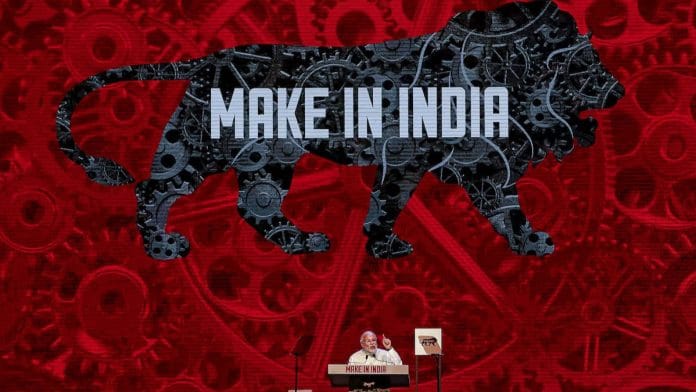
In this environment, it is tempting to talk of self-reliance (Atmanirbharta), as PM Modi has often done, but it is an impractical idea. India’s trade/GDP ratio is not minuscule, as it used to be until the 1970s. It is over 40 per cent now, which means the Indian economy is heavily integrated with the world. India cannot suddenly turn inward without inflicting huge economic self-damage. And given how badly self-reliant countries after World War II hurt themselves, while trade-reliant countries (South Korea, Taiwan, Singapore, and China after the mid-1980s) prospered, we should also have doubts about the long-term utility of the idea of self-reliance.
Two-pronged economic strategy
India’s economic strategy has to be two-pronged: external hedging and simplification of the internal regulatory structure.
Hedging essentially means external economic diversification. Though the US has stepped away from a three-decade-old special relationship, India still has to find a way to do business with it. According to the IMF-World Bank statistics, the world’s GDP was $111.25 trillion at the end of 2024, with the US accounting for $29.18 trillion—over 26 per cent of the total. Moreover, roughly 20 per cent of India’s exports used to go to the US. A trade deal with the gigantic US is in India’s self-interest, however unwelcome it might be on grounds of dignity.
But India should also reduce its dependence on the US, simultaneously seeking other big markets. The two biggest markets outside the US are the European Union (EU) and China. The GDP of EU is $19.5 trillion and China’s $18.7 trillion. A trade treaty with the EU is a move in the right direction. And for practical reasons, despite strategic conundrums, one cannot give up on China either. Imports from China have become essential to some cutting-edge industries in India, especially electric vehicles and green energy. India’s attempt to repair its relationship with China is also the right move.
Beyond the US, EU and China, hedging also means paying special attention to countries with a GDP of over one trillion dollars, given their market size. These are: Japan ($4 trillion), Britain ($3.6 trillion), Canada ($2.2 trillion), Brazil ($2.2 trillion), Mexico ($1.8 trillion), Australia ($1.7 trillion), Indonesia ($1.4 trillion), Turkey ($1.3 trillion), and Saudi Arabia ($1.2 trillion). Russia also belongs to this list, but until America’s Russia-specific tariffs are lifted, it can’t practically be a big trade partner for India, including for oil. Another exception exists. Although the UAE’s GDP is less than $1 trillion, it will remain a big trade destination for a variety of reasons. Dubai is a huge international business destination today.
Also read: PM Modi has a shot at history-making with EU’s India visit
Simplification of regulatory structure
The internal regulatory simplification, the second plank of a new strategy, mainly concerns taxation, land and labour markets. In recent weeks, GST reform has already been undertaken, and labour law reforms, approved by Parliament some years ago, have also been enacted. Both were highly desirable.
Politically, land remains a hugely contentious matter. No society has ever wiped out poverty without reducing its dependence on agriculture. Rural citizens cannot have lasting welfare gains if they remain confined to agricultural land. This is not simply an article of Western economic theory, but is also historically true of China, Japan, South Korea and Taiwan. How to put agricultural land to better economic uses, without hurting peasants, has always been a key development challenge. India is yet to meet that challenge.
Finally, one should note that while public investment under the Modi regime has expanded, leading to better physical infrastructure (roads, ports) as well as digital infrastructure, aggregate private investment has remained quite low in recent years. In 2007, the investment/GDP ratio had reached 42 per cent; in 2024, it was 33 per cent. India becoming a big centre for Apple iPhones can be misconstrued. Of late, India has not been very attractive for foreign investment in general.
Simplification of regulatory structure will be one of the best ways to increase private investment, both foreign and domestic. India’s economy is not yet primarily efficiency- or productivity-driven. It is mostly investment-driven. India should look for higher investment to maintain its high growth.
Ashutosh Varshney is Sol Goldman Professor of International Studies and the Social Sciences and Professor of Political Science at Brown University. Views are personal.
(Edited by Ratan Priya)
Yes, we know about hedging and reform.
Now, ask farmers to accept reforms.