









India accounts for nearly 18 per cent of the global population but has access to only about 4 per cent of the world’s freshwater resources. Agriculture consumes nearly 80 per cent of the country’s freshwater withdrawals, making irrigation the backbone of food production and rural livelihoods. Yet this vital system is under increasing pressure. Climate change, rising food demand, and population growth are placing a growing strain on India’s limited water resources, making efficient and sustainable water management through innovative infrastructure essential for securing the future of agriculture and ensuring long-term food security.
Along with improved infrastructure and advanced technologies, achieving water efficiency also depends on people, equity, and participation. In India, where agriculture sustains millions of livelihoods and water management, the future of food security is deeply intertwined with how wisely the country manages its water resources. Today, as the world observes World Water Day, the theme, ‘Water and Gender’, highlights this critical yet often overlooked reality.
India’s rapidly changing water landscape
Farmers across the country are experiencing erratic monsoon patterns, prolonged dry spells, and more frequent extreme weather events. Groundwater, one of the main sources of irrigation, is under strain. India is currently the largest user of groundwater in the world, extracting about 241.34 billion cubic metres annually from an assessed resource of 407.21 bcm (GoI, 2024). While groundwater irrigation has helped boost agricultural productivity over the past decades, unsustainable extraction threatens long-term water security in many regions.
To address this challenge, the Food and Agriculture Organization of the United Nations (FAO) is supporting the Government of India’s transformative initiatives across the country to build a water-smart agricultural landscape focusing on water tenure, participatory irrigation management, digital decision support, and climate resilience.
An important step in this direction is the modernisation of irrigation systems led by the Ministry of Jal Shakti, which aims to upgrade irrigation infrastructure through IoT-enabled pressure-piped systems to secure improved water efficiency and productivity. Complementing the proposed structural investments are the non-structural components to ensure long-term sustainability, such as participatory irrigation management and transfer, data-based decisions, and adoption of climate-resilient agricultural practices on the ground.
Strengthening local institutions responsible for irrigation governance helps ensure equitable water distribution and improved system performance. FAO is supporting the government to strengthen Water User Associations (WUAs) at cluster levels, linking them with Panchayati Raj institutions, Farmer Producer Organisations, and Primary Agricultural Cooperative Societies. These partnerships empower farmers to collectively manage irrigation systems while improving access to services and markets.
FAO’s digital platforms, such as WaPOR, CROPWAT, AQUASTAT, and AquaCrop-OS, using remote sensing and geospatial technologies, help in real-time monitoring, crop water productivity, and improved water-use efficiency across agricultural landscapes, enabling scientific irrigation planning.
Digital technologies are also transforming how irrigation systems operate. Across several pilot initiatives in India, Internet of Things (IoT) sensors are being used to monitor irrigation supply and crop water demand in real time. Sensors track key variables such as soil moisture, water flows, and evapotranspiration, helping farmers to determine the precise amount of water application to crops.
In addition, simple but effective tools such as pani tubes installed in paddy fields help farmers monitor field water levels in alternate wetting and drying, direct-seeded rice, and better understand crop water requirements. Data collected from these systems feeds into the Decision Support System (DSS) dashboards, which combine field information with weather forecasts to generate irrigation advisories.
Also read: India’s mollycoddling of agriculture is hurting manufacturing growth. It must prioritise reform
Recognising women as water stewards
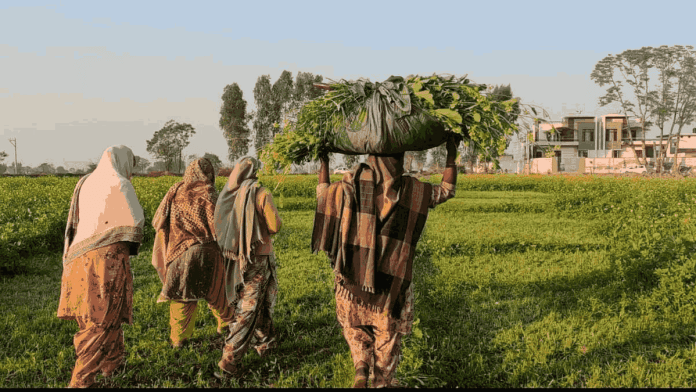
Across rural India, women play a central role in agriculture and water management — from irrigating fields and managing livestock to ensuring household water security. Yet their voices are often excluded or underrepresented in irrigation governance and decision-making structures such as the WUAs that dictate resource allocations.
A gender-responsive approach to water governance is therefore essential. When women participate meaningfully in irrigation planning and water management, irrigation systems become more efficient, equitable and sustainable. Women farmers bring valuable local knowledge, stewardship practices, and long-term perspectives that strengthen community resilience.
India’s journey toward water security must therefore combine innovation with inclusion. Modern irrigation infrastructure, digital technologies, and stronger community institutions are important, but they must be accompanied by policies and programmes that actively promote women’s participation and leadership in water governance.
As the world marks World Water Day 2026, India must continue to work toward achieving water efficiency through innovative infrastructure and technology, but also empower women as equal partners in irrigation management, strengthen inclusive water institutions, and ensure that every drop of water is managed wisely to secure India’s agricultural future.
Takayuki Hagiwara is the UN Food and Agriculture Organization (FAO) representative in India. Views are personal.
(Edited by Aamaan Alam Khan)